Profile
Rachel Scott on Craft, Context, and the Expansive Language of Diotima
Hannah R. Harris / Aug 8, 2026

For VOL Collective, Willy Chavarria reflects on building an independent fashion language from Mexican American roots, queer culture, working class style, and a belief in clothing as a vehicle for visibility.
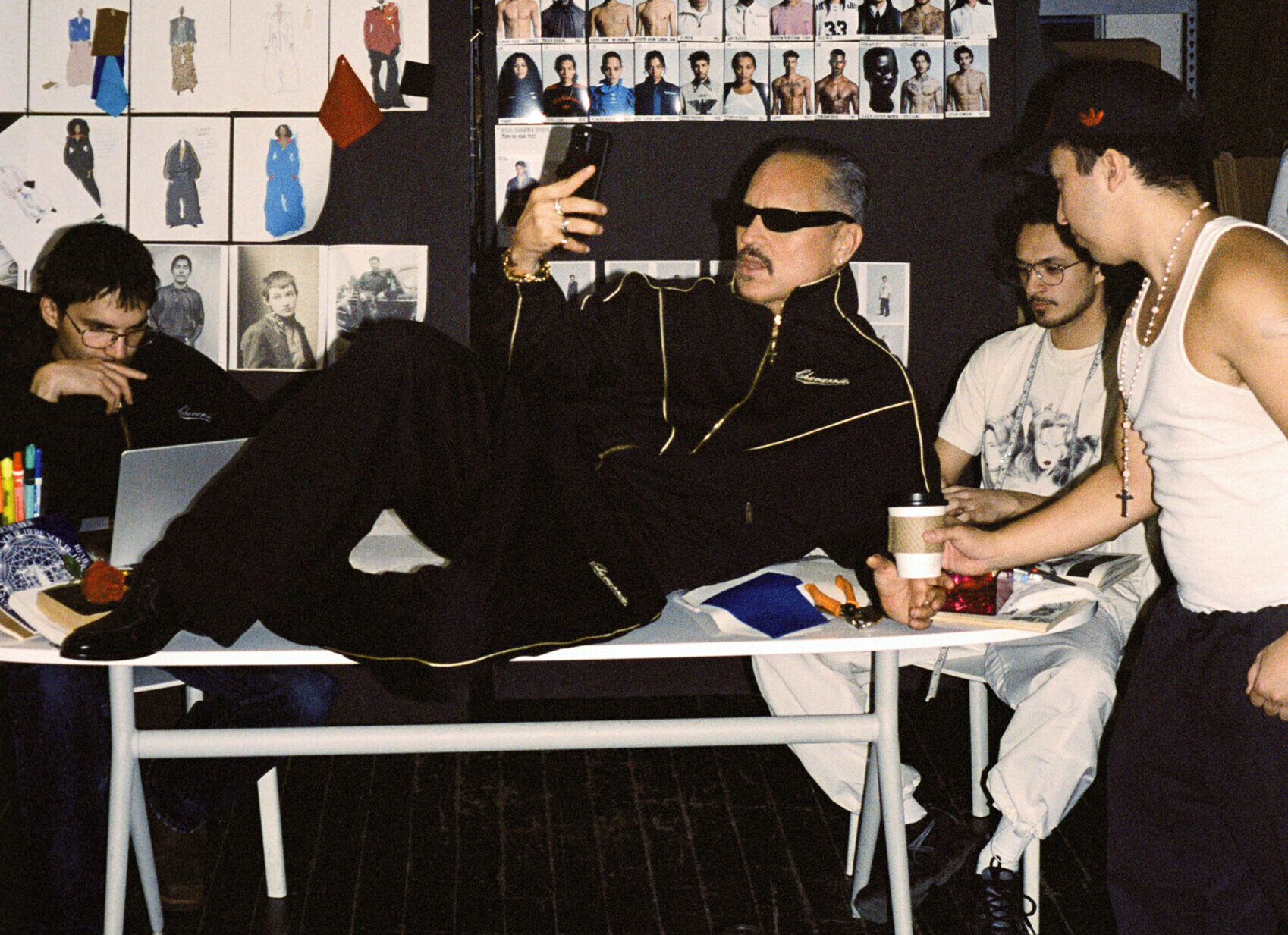
For VOL Collective, Willy Chavarria reflects on building an independent fashion language from Mexican American roots, queer culture, working class style, and a belief in clothing as a vehicle for visibility.
You grew up in Huron, California, in the San Joaquin Valley, far from the traditional centers of fashion. What did that environment teach you about style?
I did not grow up looking at fashion magazines or thinking about fashion as an industry. I grew up around people who used clothing to communicate who they were. The garments were often inexpensive, but they were worn with intention and care. A person could look like a rancher, a cholo, or someone going to church, and each of those choices carried meaning. That stayed with me. Style was connected to identity, family, work, culture, and belonging. It was not separate from everyday life. I think that is still present in the brand. The clothing begins with real people and the ways they create an image of themselves.
Before establishing your own label, you worked across companies including Joe Boxer, Ralph Lauren, American Eagle Outfitters, and Calvin Klein. How did those experiences shape your practice?
Each place taught me something different. I learned how products are developed, how businesses operate, and how technical knowledge can support a strong design idea. Ralph Lauren was especially important for my understanding of fabric, construction, and tailoring. I also learned by observing what was missing. I had spent years working within established systems, but I did not see enough space for the communities and perspectives that shaped my own life. When I began the label, I brought the discipline and craft I had developed in those environments with me. I wanted to use that knowledge to make clothes with a clearer point of view and a more personal cultural foundation.
What prompted you to launch Willy Chavarria in 2015?
I reached a point where I understood that the kind of fashion I wanted to make was not going to appear unless I made it myself. I had seen Mexican and Latin American influence throughout my career, but it was rarely acknowledged with the respect it deserved. I wanted to create clothing that reflected my experience as a Mexican American and as a queer person, while also speaking to the broader realities of American life. The label began with a desire for self representation. It was important to me that the people who had inspired the work were not treated as references from a distance. They needed to be part of the image, the casting, the atmosphere, and the conversation around the clothes.
Your work often brings together tailoring, workwear, sportswear, and the exaggerated proportions associated with Chicano style. How do you bring those references into a contemporary collection?
I am interested in the meaning already carried by familiar garments. Zoot suits, work uniforms, sportswear, cowboy clothing, and church clothes all have histories within the communities I know. I do not approach them as costumes. I look at their proportions, their attitude, and the way people have made them personal. Tailoring can become more expansive through volume, a workwear piece can become formal through its construction, and sportswear can carry a sense of ceremony. The goal is not to reproduce the past. It is to understand why certain clothes mattered and then allow those ideas to move into the present.
The brand is known for its casting as much as its clothes. What role does casting play in the work?
Casting is central because the clothes need to live on people who bring their own presence to them. I have always wanted to capture something real rather than create an image that feels disconnected from life. The people in the shows and campaigns often carry the attitude, history, or energy that informed the collection in the first place. That makes the presentation more than a display of garments. It becomes a gathering of different identities and experiences. I am interested in the dignity and individuality of each person. When the casting is right, the clothing does not erase the wearer. It gives the wearer more room to be seen.
Community is a recurring idea in your work. How do you understand community in relation to fashion?
Community is about recognition and responsibility. Many people have been visible in everyday life but absent from fashion’s official image of beauty, success, or desirability. I want the brand to acknowledge those people and the cultures they have built. That includes Latinx communities, immigrants, queer people, Black communities, and anyone who has had to create a sense of belonging for themselves. Community also means working with people who share a commitment to the work. It is present in the studio, in casting, in the collaborators, and in the audience. Clothing can help someone feel represented, but it can also remind them that they are not isolated.
Your collections frequently respond to political and social conditions. How does the wider world enter your design process?
My team and I begin by asking how the world feels and what is happening around us. We gather images, ideas, and references in response to that atmosphere. Sometimes the starting point is a specific political event. Sometimes it is a historical figure, a civil rights movement, or an image that reveals a larger struggle. The clothes do not need to explain everything directly, but they should have a reason for existing. I do not believe fashion can be completely separate from politics. The people who wear the clothes bring their identities and circumstances with them. The work should acknowledge that reality instead of pretending clothing exists in a vacuum.
You have used fashion to question conventional ideas of masculinity. What does masculinity mean within the Willy Chavarria universe?
I have never believed masculinity has to be narrow or fixed. It can include strength, tenderness, sensuality, discipline, vulnerability, and theatricality. Clothing gives people a way to explore those qualities without having to explain themselves. I am interested in silhouettes that have presence, but also in the softness and freedom that can exist inside them. The idea of the man in fashion has often been presented as uniform and restrictive. I want to create another possibility, one that recognizes different bodies, sexualities, cultures, and ways of moving through the world. The clothes are not intended to impose one identity. They are meant to give people more space to define their own.
Your collections often feel highly composed, yet the clothes remain connected to everyday life. How do you balance drama with wearability?
Clothing needs to have an emotional effect, but it also has to function. I am interested in the tension between a strong visual statement and something a person can genuinely live in. A dramatic proportion can still be comfortable. A tailored garment can still feel relaxed. The construction has to support the attitude rather than overwhelm it. That is where technical experience becomes important. I think about how a garment moves, how it sits on the body, and how someone might combine it with pieces they already own. The show can heighten the message, but the clothing has to retain its meaning beyond the runway.
What does independence mean to you as the founder of an eponymous label?
Independence gives you the ability to protect the core idea. It also asks you to be disciplined about what you accept and what you refuse. As a brand grows, there can be pressure to become more cautious, more familiar, or easier to understand. I do not want the work to lose its character in that process. At the same time, independence is not only about making decisions alone. It depends on a team, trusted collaborators, and people who believe in the direction. The challenge is to build something sustainable while keeping the conviction that made it meaningful at the beginning. Growth should create more possibility, not remove the reason the brand exists.