Profile
Rachel Scott on Craft, Context, and the Expansive Language of Diotima
Hannah R. Harris / Aug 8, 2026

For South African designer Lukhanyo Mdingi, clothing is a meeting point between contemporary design, artisanal knowledge and a broader commitment to human connection.
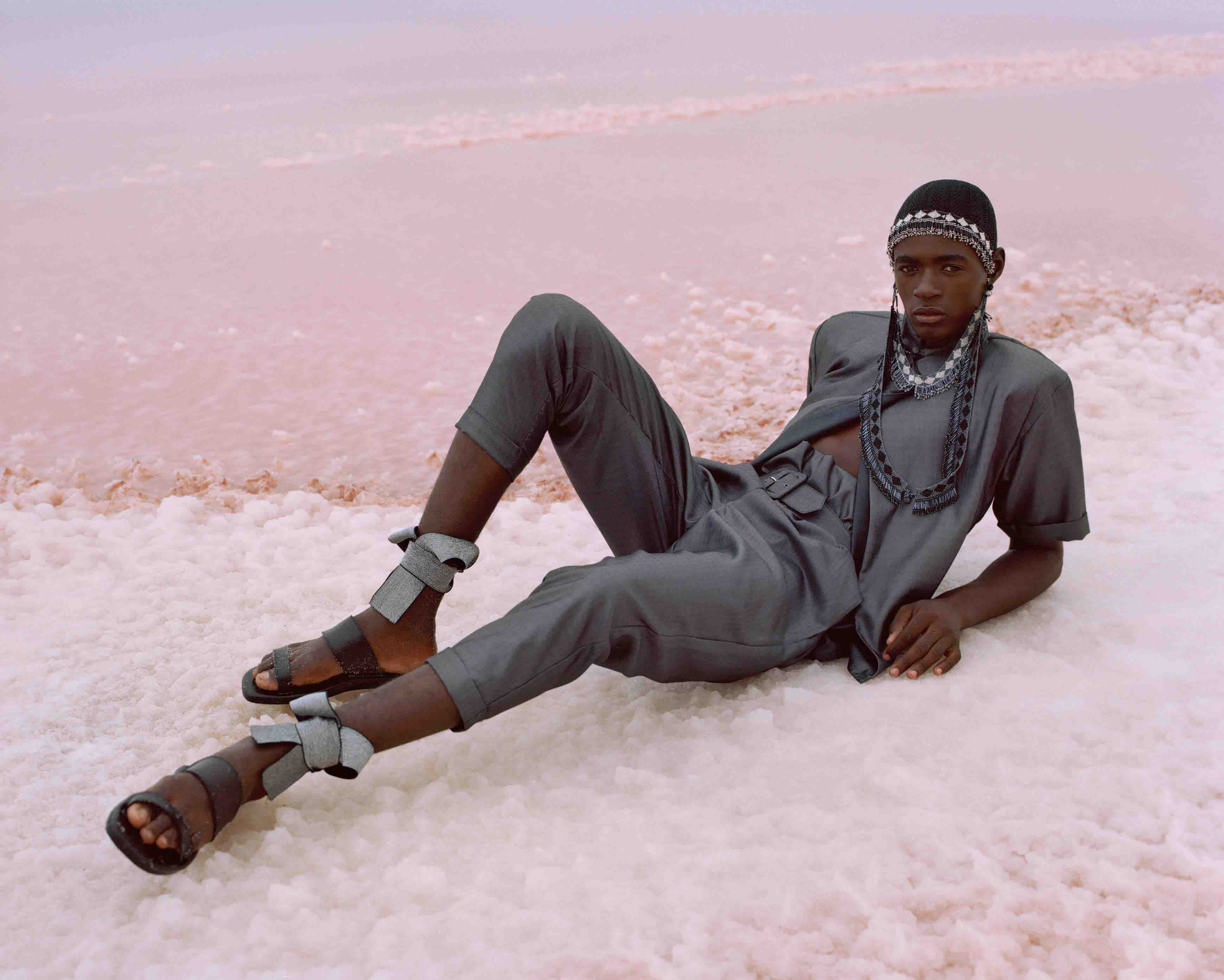
For South African designer Lukhanyo Mdingi, clothing is a meeting point between contemporary design, artisanal knowledge and a broader commitment to human connection.
You grew up in East London and later moved to Cape Town to study fashion design. What did that transition make possible for you?
Growing up in East London gave me a strong sense of place, while moving to Cape Town introduced me to a wider creative environment and gave me the opportunity to study fashion formally. I graduated from the Cape Peninsula University of Technology in 2014, and that period helped me understand fashion as more than a visual interest. It became a discipline, a daily practice and a possible way of contributing to the world. After school, I wanted to create something that felt true, steady and powerful. Establishing my own label in 2015 gave me the space to continue that exploration on my own terms.
How would you describe the central philosophy of Lukhanyo Mdingi?
The label is grounded in considered and sincere design. We are interested in the essentials, but that does not mean simplicity without thought. It means refining each element and giving attention to fabric, construction, finish and proportion. We aim to create pieces that feel strong, useful and enduring. Fabric is often the starting point because it carries so much information through its texture, weight and behaviour. The clothes are intended to hold a sense of ease and sensuality while remaining rooted in a clear design language. That combination of refinement, discretion and emotional presence has remained important to the label from the beginning.
Craft and collaboration appear to be fundamental to your practice. What do they bring to the design process?
Collaboration brings knowledge that cannot be developed in isolation. When we work with artisans, we are engaging with techniques, histories and forms of intelligence that have been built over time. Our intention is to create a meeting point between artisanal craft and modern design, allowing both to remain visible. The hand of the maker gives a piece a particular honesty. It also asks us to work with patience and care because the process cannot always be accelerated. Collaboration is therefore not an added feature of the work. It is part of how we research, how we make decisions and how we understand the value of the final garment.

How do you approach materials and textile development?
We begin with the material and consider what it can communicate. Textiles such as kid mohair, merino wool, linen and silk have their own qualities, and those qualities shape the garment. We pay close attention to texture, structure and finishing because those details determine how a piece feels and how it will live with the wearer. Textile development can also reveal the limits and possibilities of the production environment. Earlier in my career, I became very aware of the difficulty of accessing certain machinery, materials and technical knowledge in South Africa. That reality has encouraged a more resourceful and deliberate approach to making.
Your work has often been described as both contemporary and connected to African craft traditions. How do you navigate that relationship?
I see it as a relationship that can remain open and evolving. The work is informed by where I come from, by the people and practices that surround me, and by the wider histories of the continent. At the same time, I am not interested in treating heritage as a fixed visual category. Working with artisans and communities allows those histories to remain active rather than simply being referenced. There is a responsibility in bringing craft into a luxury context. The aim is to create a bridge between heritage and contemporary design while recognising the knowledge and labour that make the work possible.
Travel and cultural exchange have also influenced your collections. What kinds of encounters stay with you?
Encounters that reveal how people use clothing in daily life tend to stay with me. During a visit to Burkina Faso, I spent time with a weaving and artisanal dyeing community whose work had already been connected to the label. The experience made me more attentive to the richness of the textile traditions and to the way clothing can hold sport, history, ceremony and everyday life at once. I was also drawn to the energy of the people and the way different references existed together naturally. Those observations later informed my research, including a collection influenced by the portraiture of Seydou Keïta and the styling of West African dress.

You have presented work internationally, including in New York and Paris. What does that visibility mean to you?
International presentation creates an opportunity for the work to enter new conversations, but the most important thing is that the work remains connected to its foundation. Showing in New York or Paris can bring attention, yet visibility only has value if it supports a longer trajectory. For me, the goal is not simply to be present in a fashion capital. It is to communicate the integrity of the label and to make space for South African design within a broader global context. These moments also reflect the trust and effort of many people who have contributed to the work. They are collective achievements rather than individual ones.
What have awards such as the LVMH Karl Lagerfeld Prize and the AMIRI Prize enabled you to consider?
Recognition creates room to continue developing the work with greater clarity. The LVMH Karl Lagerfeld Prize in 2021 and the AMIRI Prize in 2023 were important acknowledgements, but they also brought new relationships, resources and opportunities for exchange. Awards can help a label reach people who may not have encountered it otherwise. They also create a moment to reflect on the direction of the practice and the responsibility that comes with greater attention. I remain most interested in using those opportunities to strengthen the work, support collaboration and continue building something that is both locally grounded and able to communicate internationally.
You have spoken about using the label as a platform of service. What does that mean in practice?
It means seeing design as a way to engage with people, not simply as a way to produce objects. The label can create opportunities to work with others, to learn, to teach and to be taught. That exchange is central to how I understand growth. Service can take different forms, from collaboration with artisans and organisations to mentorship and education. It also means remaining conscious of the people involved at every stage of the process. I believe human beings want to be seen and heard, and creative work can help create spaces for that recognition. If the label can teach or inspire, it has a purpose beyond clothing.
As you look ahead, what kind of future are you building for Lukhanyo Mdingi?
I am focused on continuous and organic growth. That requires patience, consistency and a willingness to remain attentive to the work. I want the label to develop without losing the values that shaped it: considered design, strong materials, collaboration, community and a sense of responsibility. There is also a wider need to build sustainable fashion businesses in South Africa, with stronger production systems and more opportunities for locally made products. I hope to contribute to that larger development while continuing to refine the language of the label. The future should allow the work to become more expansive without becoming less sincere.