Profile
Rachel Scott on Craft, Context, and the Expansive Language of Diotima
Hannah R. Harris / Aug 8, 2026

For British-Nigerian designer and multidisciplinary artist Tolu Coker, fashion is a space where craftsmanship, cultural memory and social responsibility can exist together.
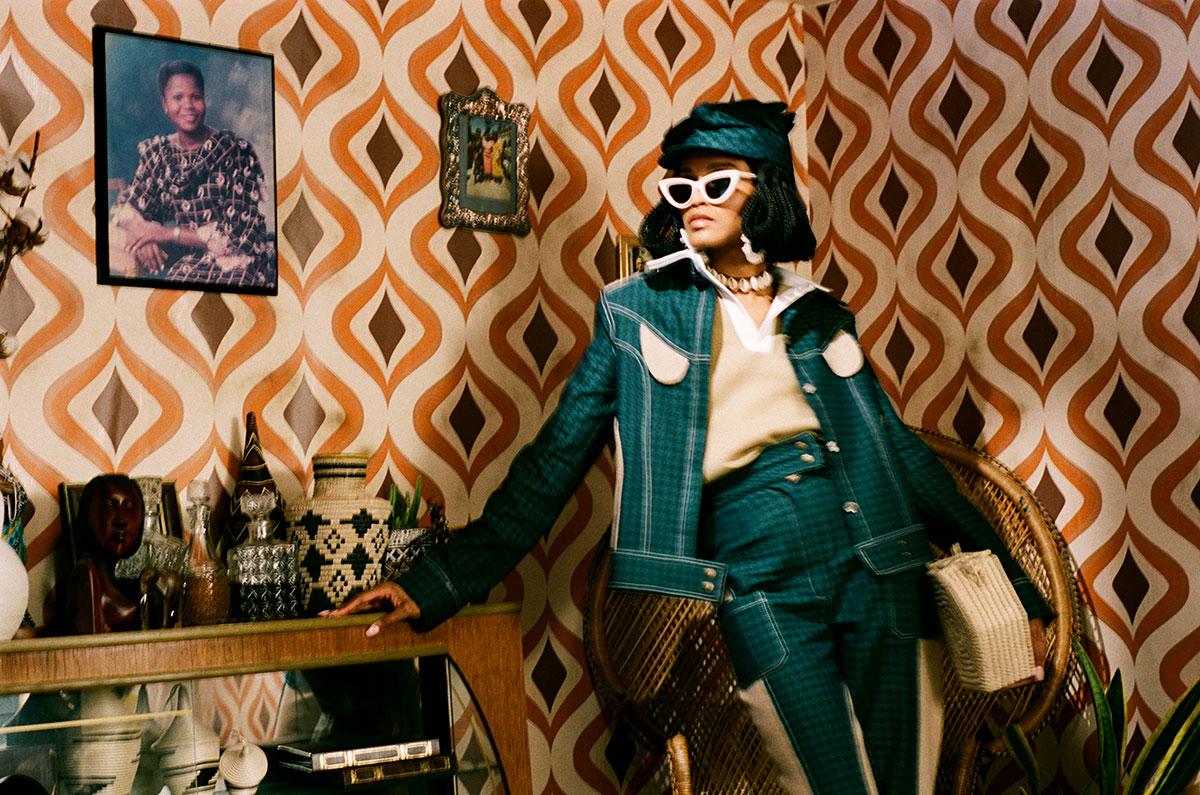
For British-Nigerian designer and multidisciplinary artist Tolu Coker, fashion is a space where craftsmanship, cultural memory and social responsibility can exist together.
Your practice moves between fashion, textiles, illustration, film and education. How do these different forms work together?
I have always understood clothing as one part of a much wider creative practice. Sometimes I am developing garments or textiles, and at other times I am illustrating, curating, teaching, consulting or working on film. Each form gives me a different way to approach a story. Fashion can communicate through shape, texture and the body, while film or photography can offer a more direct sense of time, place and memory. I am interested in allowing an idea to determine its own form rather than forcing every thought into a collection. The different disciplines also create opportunities to work with people from different creative communities, which is central to how I develop my work.
The brand is built around community, craftsmanship and culture. What do those principles mean in practice?
Community means recognising that fashion does not happen in isolation. It is shaped by the people who make, wear, document and respond to the work. Craftsmanship is about care, skill and the understanding that a garment should have a life beyond one season. Culture is the context that gives the work meaning, whether that comes through family histories, migration, local communities or shared experiences. These principles are connected. When you take time to understand a culture and the people within it, that should affect the way you research, collaborate, make and give back. I want the brand to be a creative platform that encourages those relationships instead of treating clothing as a separate, purely commercial object.

How has your British-Nigerian heritage shaped the way you design?
Heritage is present in my work through the lens I look through. It is not always something I set out to insert deliberately. The cultural, social, spiritual and environmental influences that shape a person are already present when they begin to make something. My British and Nigerian identities, and the movement between those worlds, have made me attentive to hybridity, belonging and the ways communities carry history. I am also interested in how culture changes when people migrate and build new homes. That can be seen in the way I approach colour, tailoring, textile treatments and storytelling. The work often comes from trying to understand how personal and collective histories continue to shape the present.
Your collections often begin with real people and lived histories. What does your research process look like?
I spend a great deal of time talking to people and researching before I begin designing. The process usually starts with listening and allowing myself to learn rather than deciding too quickly what the work should become. I look at photographs, family archives, social histories and the details of everyday life. My late father was a photographer and journalist, and his archives have been an important source of material and reflection. I am drawn to real stories rather than idealised images of people. Once I have spent time with the subject, I begin to translate those findings into clothing, textiles, images or film. The outcome changes according to what best serves the story.
Your SS25 collection, Olapeju, centred on your mother and the experiences of migrant communities in London. What did you want the collection to preserve?
Olapeju was a way of looking at migration through the perspective of the matriarch. I was working with my late father’s photographs of Nigerians who came to England in the 1960s and 1970s, as well as the communities they helped create. My family has a long connection to North Kensington, Ladbroke Grove and Portobello, areas shaped by Irish, Caribbean, Black, Portuguese, Algerian and other communities. I wanted to think about wealth as something larger than monetary value. It can be found in cultural memory, mutual support and the preservation of stories. The collection looked at how those forms of wealth are carried through families and expressed through dress.

Sustainability is often described as a material choice, but you have spoken about it as a way of working. How does that approach affect the clothes?
Sustainability begins before the design is finished. It affects how materials are sourced, how patterns are cut, how garments are reinforced and how a piece can remain useful over time. I think about whether something can be worn across seasons, layered, dressed up or dressed down, and incorporated into an existing wardrobe. In tailoring, panelling allows us to work around defective or end-of-life materials and use more of what is available. Offcuts from one design can also become part of another. The aim is to maximise the materials already in the studio while creating garments with enough strength, versatility and emotional connection to be worn repeatedly and eventually passed on.
How do you balance the expressive qualities of your work with the need for clothes to be lived in?
I am interested in clothes that have a strong point of view but remain connected to everyday life. Tailoring, construction and finish are important because they give a garment longevity, but I also want the wearer to have room to interpret it. A piece should be able to move through different settings and be styled in more than one way. That is part of making a wardrobe rather than simply producing an image for a season. The expressive elements can come through a print, a proportion, a textile technique or an unexpected combination. They do not have to prevent a garment from becoming familiar and useful. For me, the most successful pieces can hold both qualities.
What has collaboration made possible within your practice?
Collaboration allows a project to become more expansive than it could be through one person’s perspective. I have worked with members of my family and with photographers, directors, artists, institutions and charities. Those relationships influence the way a story is understood and the way it reaches an audience. For example, working with my brother Ade Coker and director Adeleke Adesina on SORO SOKE: Diaspora ’68 created a visual language that extended beyond the clothing. Collaboration also brings accountability. When a project is connected to a community or a social issue, other voices can challenge assumptions and make the work more truthful. It becomes an exchange rather than a one-way act of authorship.
You have described your creative process as vulnerable. What does that vulnerability allow you to do?
It gives me permission to remain open for longer. I try to create space to feel, discover and learn before I start making decisions. That can be uncomfortable because it means not knowing immediately what the final outcome will be. However, it helps me respond to the subject rather than imposing a fixed idea onto it. Empathy is important in that process. I want to understand the environments and experiences that inform the work, and I know that requires patience and humility. The result may become clothing, film, an illustration or something else entirely. Vulnerability allows the work to stay connected to the people and histories that made it necessary.
What have you learned about building an independent fashion brand?
I have learned that creative ambition has to exist alongside a detailed understanding of the business. An independent studio has to be resourceful, and the reality is that a small team is working across design, production, finance, communications and logistics. Financing is one of the biggest challenges for emerging brands, particularly when the wider industry operates at a pace set by much larger companies. It is also important to recognise that several collections a year are not always compatible with sustainability or the resources available to a young studio. I am focused on growing in a way that allows the brand to have more visibility and impact without losing the care, consistency and purpose at its centre.