Profile
David and Sybil Yurman: A Life in Art, Made Wearable
Hannah R. Harris / Nov 20, 2025

For Sophie Buhai, jewelry sits between adornment and sculpture, bringing modernist forms, careful materials, and Los Angeles craftsmanship into the rhythm of daily life.
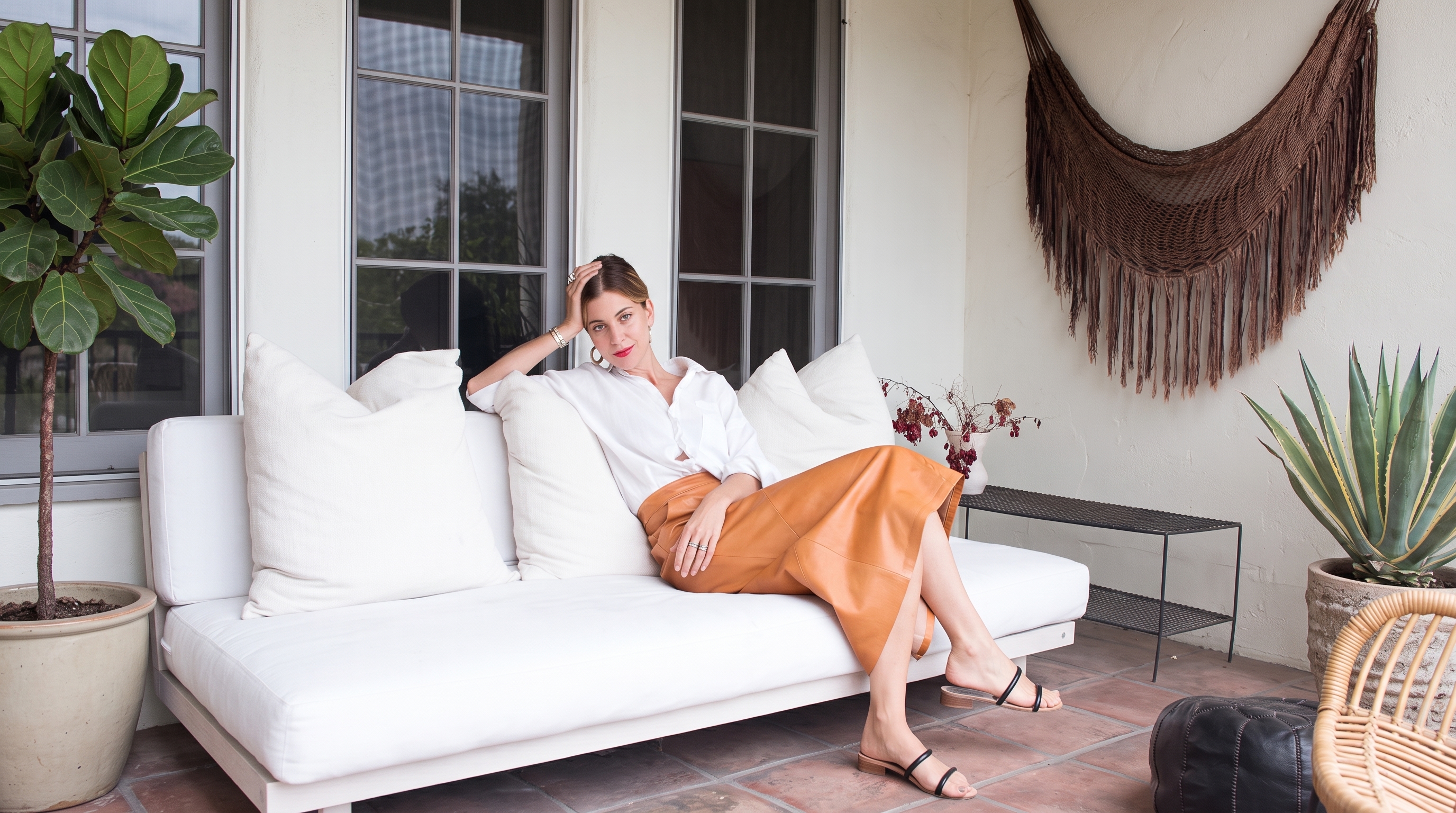
Sophie Buhai studied design at Parsons and spent a decade designing clothing for Vena Cava before moving into jewelry after the label closed. Working from the Hollywood Hills with artisans in downtown Los Angeles, she builds modernist silver and gold pieces that draw on family collections of Scandinavian and Mexican silver. Her work moves freely between jewelry, sculpture, and functional objects for the home.
You began your career in fashion with Vena Cava before turning to jewelry. What did that transition open up for you?
I studied design at Parsons and spent ten years designing clothing, so moving into jewelry was not a complete departure. It was another way of thinking through form, proportion, material, and the relationship between an object and the body. After Vena Cava closed, I took some time away and went on a residency in Italy. I brought materials with me and began making jewelry naturally, without a very fixed plan. That process helped me understand that jewelry gave me the kind of focus I was looking for. It allowed me to work more closely with objects and to develop ideas in a quieter, more concentrated way.

Your family had a strong relationship with jewelry, even though no one in the family made it. How did that influence your eye?
My grandmother, mother, and great-aunts all collected jewelry, but they were drawn to very different things. My grandmother loved Scandinavian silver and American silver from the middle of the twentieth century. My great-aunts were interested in antique art jewelry, and my mother collected Mexican silver. What they shared was the belief that jewelry did not need to depend on expensive stones. It could be about imagination, materials, and a strong idea. That stayed with me. I became interested in jewelry as a form of design, rather than as a hierarchy of preciousness.
The brand is often described through modernism, minimalism, and surrealism. How do those references become practical design decisions?
I am interested in objects that have a clear visual point of view, but I also want them to feel natural in a person's life. Proportion and scale are important because a piece has to work on the body as well as exist as an object on its own. I may begin with a very simple form, such as an egg, a sphere, or a curve, and then push it slightly until it becomes unfamiliar. That is where the surrealist element can enter. The goal is not to decorate a basic shape, but to give it enough tension that it holds your attention over time.
You have said that you see yourself as a designer more than a traditional jeweler. What does that distinction mean in your practice?
It reflects the way I work. I was trained as a designer, and I begin with research, drawings, references, and a larger concept. I do not traditionally fabricate every piece myself. Instead, I work closely with skilled artisans, including wax carvers and silversmiths, to develop the form. The process is collaborative and involves a great deal of back and forth. I may make a drawing, see it translated into wax, then adjust the proportions several times. That exchange is essential. It allows the original idea to become something more precise and more resolved than it was on paper.

Could you describe the path from an initial idea to a finished Sophie Buhai piece?
I usually begin in a library or through research, looking at books and developing a visual direction. From there I make reference boards, establish a theme, and begin sketching. The sketches lead to wax prototypes, which are revised repeatedly. Sometimes a design arrives very quickly and feels almost accidental. Other pieces remain unresolved for a long time and require a great deal of attention before the proportions feel right. Once the form is established, I work with our artisans to determine how it should be made. The final result depends on both the original concept and the intelligence of the people making it.

Silver was central to the beginning of the brand. What continues to draw you to it?
I have always loved modernist silver, partly because I grew up seeing it worn by my mother and grandmother. I also felt that it had become disconnected from a younger generation, even though it has such a strong history and presence. Silver has weight, clarity, and a beautiful relationship to light. It can feel architectural without becoming formal. We began with contemporary interpretations of that tradition, then gradually introduced pearls, onyx, lapis, other semi-precious materials, and eventually fine jewelry in eighteen karat gold. The material changes, but the interest in form remains the same.
The collection moves between jewelry, accessories, and functional objects. Why is that boundary important to you?
I like the idea that a piece can operate in more than one way. Jewelry can be worn, but it can also have the presence of a small sculpture. A bangle can sit on a vanity when it is not on the wrist. A mirror, a vase, or a lighter case can be useful while still carrying a strong visual idea. I am interested in the space between jewelry, object, and sculpture because those categories are not always separate in real life. We live with objects, touch them, and assign meaning to them. That makes the design of everyday things feel just as important as the design of something purely decorative.
Many of the pieces are designed to be worn every day and passed down. How do you think about longevity while designing?
I want the pieces to feel relevant beyond a particular season or moment. That does not mean they have to be plain. A strong shape can be unusual and still become part of someone's daily life. I am looking for objects that improve through familiarity and wear, rather than losing their meaning as trends change. That is also why we pay attention to materials and construction. We use recycled and responsibly sourced silver and gold, and many pieces are made to order to reduce waste. The intention is to make fewer things, with enough quality and character that they can remain in circulation for a long time.
Local production is an important part of the brand. What does working in Los Angeles make possible?
The pieces are designed in the Hollywood Hills and made primarily by artisans in downtown Los Angeles. Being close to the people who produce the work allows for a very direct conversation. We can look at a prototype together, adjust a detail, and test the result without separating design from production. The artisans we work with have deep knowledge of traditional handcraft techniques, and their experience affects the final objects in meaningful ways. Local production also helps us reduce unnecessary movement and support the community around the studio. When a particular technique requires another workshop, we work with responsible partners, but our preference is to produce locally whenever possible.
What would you encourage a young designer to protect while developing an independent point of view?
I would encourage them to spend time with books, museums, and the physical world, and to develop a perspective that belongs to them. It is important to research widely, but also to understand what keeps returning in your own work. Once you recognize that, you can build a distinct world around it. Consistency matters, not as repetition, but as a commitment to exploring the same questions from different directions. I also think it is useful to stay close to the making process, even when you are collaborating with artisans. The more clearly you understand the relationship between an idea, a material, and a method, the more specific the work can become.