Profile
David and Sybil Yurman: A Life in Art, Made Wearable
Hannah R. Harris / Nov 20, 2025

For Alexia Connellan, rare gemstones, classical architecture, Jamaican heritage, and responsible making come together in one-of-a-kind jewels designed as wearable works of art.
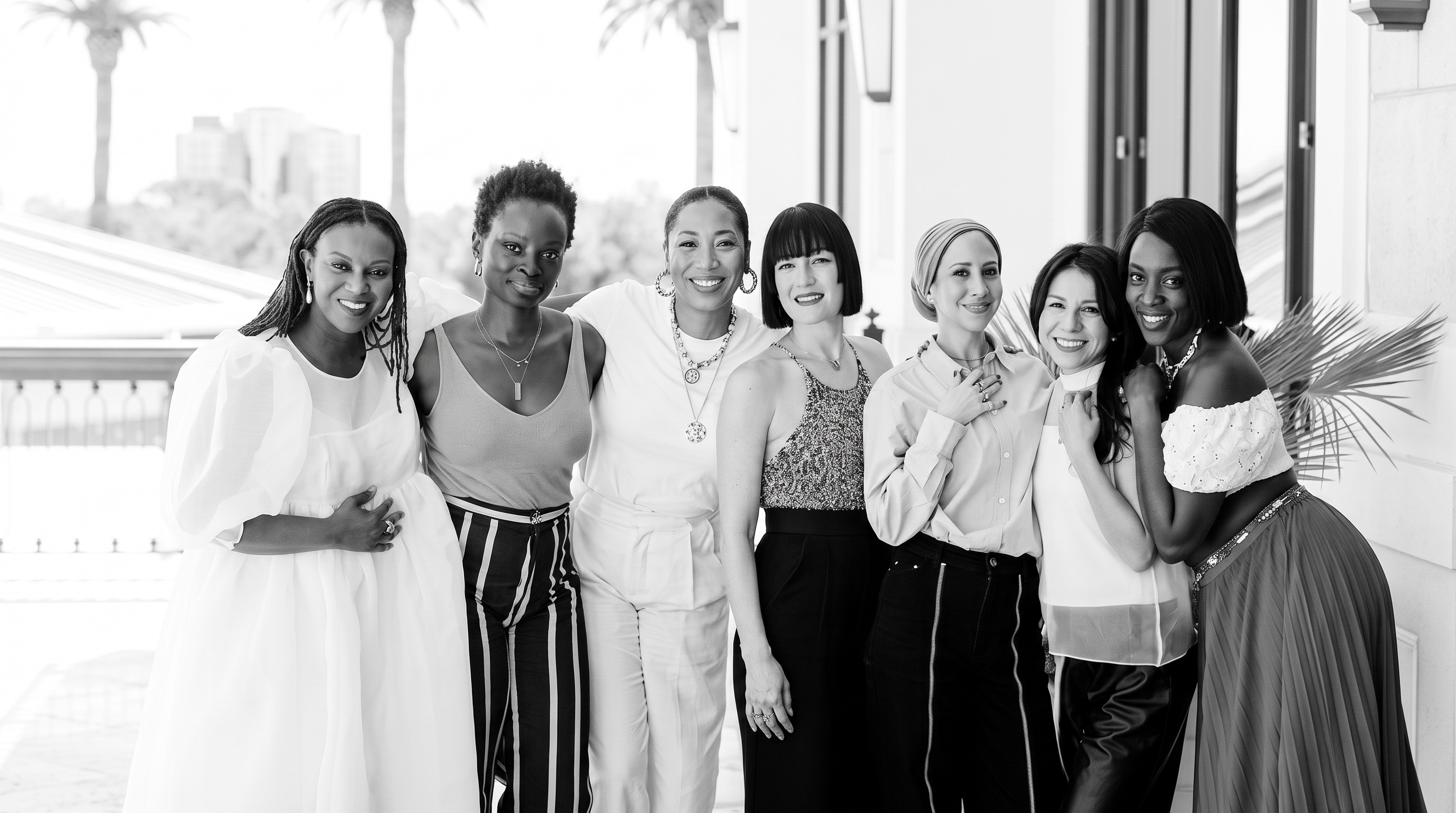
Alexia Connellan trained in art history and sculpture at Columbia University and the School of Visual Arts, then studied jewelry design at the Fashion Institute of Technology. Her one-of-a-kind pieces draw on Regency and Georgian architecture, her Jamaican upbringing, and gemstones sourced from artisanal and small-scale miners.
Your practice brings together art history, sculpture, gemology, and jewelry design. How did those disciplines find their way into a single practice?
I began with a strong interest in both art and science. At Columbia University, I initially studied pre-law, but I realized that I was much more drawn to the visual arts, so I shifted my focus to Art History and Visual Arts. After graduating, I continued studying sculpture at the School of Visual Arts, and later studied jewelry design at the Fashion Institute of Technology. Alongside that, I worked in commercial photography and web design. Jewelry became the place where these different interests could meet. It combines visual composition, three-dimensional form, materials, construction, and the scientific understanding required to assess gemstones.
You have described your work as a contemporary and colorful interpretation of antique and classical jewelry. What continues to draw you to historical forms?
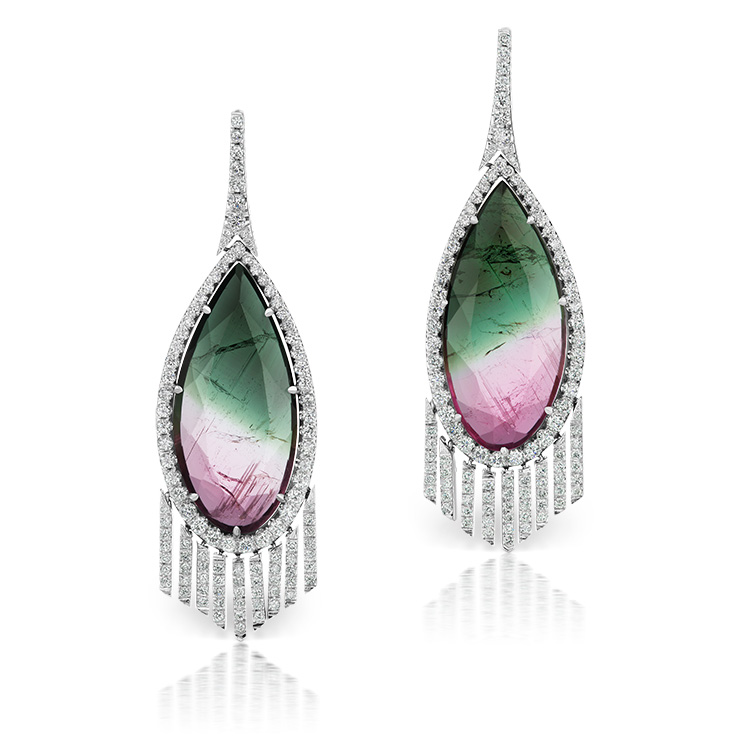
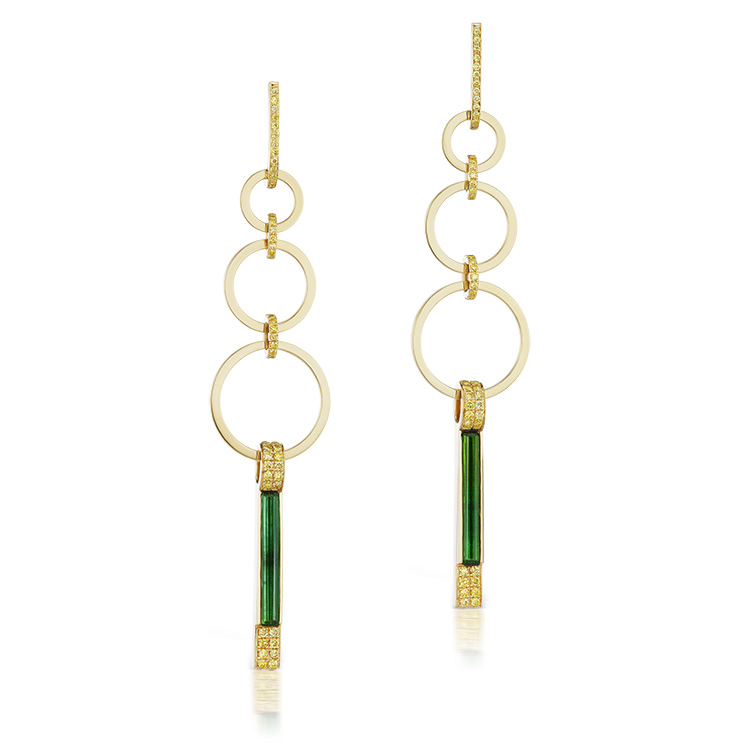
I am drawn to the way historical design gives a piece a sense of structure and identity. I look at Regency and Georgian architecture, portraits, textiles, and decorative details from earlier periods. I am interested in proportion, movement, ornament, and the way an object can feel elegant without becoming static. At the same time, my approach to color is much brighter and more intense. I love tropical, fluorescent, and highly saturated colors, so I bring those into forms that may have a more classical foundation. That contrast is central to the character of the work.
How does your Jamaican background influence the jewelry?
Jamaica has a strong influence on the way I see color, architecture, and scale. I was born there, and the Georgian buildings in the part of Jamaica where I grew up have stayed with me. Their original architectural language came from Britain, but the buildings were constructed and preserved by Jamaicans, and they developed a distinct local character. They often have brighter colors, larger proportions, and more expressive elements than Georgian architecture elsewhere. I may begin with a historical idea, but I tend to interpret it through that more vivid Jamaican sensibility.

Gemstones appear to be the starting point for many of your designs. What do you look for when you encounter a stone?
I look for personality. A gemstone can have an unusual color, an unexpected internal structure, a particular shape, or a quality of light that makes it unlike anything else. I began collecting gemstones as a hobby long before I became a jewelry designer, and that developed my eye over time. I still enjoy researching new discoveries and examining stones closely. I often draw a design by hand and then choose the gem that can carry it, but the process can also work in reverse. Sometimes the stone is so compelling that it creates the direction for the entire piece.
Your jewels are often one of a kind. What does that allow you to do as a designer?
Working with one-of-a-kind stones means that each design can respond to the specific character of the material. I am not trying to make every piece identical or force a stone into a predetermined formula. Scale, proportion, movement, and wearability all have to be considered, but the gemstone remains an important part of the conversation. A unique stone can change the balance of a design or suggest a more sculptural approach. The result is a piece that has its own identity. It can function as jewelry, but it also has the qualities of a small, wearable sculpture.

Responsible sourcing is an important part of your practice. How do you approach the relationship between beauty and origin?
The origin of a material matters because jewelry does not exist separately from the communities and environments involved in making it. I have seen the damage that irresponsible mining can leave behind, including in Jamaica, where mining is a significant activity. I work with ethically sourced colored gemstones from artisanal and small-scale miners whenever possible, and I use recycled, post-consumer diamond melee when it is appropriate. I also look for old stock that has been sitting with cutters for many years. For metals, I use recycled gold and work with platinum suppliers who can document conflict-free sources. These decisions are part of the design, not an afterthought.
What have you learned from working closely with craftspeople and makers?
The quality of a jewel depends on the skill and care of the people who make it. My work is produced with jewelers who bring extraordinary technical knowledge to the process, and many of them, like me, are immigrants or members of minority communities. That has been meaningful to me, both personally and professionally. Jewelry is often discussed as though the designer is the entire story, but the finished piece reflects many hands and many forms of expertise. The design has to communicate clearly, and the maker has to interpret it with precision. That relationship is essential to the work.
Your pieces combine bold color with a strong sense of refinement. How do you maintain that balance?
I think the balance comes from structure. Color can be exuberant, but the design still needs proportion and intention. I may work with an intense tourmaline, a glowing garnet, an emerald, a spinel, or a pearl, but the setting, silhouette, and movement have to give the stone a clear place within the piece. My interest in classical architecture helps me think about rhythm and balance, while my attraction to tropical color keeps the work lively. I want the jewelry to feel sophisticated without losing its sense of joy.
You have spoken about following your instincts rather than conforming to a predetermined career path. How does that principle affect the way you work today?
There was a period when I felt I was expected to follow a more conventional and secure professional direction. Over time, I realized that I was more successful when I listened to my own instincts. The path into jewelry was not completely straightforward. I moved through different studies and careers before the practice began to take shape. That experience taught me to remain open to changes in direction and to keep learning. Jewelry requires both discipline and curiosity, so I try to keep developing intellectually and artistically rather than treating the work as a fixed formula.
What do you hope someone feels when they wear one of your jewels?
I hope they feel a sense of connection to the piece. A jewel can hold the history of a material, the influence of a place, the work of the people who made it, and the character of the person who wears it. I want the pieces to bring color and pleasure, but also to reward attention. There should be something to discover in the gemstone, the construction, or the reference behind the design. The best jewelry becomes part of a person's life while retaining its own presence. It can be intimate and expressive at the same time.