

Profile
Rachel Scott on Craft, Context, and the Expansive Language of Diotima
Hannah R. Harris / Aug 8, 2026

During his five-year chapter at Alaïa, Pieter Mulier approached the house through its founder’s devotion to the body, its exceptional atelier, and a belief that beauty should lead the creative process.
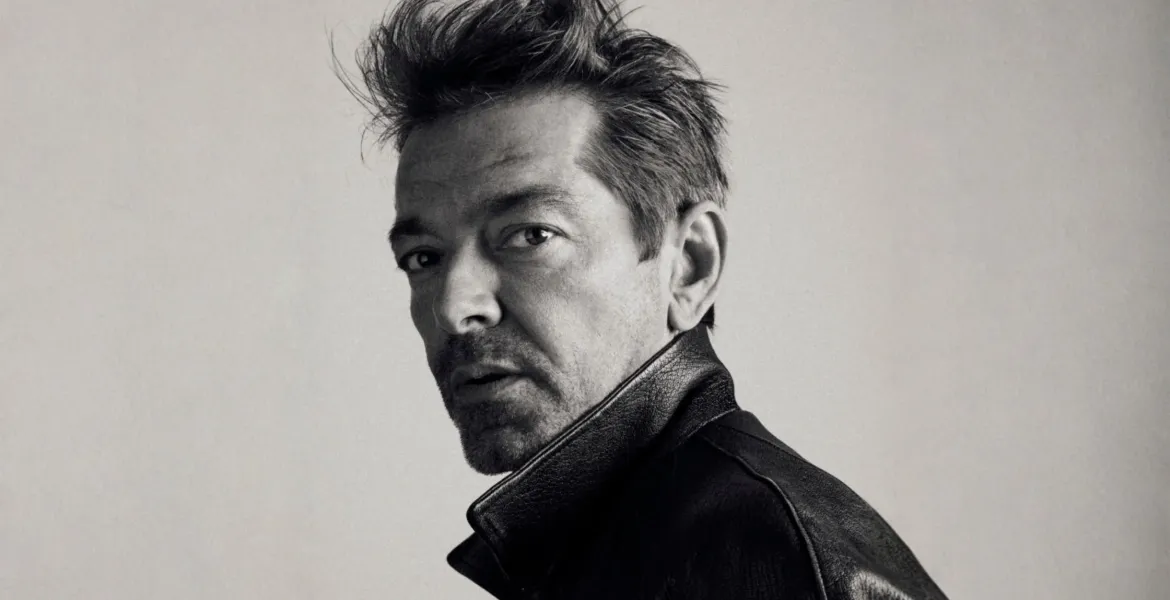
During his five-year chapter at Alaïa, Pieter Mulier approached the house through its founder’s devotion to the body, its exceptional atelier, and a belief that beauty should lead the creative process.
You came to Alaïa after years of working closely with Raf Simons and holding senior roles at Jil Sander, Dior, and Calvin Klein. What drew you to this house?
Alaïa occupied a very particular place in my imagination. I had known the clothes through images long before I had any relationship with the house itself, and they represented a kind of ideal fashion world. The work was deeply connected to the body, but it was also constructed with extraordinary intelligence. There was no separation between the idea and the making of the garment. I was drawn to the possibility of working within a house where the clothes could again be the central subject. It felt like a return to a very pure form of fashion, one grounded in craft, proportion, and emotion.
How did you approach the responsibility of continuing Azzedine Alaïa’s work?
The first responsibility was to listen. I spent a great deal of time with the atelier, the archives, and the people who had worked with Azzedine for many years. I did not want to treat the archive as a collection of objects to be reproduced. I wanted to understand the principles behind the work, including the way he approached the body, the precision of his pattern cutting, and the importance he gave to the individual woman wearing the clothes. The house had to remain recognisable, but it also had to live in the present. Continuity is not repetition. It is understanding what must remain alive.
What did the atelier teach you about Alaïa?
The atelier made clear that Alaïa is not an abstract idea. It exists through specific knowledge held by specific people. The technicians and dressmakers understand how a fabric behaves, how a line should move around the body, and when a garment is finished. That knowledge cannot be replaced by an image or a concept. I worked closely with the team, look by look, through fittings and adjustments. The process is very direct. You see something on the body, you react to it, and you make a decision. It keeps the work honest because every intention has to survive contact with the garment.
You have spoken about placing beauty before fashion. What does that mean in practice?
It means beginning with an emotional response rather than with a commercial calculation or a seasonal formula. When we develop a piece, I want to know whether it creates a feeling when it appears on the body. Does the proportion move you? Does the silhouette create a sense of presence? If the answer is no, then the garment is not ready, regardless of how interesting the idea may be. Beauty is not decoration. It is a form of conviction. At Alaïa, it has to be felt in the cut, the material, and the way the woman moves.
The body has always been central to Alaïa. How do you work with that legacy today?
The body is the starting point, but it should never become a rigid template. Azzedine understood that clothing could reveal the body while also giving the woman strength and freedom. I am interested in the tension between control and movement, between a garment that follows the body and one that creates a new volume around it. Fittings are essential because the body tells you what the design is really doing. A silhouette may look convincing on a drawing or a mannequin, but it becomes something else when a woman walks, sits, turns, or simply stands in it.
Your work often combines strict construction with a sense of sensuality. Where does that balance come from?
I think sensuality becomes stronger when it is supported by structure. A garment can be revealing, but it still needs architecture. The cut must understand where the body is and how the material will respond to it. My background in architecture has influenced the way I think about proportion and volume, although fashion remains an embodied discipline. You cannot understand a dress only from the outside. You have to consider the inside, the construction, and the movement. The most powerful pieces often have a certain restraint. They do not need to explain themselves because the form already has authority.
How do you use the Alaïa archive without allowing it to dictate the future?
I look for an idea rather than a finished garment. A historical piece can show you a way of placing a seam, shaping a shoulder, or creating tension around the waist, but copying the object would remove the reason it mattered in the first place. I prefer to study the archive, then put it aside and work with the present. The question is always how an Alaïa principle can become relevant now. A reference becomes useful only when it changes through the new material, the new body, and the new context.
In 2024, you presented Alaïa at the Guggenheim Museum in New York. What did the building offer the collection?
The Guggenheim gave the collection a physical path. Frank Lloyd Wright’s spiral creates a continuous movement, so the clothes could be seen in relation to architecture rather than on a conventional runway. The connection was especially meaningful because New York has played an important role in Alaïa’s history. I was also thinking about American designers such as Claire McCardell and Halston, whose work understood the relationship between ease, movement, and the modern woman. The building allowed those ideas to meet. The garments could move through space, and the space became part of the composition.
Alaïa has a distinctive relationship with time and the fashion calendar. How do you think about pace?
The house has always protected the time required to make the work properly. That does not mean working slowly for its own sake. It means allowing the garment to reach the point where the idea and the execution agree. Fashion can become very noisy when every decision is made in response to a deadline, an image, or an expectation. At Alaïa, the atelier gives you another rhythm. You can return to a piece, change the proportion, and test it again. That patience is part of the house’s identity, and it is also a practical necessity when the work depends on such a high level of craft.
After your time at Alaïa, what do you hope remains from your work there?
I hope the house continues to trust its own language. Alaïa has a strong foundation in sculptural form, femininity, craft, and the direct relationship between the designer and the atelier. My work was to bring those principles into my own time, with my own questions and instincts. The most important thing is that the house remains open to evolution without losing its centre. A maison is not preserved by keeping it unchanged. It is preserved by continuing to make work with the seriousness, curiosity, and respect that gave it meaning in the first place.