Profile
Gucci Westman on the Art of Making Beauty Feel Like Yourself
Kayla M. Walker / Aug 8, 2026

The Musée International de la Parfumerie in Grasse opens Parfums d'Asie, Cultures olfactives traditionnelles de la Chine à l'Inde, on June 26, 2026, arguing that the story of scent has never been a French one alone.
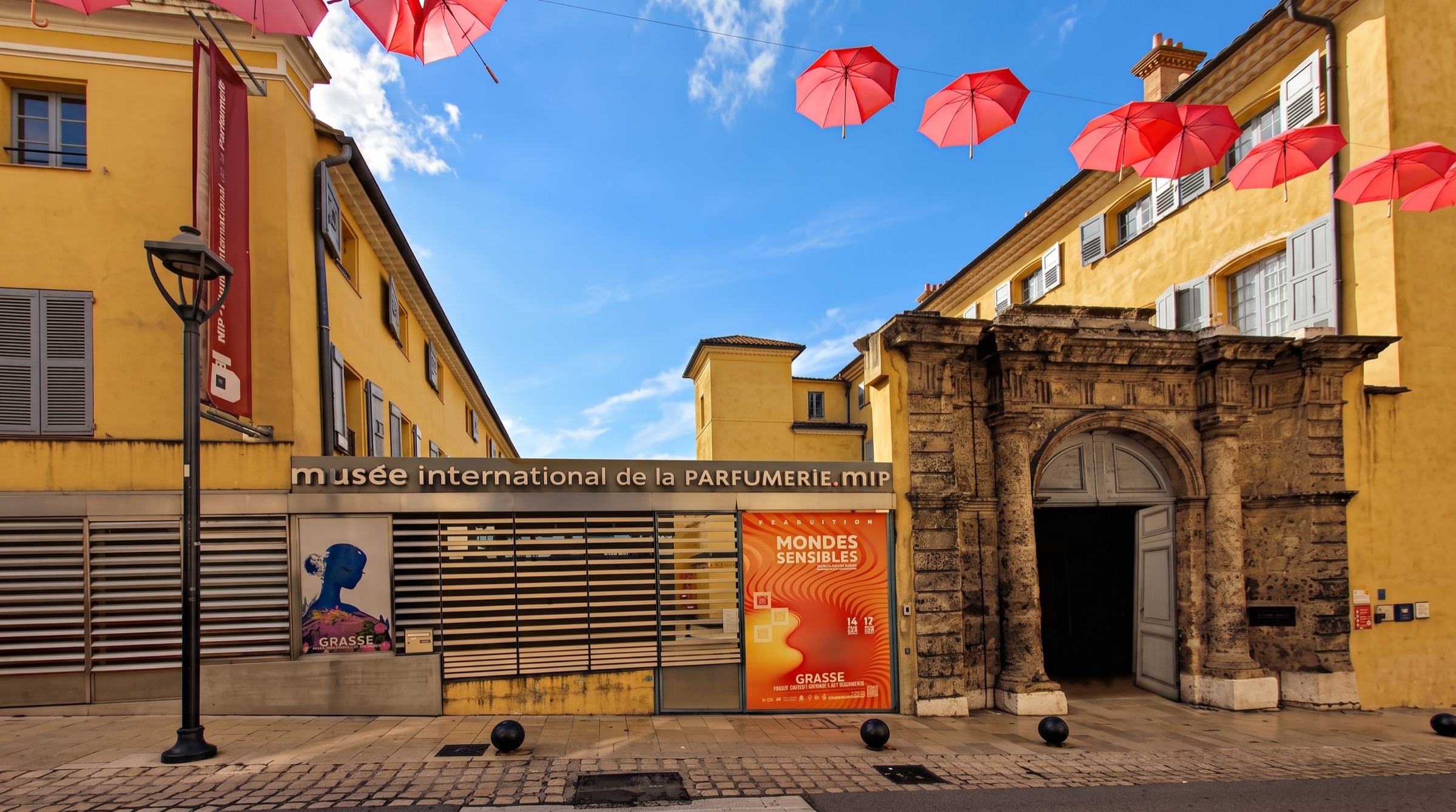
Grasse has told its own story for two centuries: hillside jasmine, the eighteenth-century tanners who turned to gloves and then to flowers, the birth of an industry that came to define what perfume means in the West. On June 26, 2026, the Musée International de la Parfumerie, at 2 boulevard du Jeu de Ballon in Grasse, opened an exhibition that sets that story next to a much older one. Parfums d'Asie, Cultures olfactives traditionnelles de la Chine à l'Inde runs through January 3, 2027, and it asks visitors to walk through incense, ritual oil and cosmetic powder from Japan, China and India before they ever reach the aisle devoted to Chanel.
The show, organized by the museums of Grasse under director and chief heritage curator Olivier Quiquempois, opened with a public reception on June 25 attended by Grasse mayor Jérôme Viaud. Its premise is unglamorous and specific: fragrance in the societies it surveys was rarely ornamental first. It was, in the museum's own framing, tied to ritual life, to medicine rooted in ancestral knowledge, to social rank, and to artistic practice, four functions the exhibition treats as inseparable rather than sequential. A visitor accustomed to thinking of scent history as a march toward the modern bottled fragrance will find that march interrupted by objects, reconstructed aromas and burners that predate it by centuries.
The exhibition's more pointed argument sits in its handling of the nineteenth and early twentieth centuries, the period when European fashion absorbed Japanese and Chinese motifs under the label of Japonisme and chinoiserie. The museum extends that familiar art-history narrative into perfumery specifically, tracking how Asian raw materials, aesthetics and ritual objects moved west and were folded into a French industry that later told its own founding story without much reference to where the appetite for those materials began. Sandalwood, musk, incense resins: the show places these alongside the European perfumer's palette not as exotic additions but as long-running participants in a global trade in scent, with commercial exchange as old as the objects on display.
That is a different claim than the usual museum line about cultural influence enriching a Western center. It suggests the center was never as self-contained as the industry's own mythology, heavy on Grasse's flower fields and the noses trained in them, has made it sound. Perfume history, told honestly, runs through Chinese incense culture and Indian attar production on terms those traditions set for themselves, not only as tributaries feeding a French finish line.
Grasse has reason to make this argument carefully rather than performatively. The Musée International de la Parfumerie is itself a product of the industry it now complicates, built by the same municipality whose flower fields anchor the local economy and whose houses, Fragonard, Molinard, Galimard, still draw the tourist trade the museum depends on. An exhibition that decenters the French narrative inside a French institution devoted to that narrative is, at minimum, a departure from the gift-shop version of Grasse's history that most visitors arrive expecting.
The museum's collection has always held Asian material: incense burners, cosmetic containers, ritual vessels acquired over decades of building out a genuinely international holding rather than a purely local one. What changes in 2026 is the decision to let that material organize an entire exhibition rather than sit as background texture behind the Grasse timeline. Reconstructed scents, built from the plant, mineral and animal materials the show catalogs, let visitors encounter these traditions through the nose rather than only through vitrine labels, a method the museum has increasingly relied on to make historical argument sensory rather than abstract.
The test of the exhibition will be whether it changes how visitors read the museum's permanent collection once they leave the temporary galleries. A show can gesture at global context without disturbing the origin story that pays the bills. Parfums d'Asie, running into January 2027 in the town that has spent two hundred years insisting perfume is a French invention, is betting that a fuller history is more interesting than a tidier one.