Profile
David and Sybil Yurman: A Life in Art, Made Wearable
Hannah R. Harris / Nov 20, 2025

From an art school education and years spent travelling among artisans, Monica Vinader built a jewellery brand rooted in expressive design, everyday wearability and a more transparent approach to making.
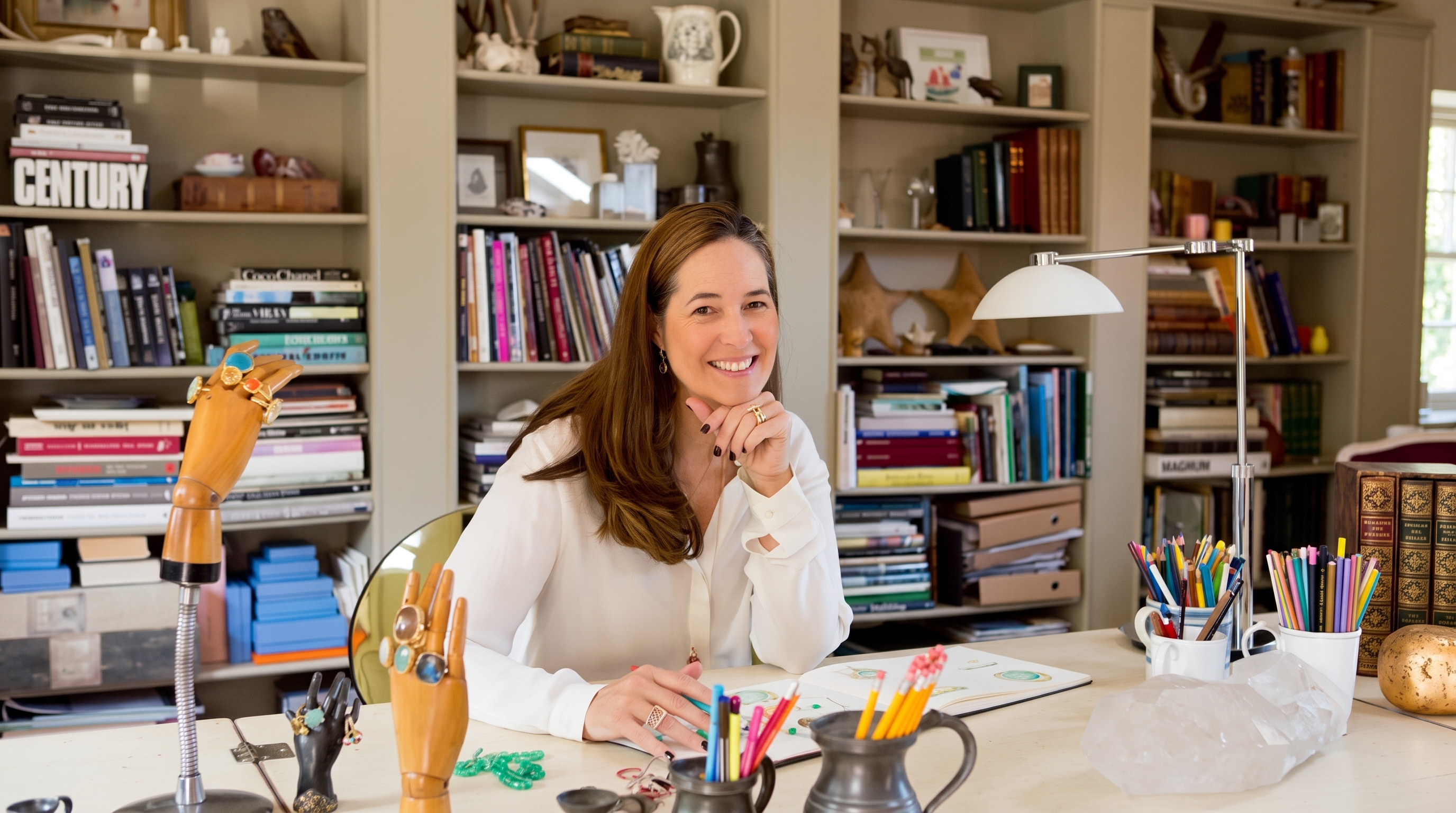
Monica Vinader studied fine art before founding her jewellery brand with her sister, drawing on years of travel through India, Patagonia and Mexico to build a design vocabulary rooted in landscape, artisanship and everyday wearability. The company has since built its identity around recycled materials, lifetime repairs, and a Product Passport that traces each piece's journey from design to packaging.
You studied fine art before moving into jewellery. What did that early training give you that still informs your work today?
Fine art taught me to look carefully and to think about form, proportion, texture and scale. Jewellery is very close to sculpture in that sense. It may be small, but it has to work from every angle and feel right on the body. I was always interested in the relationship between an object and the person living with it. That continues to shape the way I design. I am drawn to pieces that have a strong presence but are still easy to wear, because jewellery becomes more meaningful when it is part of someone's everyday life.

Before launching your own brand, you travelled through places including India, Patagonia and Mexico. How did those experiences influence your creative direction?
Travel gave me the opportunity to see materials and craftsmanship in a very direct way. I began building relationships with artisans, cutting gemstones and learning more about how pieces could be made. Those experiences also gave me a much broader visual vocabulary. I found inspiration in landscapes, architecture, antique objects and the colour of stones themselves. Mexico was particularly important to me, but I still take ideas from everywhere. A beach pebble, an old coin or a fragment of sculpture can all suggest a shape or a surface that eventually becomes part of a collection.
What gap in the jewellery market were you trying to address when you founded the brand?
I wanted to create pieces that sat between traditional fine jewellery and fashion jewellery. At the time, there was a very clear divide between highly valuable jewellery that was often reserved for special occasions and more disposable pieces. I wanted to make beautifully designed jewellery that people could buy for themselves and wear regularly. That meant paying close attention to design, craftsmanship and materials while keeping the pieces accessible enough to become part of everyday life. The intention was always to make jewellery with emotional and physical longevity.
The brand is known for jewellery that can be worn every day. What makes a piece endure beyond a single season?
It starts with a clear design idea and a strong sense of proportion. A piece needs to feel distinctive without depending on a passing trend. Quality is also essential, from the construction and finish to the way the piece feels when it is worn. I think jewellery becomes lasting when it can move between different parts of a person's life. It might mark an occasion, become part of a daily ritual or be passed on to someone else. Designing for that kind of relationship encourages us to be thoughtful about every detail.
How does a piece develop from an initial idea into a finished design?
We may begin with a drawing, a wax model or a physical object that has sparked an idea. The design then moves through digital modelling and three-dimensional printing so that we can assess its scale and presence. From there, a silver master is refined by hand. We look closely at the weight, the balance, the surface and the way the piece sits on the body. That process is collaborative, and the design often changes as we work through it. The final piece needs to have both a strong visual identity and a sense of ease.

Responsibility has been part of the brand's direction from the beginning. How has that commitment developed over time?
When my sister and I started the business, we wanted to build it with integrity and to make decisions we could stand behind. Over time, that principle has become more detailed and more demanding. We use recycled gold and sterling silver, recyclable packaging and reusable pouches, and we continue to examine how materials are sourced and how products are made. We also know that responsible business is not a finished achievement. It requires ongoing measurement, transparency and a willingness to acknowledge where more work is needed.
Why is transparency particularly important in jewellery?
Jewellery has historically involved many layers of production, and those layers have not always been visible to the customer. Without visibility, it is difficult to understand the environmental and social impact of a piece. Our Product Passport was created to make more of that journey accessible, from design and materials through to craftsmanship and packaging. Transparency is not only about sharing information. It also creates accountability within the business and encourages better conversations with suppliers, partners and customers.
The brand offers repairs and recycling. What does circularity mean in practical terms for jewellery?
Circularity begins with making pieces that are worth keeping and caring for. Repair is a very important part of that, because a damaged piece should not automatically become waste. We offer lifetime repairs and have a recycling scheme that accepts jewellery from other brands, allowing precious metals to remain in use. It is also about encouraging customers to think about the life of an object beyond the moment of purchase. Jewellery can be maintained, repaired, reused and eventually recycled rather than treated as disposable.
You have also supported projects focused on nature and regeneration. How does the natural world enter the life of the brand?
Nature has always been a personal source of inspiration, from the forms of stones and shells to the landscapes I encountered while travelling. Living on the Norfolk coast has made that connection even more immediate. Our work with Monica's Meadow reflects a wider interest in restoring biodiversity and understanding the relationship between materials, land and communities. It is important to look beyond the finished product and consider the places and people connected to its creation. That broader perspective is increasingly central to how we think about the business.

What do you hope someone feels when they wears a Monica Vinader piece?
I hope the piece feels personal. Jewellery can carry memory, intention and meaning, whether it marks a major moment or simply becomes part of someone's daily routine. I also want people to feel confident buying jewellery for themselves. It does not need to wait for a celebration or come from somebody else. The most rewarding part of the work is seeing how people make the pieces their own, combining them in ways we could not have predicted and giving them a life beyond the studio.