

Profile
Rachel Scott on Craft, Context, and the Expansive Language of Diotima
Hannah R. Harris / Aug 8, 2026

At Chanel, Matthieu Blazy is bringing a practice rooted in transformation, material intelligence, and close collaboration into conversation with one of fashion’s most enduring creative languages.
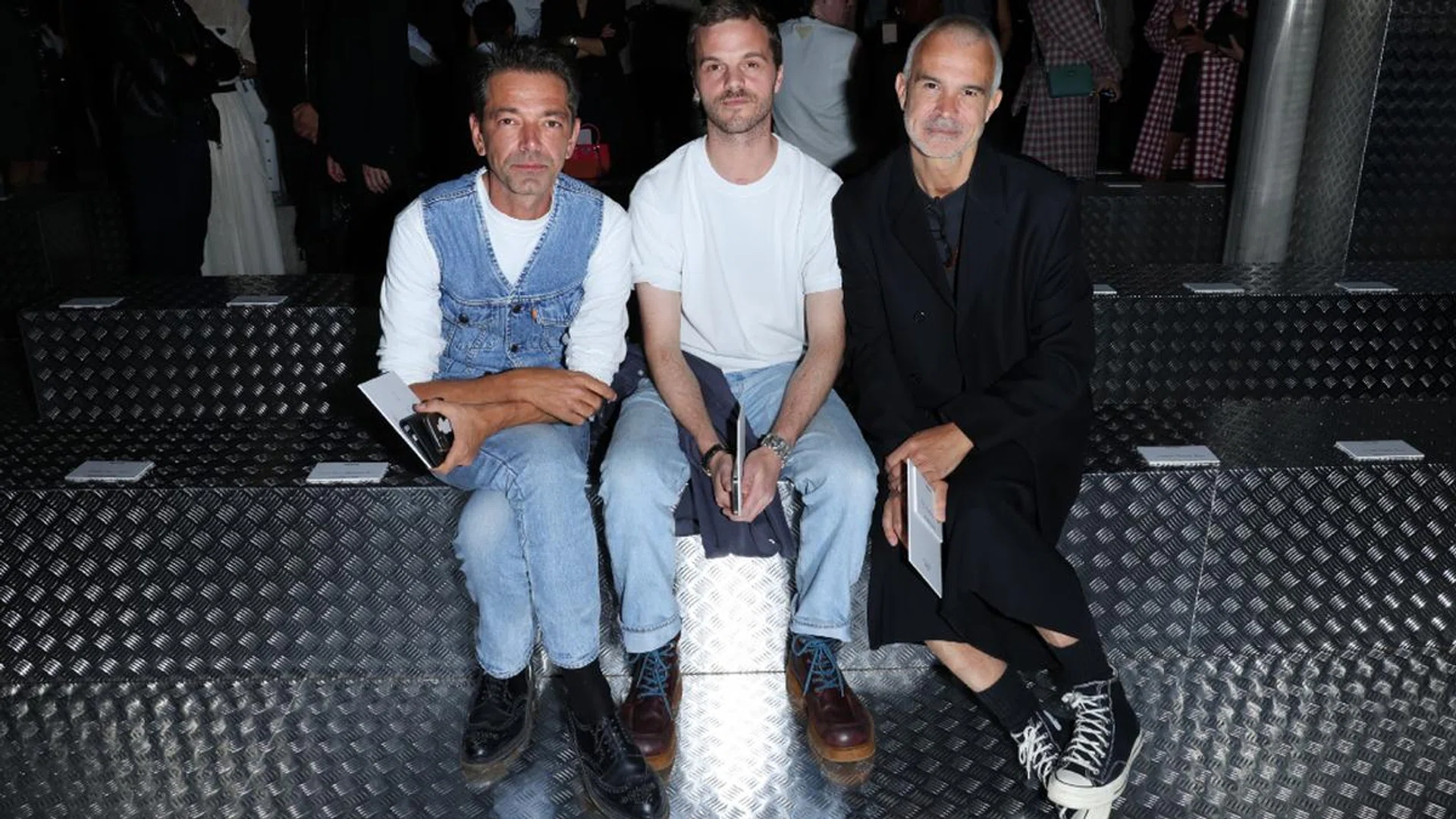
At Chanel, Matthieu Blazy is bringing a practice rooted in transformation, material intelligence, and close collaboration into conversation with one of fashion’s most enduring creative languages.
Chanel carries a highly recognizable visual vocabulary. How do you approach working within such a rich heritage?
Heritage is not a fixed image. It is a living language, made of gestures, proportions, materials, and ideas that can be interpreted again. At Chanel, the codes created by Gabrielle Chanel provide a strong foundation, but they also invite movement. I am interested in understanding what gives those codes their force, then finding where they can breathe differently. The dialogue is not only with the archive. It is also with the people who work in the studios and ateliers, with the materials themselves, and with the women who will wear the clothes. The aim is to respect the house by allowing its vocabulary to remain active.
The body seems central to your approach to design. What does that mean in practice?
A garment begins to exist fully when it is worn. The body gives it movement, character, and a personal history. That is particularly clear in haute couture, where the piece is made and adjusted for an individual woman. Proportion is reconsidered according to her presence, rather than imposed as an abstract idea. I am interested in clothing that accompanies movement and allows the wearer to remain visible. The garment should have its own identity, but it should also leave room for the person inside it. A beautiful piece becomes more meaningful when it can absorb something of the life of the woman who wears it.
Your work often makes one material appear to be another. What attracts you to that kind of transformation?
Transformation creates a moment of discovery. A material can carry one expectation, then reveal another quality through the way it is cut, worked, or finished. I have always been interested in the distance between what something looks like and what it actually is. That tension can make a familiar piece feel newly alive. It also requires a precise understanding of construction, because the illusion only works when the material behaves convincingly. The most satisfying result is often something that appears simple at first. Its complexity is discovered gradually, through touch, movement, or closer attention.
You have spoken about craft as something that can be highly sophisticated without becoming overly elaborate. How do you define that balance?
Craft should serve an idea rather than announce itself as decoration. It can be extremely intricate while remaining direct, useful, and emotionally clear. I am drawn to work that has the precision of a great technique but the ease of something that belongs naturally in a wardrobe. This is a demanding balance because simplicity often requires more thought than excess. The hand of the artisan should be felt in the quality and behavior of the piece, not necessarily displayed as a demonstration. At Chanel, the ateliers make it possible to push materials and construction while retaining clarity in the final silhouette.
What role does collaboration play in your creative process?
Collaboration is fundamental. I like working with teams because ideas become more precise when they are tested by different kinds of knowledge. A designer may begin with an intuition, but the studio, the pattern makers, the embroiderers, and the artisans each reveal possibilities that are not visible at the start. Their experience can change the direction of a piece in the best way. Collaboration also creates a shared responsibility for the result. It is not one person facing a collection and giving opinions. It is a conversation between creative intention, technical intelligence, and the material reality of making clothes.
How do the Chanel ateliers influence the way you design?
The ateliers make time and technique part of the design process. Their knowledge is not simply applied after a collection has been conceived. It can shape the conception itself. A specific embroidery, a way of building a sleeve, or the behavior of a particular fabric can open a new direction. The work at Rue Cambon is grounded in gestures that have been transmitted over generations, but those gestures are continually renewed through experimentation. That combination is important to me. The atelier preserves knowledge while also allowing the unexpected to happen. It gives the clothes a depth that cannot be achieved through an image or an idea alone.
You have worked across different houses and design cultures. What has remained consistent in your practice?
Curiosity has remained consistent. I am interested in looking closely at how things are made, how they are worn, and how their meaning changes in a different context. My experiences have also reinforced the importance of working from the material rather than forcing it to illustrate a predetermined story. A fabric, a leather, or a technique can suggest its own direction. I have learned to pay attention to those signals. Each house has its own history and responsibilities, so the work cannot be repeated from one place to another. What carries across is a willingness to question the obvious and to keep looking.
What does modernity mean to you in fashion?
Modernity is not simply a new shape or an unusual image. It can exist in the way a familiar garment is constructed, in the way a material is used, or in the relationship between a piece and the person wearing it. I am interested in work that feels relevant without depending on novelty alone. Something can be connected to its time and still have a lasting quality. The balance is delicate. Fashion needs imagination, but it also needs a relationship with real life. A modern piece should have enough clarity to be understood and enough openness to acquire new meaning over time.
Chanel’s couture is closely associated with precision and refinement. Where do you look for emotion within that discipline?
Emotion often begins with attention. A line that follows the body correctly, a lining that moves beautifully, or a detail that is discovered only from close range can create a strong response. Precision does not remove feeling. It can make feeling more concentrated. Couture also carries the intimacy of the relationship between the atelier and the client. The piece is developed over time, fitted, adjusted, and reconsidered. That process gives the garment a personal dimension. I want the clothes to communicate through their presence rather than through explanation. When a woman wears a piece and it becomes part of her own story, that is where the emotion continues.
As you begin this chapter at Chanel, what kind of conversation do you hope to create between the house and the future?
I hope for a conversation that is active and generous. Chanel has an extraordinary foundation, but a house remains alive only when each generation engages with it honestly. The future should not be treated as a break from the past, nor should the past become a costume. It is a matter of looking at the codes, the ateliers, and the values of the house with fresh attention, then asking what they can become now. I want the work to bring together strong design, beautiful materials, technical knowledge, and the freedom of the woman who wears it. That is where a new chapter can begin.