Profile
David and Sybil Yurman: A Life in Art, Made Wearable
Hannah R. Harris / Nov 20, 2025

For Marla Aaron, jewelry begins with curiosity about the mechanisms, objects, and everyday tools that shape how we move through the world.
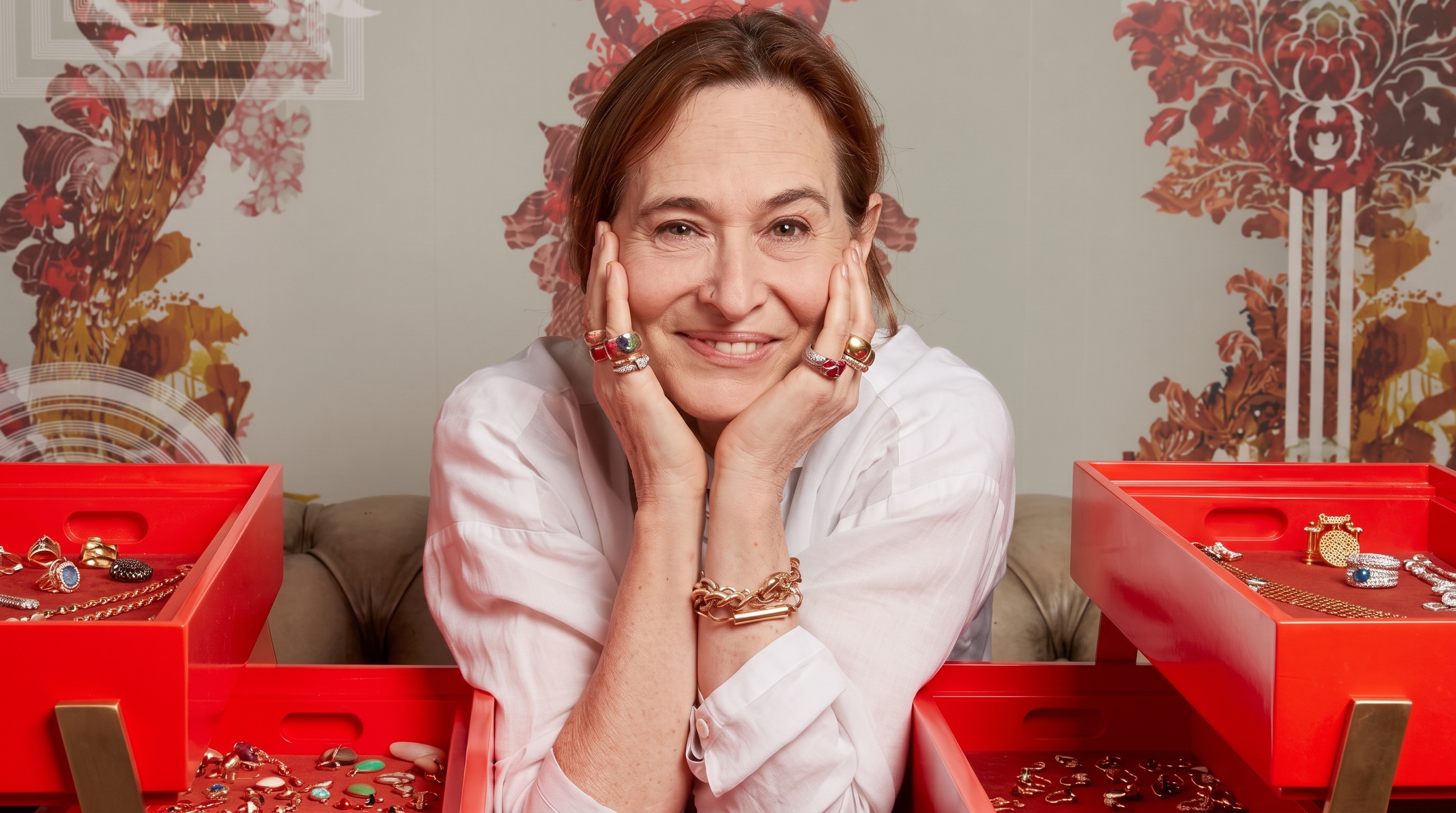
Marla Aaron spent years working in marketing and advertising while teaching herself to solder at night and studying on New York's 47th Street during her lunch hours. An accident during a business trip to France convinced her to leave her job and launch her own collection. The brand she built turns hardware, locks, and carabiners into fine jewelry meant to be opened, closed, and rearranged.
Your work began with a very specific idea for a jewelry collection while you were still working in marketing and advertising. What finally gave you the confidence to begin?
I had been thinking about the collection for a long time. I was working, raising children, and living a life that did not appear to leave much room for a new career, so I taught myself to solder at night and spent my lunch hours on 47th Street learning everything I could. I had the idea, but I was afraid to act on it. After a serious accident during a business trip to France, I decided that when I got home, I would leave my job and launch the company. I wrote a presentation for my husband on the flight home, explaining why I needed to do it immediately.
What was it about hardware and mechanisms that first drew you toward jewelry?
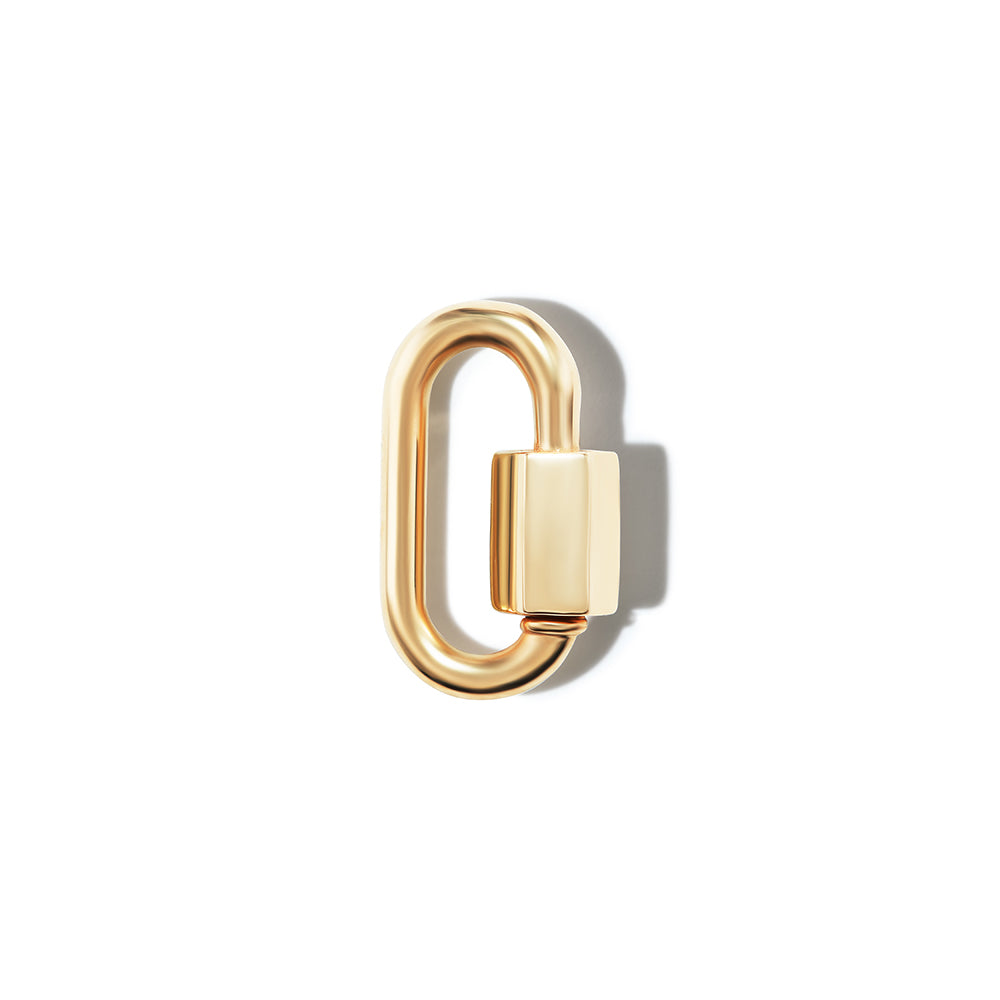
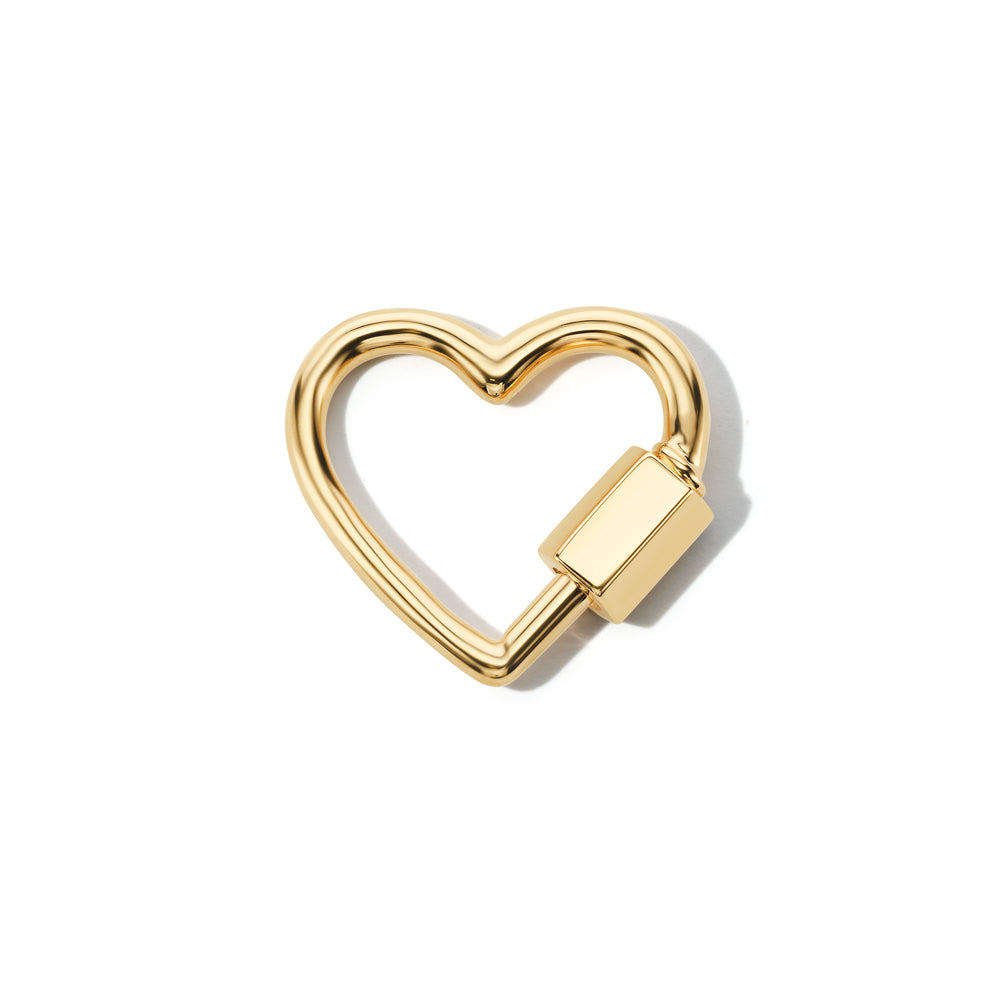
I have always been fascinated by the way things work. I notice latches, fasteners, hinges, tools, and the small movements that allow an object to open, close, connect, or transform. I was interested in bringing that language into fine jewelry. The carabiner became the starting point because it already had a clear function and a strong visual identity. Recasting it in precious materials created an interesting tension. It could be luxurious without losing its usefulness. From there, the collection developed as a world of locks, rings, chains, earrings, and charms that are meant to be handled and rearranged.
The collection is often described as functional jewelry. What does function add to the emotional experience of wearing a piece?
Function gives the wearer a role in the piece. You are not simply putting it on and leaving it alone. You are opening it, closing it, connecting it to something else, changing its position, or discovering another way to wear it. That physical interaction creates a different kind of relationship with jewelry. A lock can hold a chain, become a charm, or connect to a piece someone already owns. I like the idea that jewelry can be both beautiful and useful, while still leaving space for personal meaning. The object becomes more individual through the way someone chooses to use it.
Your inspirations can come from surprisingly ordinary objects, including household hardware. How does an everyday object become a viable piece of jewelry?
It usually starts with a mechanism that I cannot stop thinking about. I keep objects around the studio that other people might consider unremarkable, because their movement or construction may suggest something unexpected. The trundle lock ring, for example, needed a particular push mechanism. When I was explaining it to the workshop, I used a toilet roll holder from my house to demonstrate the motion. The object itself was not the final reference in a literal sense. It helped communicate the principle. The process is often a mixture of observation, experimentation, technical drawing, and many attempts to make the mechanism work beautifully.
How do you balance the precision required by these mechanisms with the playfulness that defines the brand?
The precision makes the playfulness possible. The pieces may look simple, but their mechanisms have to be extremely accurate. We work closely with engineers and craftspeople because a lock must function properly, feel good in the hand, and remain elegant when reduced to jewelry scale. There is usually a great deal of trial and error before a design is resolved. I do not want the technical complexity to dominate the final object. It should feel intuitive when someone wears it. The delight comes from the fact that the piece does something, but the engineering underneath should support the experience rather than announce itself.
You have built the brand through independent retail, direct relationships, and unconventional ideas such as vending machines. What have those experiments taught you?
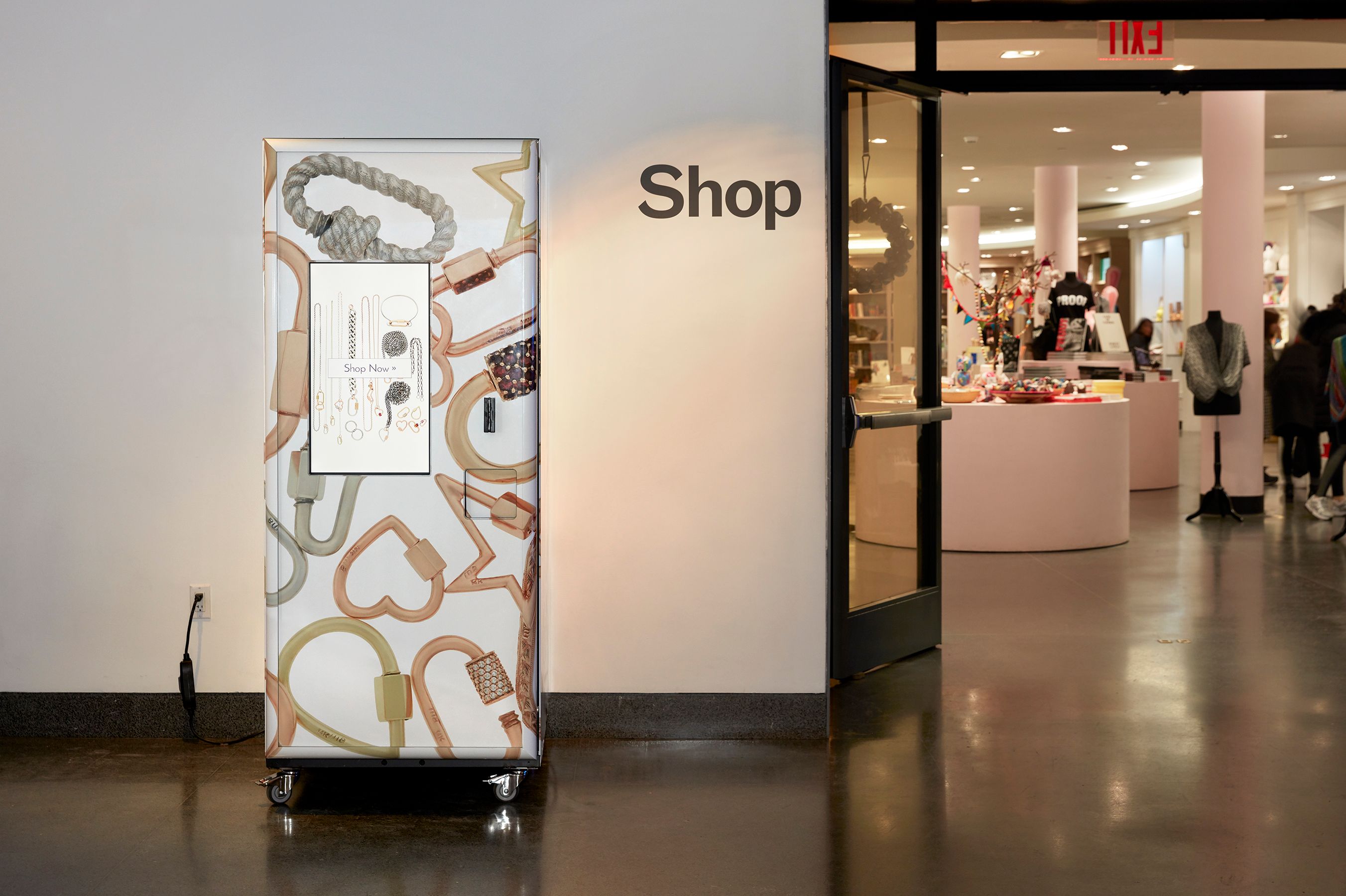
They have taught me to stay open to possibilities that do not fit an established retail formula. We have always been careful about where and how the collection is presented. The right environment allows people to understand the work as a system rather than as a single isolated object. A vending machine was a playful way to introduce jewelry in an unexpected setting, while independent retailers have given the collection room to be explored in depth. I think every part of the business can be an experiment, from distribution to communication. The important thing is to remain attentive to how people actually encounter and use the work.
Your pieces are designed to be mixed, matched, and combined with jewelry people already own. Why is that important to you?
I have no interest in creating a uniform way for people to wear jewelry. The collection is designed to be adaptable because personal style is rarely static. A lock may begin on one chain and later be attached to another piece, a bracelet, or something that has been in someone's jewelry box for years. That possibility makes the object more personal over time. I also enjoy contrast. Different metals, proportions, and materials can make a combination feel more alive. Jewelry does not need to match perfectly to feel intentional. I would rather people wear what they love and find their own logic in the mix.
You have described your design process as messy and focused on small pieces of hardware. What does the beginning of a collection actually look like?
It is usually not a clean sequence. I may be focused on a mechanism, a material, or a particular movement, and then an object from daily life will help clarify the idea. I collect references, make drawings, test proportions, and work with the team to understand what can be produced. Sometimes the first version is very different from the final piece. The process can be chaotic, but there is usually a clear question underneath it. Can this object become a ring? Can it hold something? Can it transform? Can it be worn in more than one way? When we remain genuinely interested in the problem, the design tends to develop energy.
Your collaboration with Nymphenburg brought your functional language together with an old porcelain tradition. What interested you in that contrast?
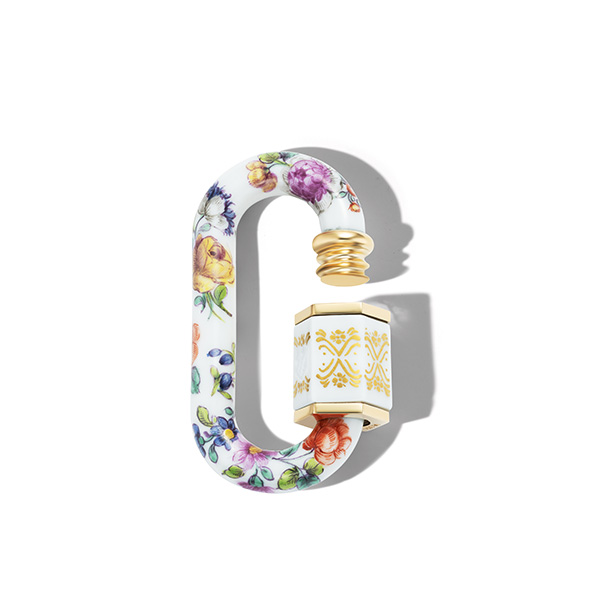
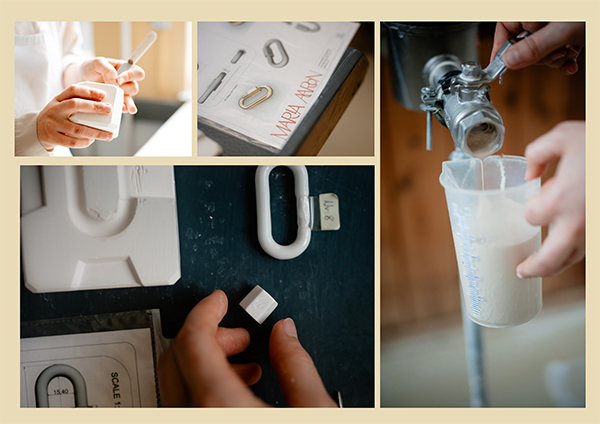
I had known about Nymphenburg for many years and was drawn to the history, the craft, and the extraordinary detail of its porcelain. When I visited the archive, I found the Cumberland pattern, which felt particularly rich and elaborate. I wanted to make that world more accessible through objects that could be worn or used. The collaboration brought together two very different forms of making. Our pieces depend on mechanisms and precision, while the porcelain carries a long decorative tradition and an intricate hand-painted surface. The contrast felt natural to me because I am drawn to both industrial objects and historic decorative arts.
What do you hope people understand about jewelry after encountering your work?
I hope they see jewelry as something more expansive than a finished ornament. It can be a tool, a connector, a container, a keepsake, or a way to alter something you already own. I also hope people feel permitted to approach it with curiosity. You do not need to know every convention of fine jewelry to enjoy a piece that opens, closes, moves, or changes. Jewelry can be serious and playful at the same time. For me, its most important role is to bring pleasure. If a piece makes someone want to touch it, experiment with it, or wear it in a way that feels entirely their own, then it is doing its job.