Profile
Gucci Westman on the Art of Making Beauty Feel Like Yourself
Kayla M. Walker / Aug 8, 2026

Co-curator Kirsty Hassard's Catwalk: The Art of the Fashion Show, at V&A Dundee from April 3, 2026, through January 17, 2027, treats hair and makeup as authored design disciplines, not finishing touches, inside the total spectacle of a runway show.
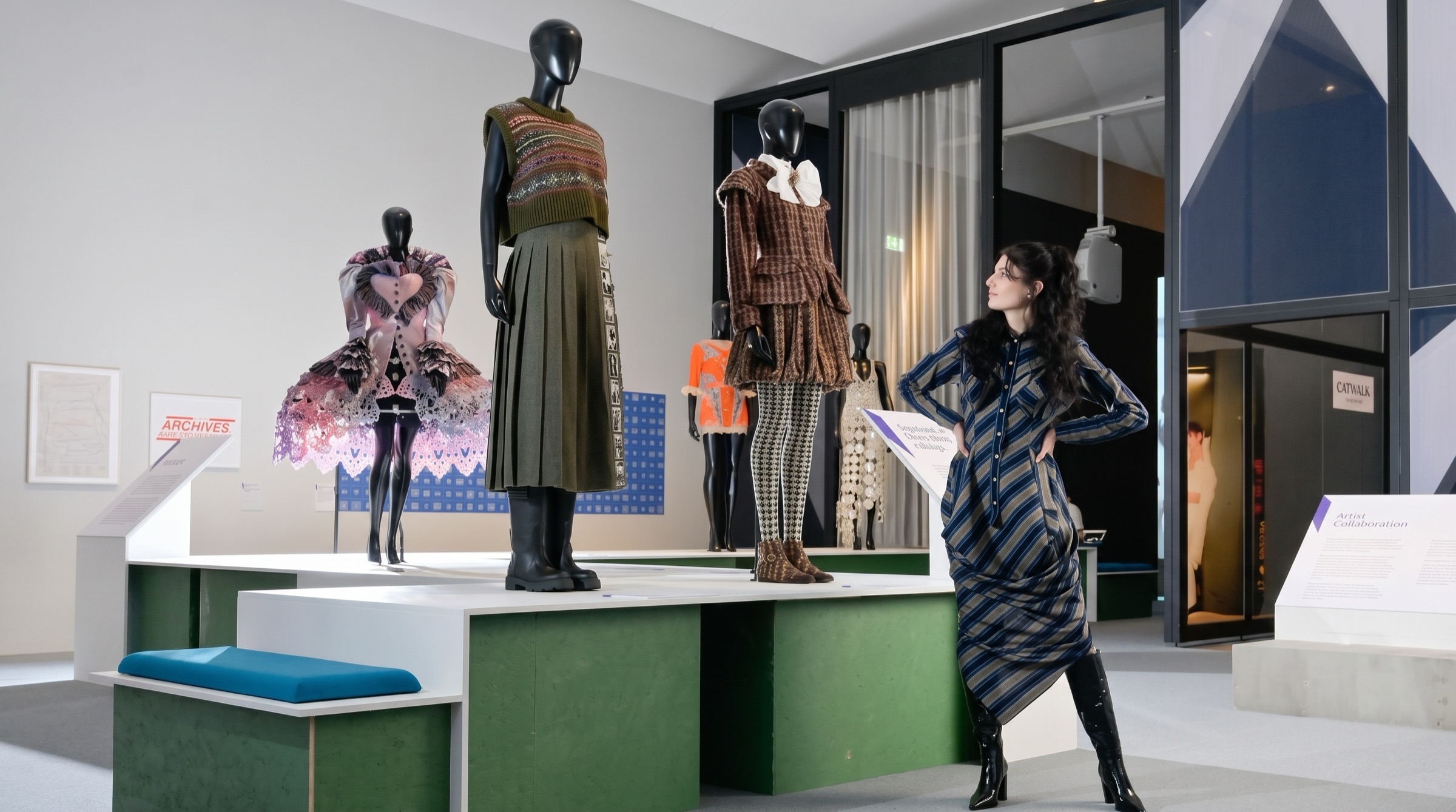
A fashion show has a set designer, a lighting designer, a composer, sometimes an architect, and for more than a century it has also had someone responsible for how a hundred models' hair and faces read identically under those same lights, from the front row to the standing crowd at the back. Catwalk: The Art of the Fashion Show, open at V&A Dundee from April 3, 2026, through January 17, 2027, is built around the argument that this last role belongs on the same list as the others, a credited design discipline rather than a finishing touch applied after the clothes are decided.
The exhibition originated at the Vitra Design Museum, where it ran from October 2025 to February 2026, and arrives in Dundee organized by curators Jochen Eisenbrand and Katharina Krawczyk of Vitra alongside Kirsty Hassard and Svetlana Panova of V&A Dundee. More than a century of runway history is traced through pieces from Alexander McQueen, Balenciaga, Chanel, Dior and Prada, alongside film, photographs, props and archival material documenting how the presentation itself, not only the clothes on it, became a designed object: McQueen's theatrical staging, Dior's takeover of the gardens at Drummond Castle, the shift from private salon showings in the late nineteenth century to today's live-streamed spectacles.
What distinguishes Catwalk from a straightforward garment survey is its insistence on architecture, lighting, music, set design and jewelry as co-authors of a fashion show's meaning, and its explicit inclusion of hair and makeup in that same list of design disciplines. It is a small reclassification with a real consequence: it asks a viewer to read a stylist's uniform, hard-set finger wave or a made-up eye repeated identically across forty models not as decoration in service of the clothes, but as a compositional choice made with the same intent as the choice of runway length or soundtrack, one that can unify a collection's meaning or, deployed badly, undercut it entirely.
The harder question the show raises without fully answering is one of credit. Runway history, as told through garments in museum collections, already privileges the designer whose name is on the label. Folding hair and makeup into that same authored history is a genuine correction, but it only goes as far as the archive allows: a set designer or lighting designer working for a major house tends to be named and retained across seasons, while the hair and makeup teams assembled for a single show are frequently uncredited in the press materials that museums later draw from to build an exhibition like this one. Treating styling as authored design is the right instinct. Whether an institution the size of the V&A can actually recover and display the individual names behind that styling, rather than folding it back into the house's collective identity, is a different and much harder test, one the exhibition itself does not claim to have passed.
That gap does not undercut the exhibition's central move so much as sharpen it. Once hair and makeup are treated as design decisions rather than ambient styling, the obvious follow-up question is who made them, and Catwalk leaves a viewer more alert to how rarely fashion history has bothered to answer that for anyone standing behind the model rather than in front of the runway.
The Dundee run gives the argument a second life beyond its Vitra debut, and a Scottish audience a chance to weigh it against the museum's own design collection, where architecture and product designers are catalogued by name as a matter of course. Placing a runway hairstylist's uncredited work inside that same building, under that same standard of attribution, is a quieter kind of pressure than a wall label can usually apply, and it is the reason Catwalk is worth a beauty desk's attention rather than only a fashion one.