Profile
Rachel Scott on Craft, Context, and the Expansive Language of Diotima
Hannah R. Harris / Aug 8, 2026

In her London-based practice, Brazilian designer Karoline Vitto makes sculptural womenswear that treats curves, folds, and movement as essential parts of the design.
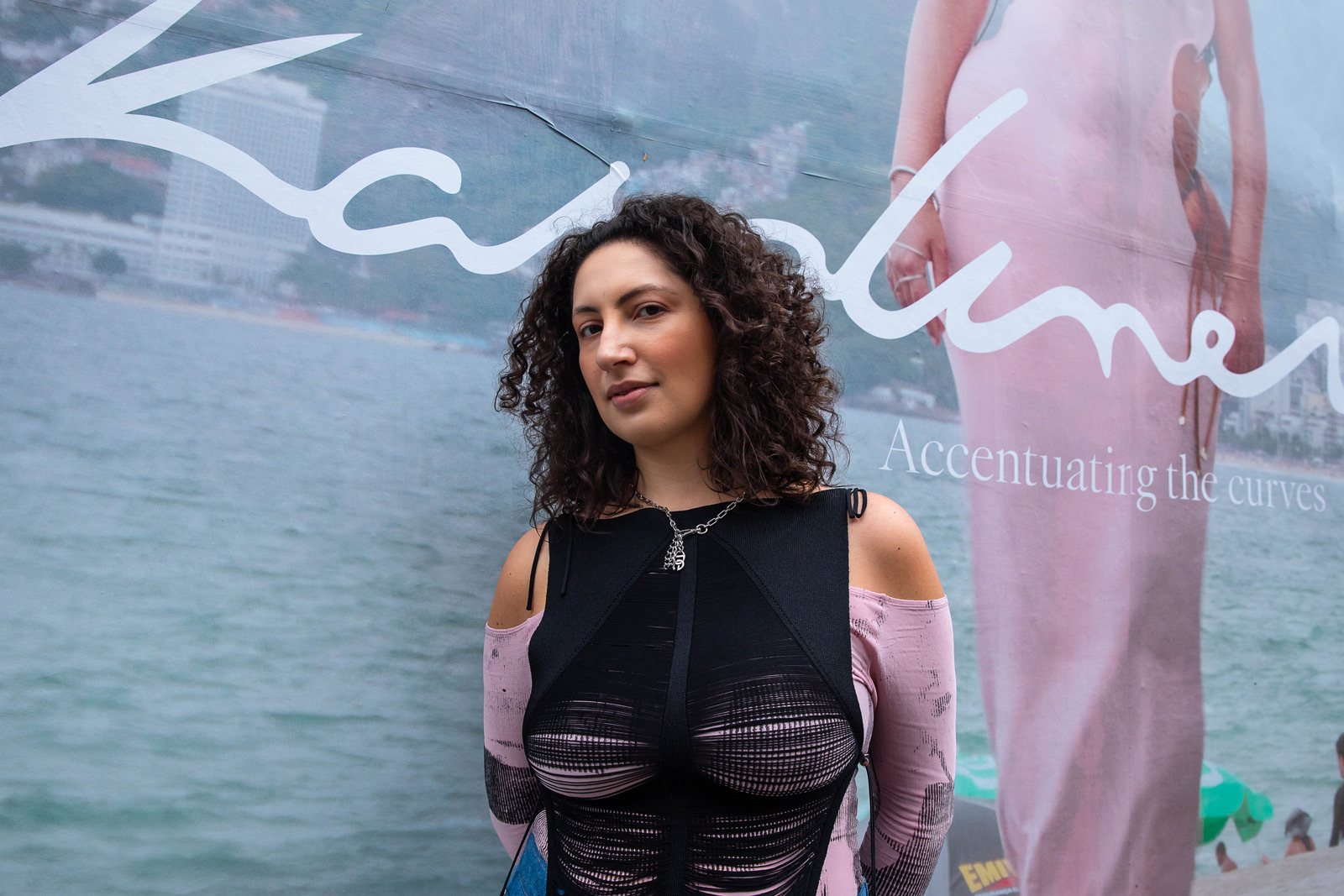
In her London-based practice, Brazilian designer Karoline Vitto makes sculptural womenswear that treats curves, folds, and movement as essential parts of the design.
You grew up in Caçador, in southern Brazil, and later studied fashion in Florianópolis before moving to London. What did those places give you as a designer?
Brazil gave me a very strong visual and cultural foundation. I grew up in a place where fashion was closely connected to the body, especially through swimwear, but the bodies being represented were often very narrowly defined. That contrast stayed with me. I was also surrounded by making from an early age. My grandfather was a cobbler and my grandmother was a seamstress, so craft was part of my family environment. Moving to London gave me access to a different kind of fashion education and a much wider design community. Studying at Central Saint Martins and the Royal College of Art helped me develop the technical and conceptual language that now connects those experiences.
You founded your namesake brand in 2020. What was the starting point for the work?
The brand developed from a period of experimentation during my master’s degree. I was photographing my own body and working with friends rather than professional models, which gave me a close and practical understanding of bodies that did not correspond to the standard runway sample. I began to see the body itself as a source of design rather than something that clothing needed to correct or disguise. The brand grew from that idea. It was important to me that the clothes were made for people to wear, and that different shapes were considered from the beginning of the process rather than added later.
Your clothes often reveal areas that fashion has traditionally tried to conceal. How do you approach the relationship between exposure and structure?
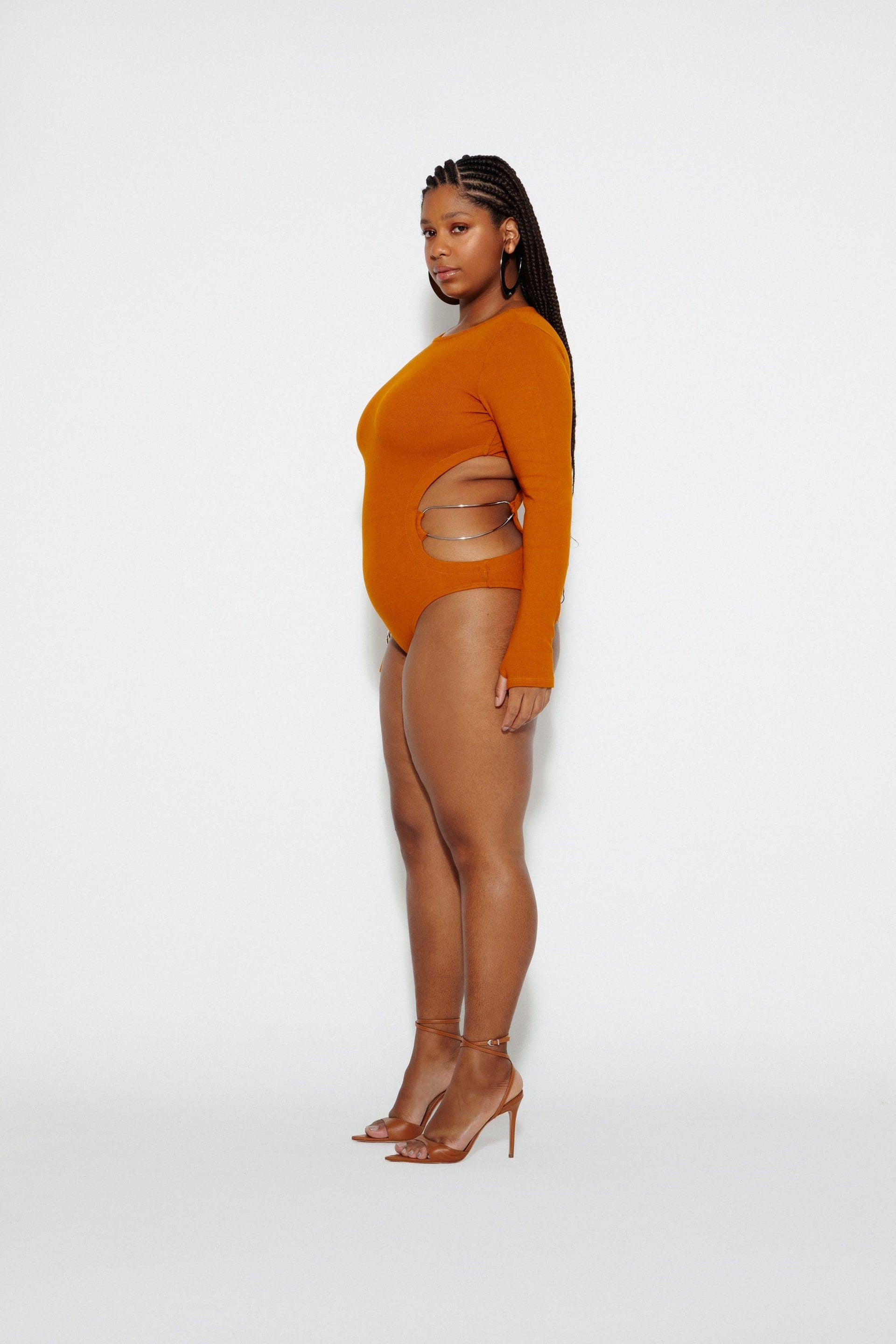
I am interested in the way clothing can frame the body and draw attention to its natural lines. At the beginning, I worked largely with black because I saw it almost as a shape. It can cancel out certain areas while highlighting others, so it became a useful tool for exploring the body visually. Cut-outs came from that investigation. They were not intended simply as decoration or exposure. They allowed me to look at how a garment could create a new composition around the body. Over time, the work has become more colourful and more varied, but the central question remains how clothing can reveal form with intention.
Jersey, stretch, adjustable elements, and sculptural hardware are recurring parts of your language. What do these materials and details allow you to do?
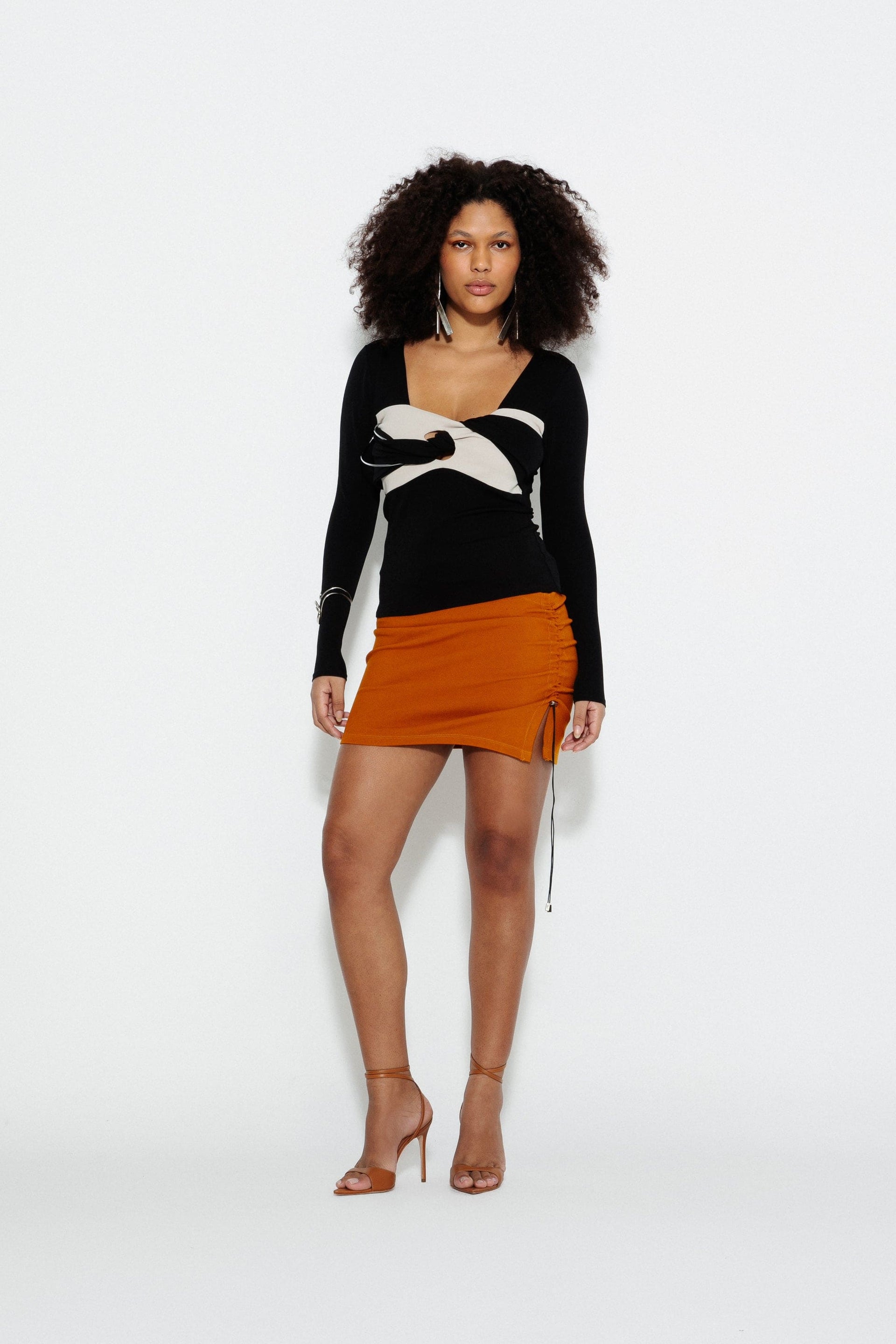
They allow the clothes to respond to the body rather than forcing the body into one fixed shape. Stretch fabrics can accommodate movement, while adjustable straps, ties, and hardware make it possible for a garment to work across different proportions. That is especially important when designing for a broad size range. In one collection, for example, we used elements inspired by bra straps so that the same piece could fit more than one body type. I think of these details as functional design features, but they also become part of the visual identity of the clothes. The practical solution is visible, and that visibility is important to the work.

You have spoken about learning manufacturing, pattern cutting, and grading yourself. What have those technical challenges taught you?
They have shown me how closely design and production are connected. If you are serious about extending a size range, it is not enough to enlarge an existing pattern. Bodies change in proportion, and that affects the balance, construction, and fit of a garment. I have had to learn how to work through those differences in a very practical way. Production can also be difficult because sampling costs more, minimum order quantities can be restrictive, and many existing systems are based on outdated grading methods. Those constraints have encouraged us to think carefully about adaptable garments, small-scale production, and how the business can grow without losing the principles that shaped it.
Your work has been associated with size inclusivity, but you have also resisted the idea that it should be treated as a separate category. Why?
Size inclusivity was always part of my vision in the simplest sense that fashion is made for people, and people come in many shapes and sizes. I do not see it as an additional feature or a special project. It is part of the design brief. When I was studying, I made clothes for myself in my own size and tried them on because I needed to understand how they felt on the body. That was not a statement added after the work was made. It was part of the design process. The same principle applies to the brand now. The clothes, the casting, the fittings, and the production all need to support the idea together.
Your shows have brought many curve models into spaces where they are still underrepresented. What does casting contribute beyond representation?
Casting changes the way the clothes are understood. When you see several different bodies wearing the collection together, you can see the range of the design rather than one isolated interpretation. It also creates a different atmosphere within the process. Many of the models I work with have returned across several seasons, and there is a sense of community among them. That continuity matters to me. It allows the work to develop relationships rather than treating each show as a single image. There is also a practical side. Casting different body shapes teaches us how the samples work, where they need to be adjusted, and how we can improve the garments for future collections.

The brand has moved from Fashion East to NewGen, while also receiving support for its Milan presentation and becoming an LVMH Prize semi-finalist. How have those opportunities affected the business?
They have expanded the scale of what the brand can do and have made the operational side of the work much more visible. Fashion East gave me an early platform and helped introduce the collection to a wider audience. The Milan presentation brought a much larger production, with more looks, models, suppliers, and fittings than we had managed before. It was exciting, but it also made clear how much infrastructure is required to grow an inclusive brand. My focus has been on building a business model that can become more scalable while retaining control over the design and production decisions. Recognition is valuable, but the real work is creating a system that can support the clothes properly.
Your brand continues to work on a made-to-order and small-scale production model. What does that approach make possible?
It allows us to remain close to the garments and to the people who wear them. We can pay attention to construction, fit, and finishing rather than producing large quantities without knowing how the pieces will be received. It also makes sense for a brand working across sizes from XS to 2XL as well as custom requests, because the process needs to remain responsive. Small-scale production places limits on how quickly we can grow, but it also protects a certain level of care. Sustainability, community, and craft are not separate from the business model. They are connected to how we choose to make the clothes and how we want the brand to develop.
What are you working toward as Karoline Vitto continues to evolve?
I want the brand to keep developing its design language while becoming stronger and more capable as a business. The clothes have already moved from an early focus on black and body contouring into brighter colour, prints, denim, knitwear, and more varied silhouettes, but the body remains central. I am also interested in making the production process work for more people and in finding better solutions for different proportions without reducing the clothes to technical exercises. The wider fashion industry still has a great deal to learn about representation, manufacturing, and who gets to be included. I want Karoline Vitto to contribute through the work itself, with clothes that are considered, desirable, and made for real bodies.