Profile
Gucci Westman on the Art of Making Beauty Feel Like Yourself
Kayla M. Walker / Aug 8, 2026

On the 30-hectare Grasse farm Joseph Mul has supplied exclusively to Chanel since 1987, the 2026 jasmine and rose bloomed roughly three weeks ahead of schedule, a warning sign for any formula built on a specific flower.
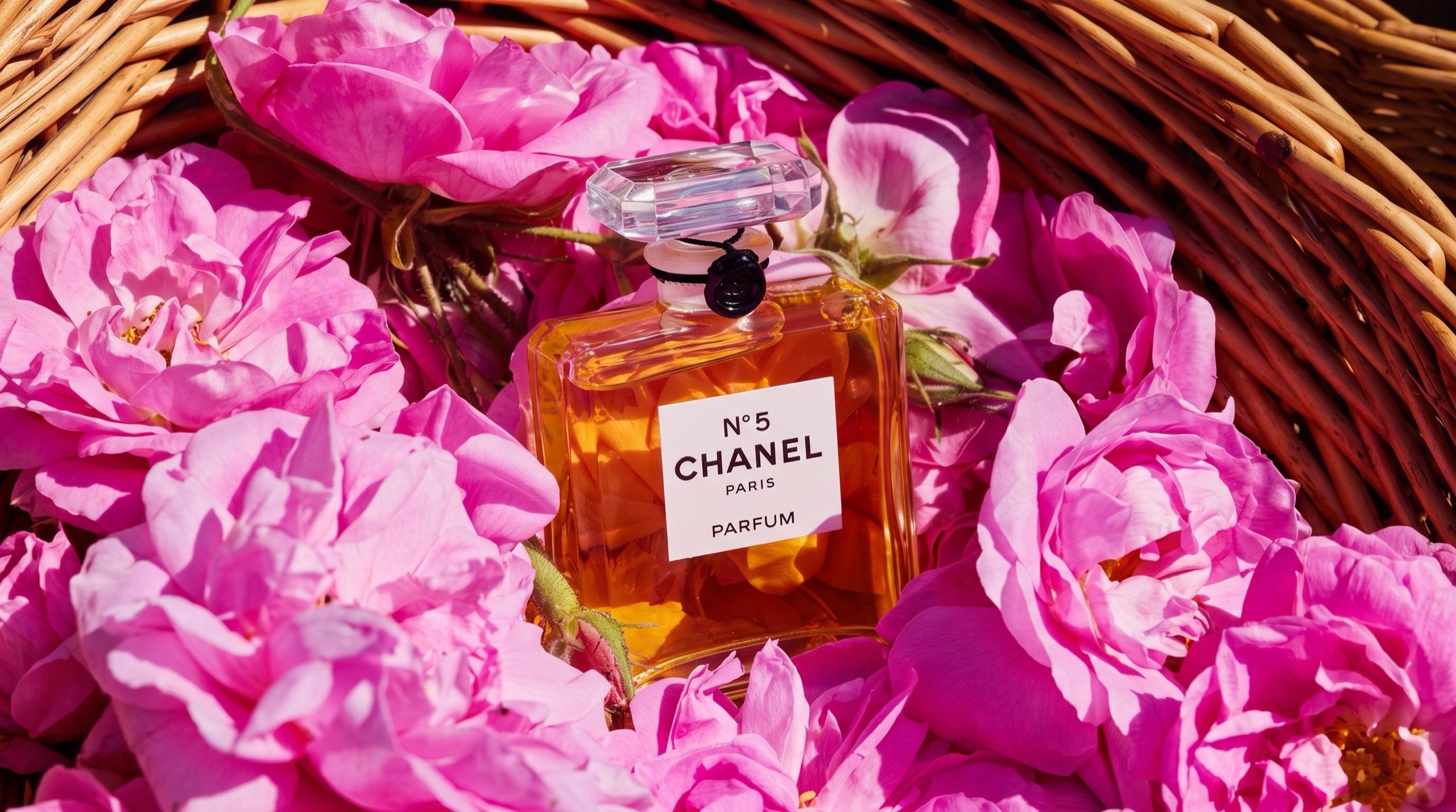
Forty kilograms of jasmine flowers are needed to produce one kilogram of concentrate, and every one of those flowers has to be picked by hand, before the sun gets too high, on the same 30 hectares outside Grasse that Joseph Mul's family has farmed since 1840. Since 1987, the entire harvest has gone to a single client: Chanel, which struck the arrangement with Mul after jasmine production in the region collapsed under pressure from tourism development and cheaper foreign supply, and which now treats the farm as the sole source for the jasmine note in Chanel No. 5. In 2026, that arrangement met a new variable neither party controls. Reported in July 2026, this year's blooms, both the May rose and the jasmine that follows it into late summer, opened roughly three weeks ahead of their usual schedule, a shift attributed to warmer conditions rather than any change in cultivation.
Mul, whose son-in-law Fabrice is expected to eventually take over the farm, has described the rhythm of the crop before in plainly seasonal terms: "The scents are the language of the seasons. The rose announces the spring. Jasmine means fall is coming." A three-week shift does not sound dramatic stated as a number. Stated as a disruption to a language, a fixed vocabulary that a perfume house has built formulas around for a century, it is a different kind of problem, one that has nothing to do with taste and everything to do with timing a harvest, a workforce of roughly sixty pickers, and an extraction process that has to happen within hours of the flower leaving the stem.
Chanel's public rationale for the 1987 arrangement was always framed as quality control: buying the field rather than the market meant the house controlled the plant from seed to bottle, insulated from the price swings and adulteration risk that come with sourcing jasmine absolute on the open commodities market. Olivier Polge, the house's current in-house perfumer and son of his predecessor Jacques Polge, who initiated the Mul partnership, has put the position bluntly: the house sees itself, in his words, as "the guardians of Chanel formulas," obligated to "make every effort to maintain absolute control over our ingredients." That is a defensible commercial argument. It is also a bet that a single 30-hectare parcel of Provençal soil can be made to behave predictably enough, year after year, to anchor a formula sold at global scale.
The 2026 early bloom does not break that bet, but it exposes its terms more plainly than a stable season would. A synthetic jasmine substitute does not care what week it flowers. A formula built on the real thing, sourced from one farm, run by one family, does. The three-week shift this year is a scheduling problem Chanel and Mul absorbed without apparent damage to the finished fragrance, but the underlying argument, that owning the field guarantees control, was always premised on the field behaving roughly the way it has for decades. If the bloom keeps arriving earlier, the guarantee starts to look less like control and more like exposure dressed up as heritage.
None of this is visible in a bottle of Chanel No. 5, which will smell, this year, essentially like it has for a century. That consistency is the entire point of Mul's farm and the reason Chanel pays for exclusivity rather than buying jasmine absolute on the open market. What the 2026 harvest suggests is that consistency is getting more expensive to manufacture, not in money but in the quiet agricultural labor of adjusting to a season that no longer keeps the schedule the formula was written for.