Profile
David and Sybil Yurman: A Life in Art, Made Wearable
Hannah R. Harris / Nov 20, 2025

Auction results, sourcing data and new grading-lab standards show buyers now pay for a stone's documented story as much as its size.
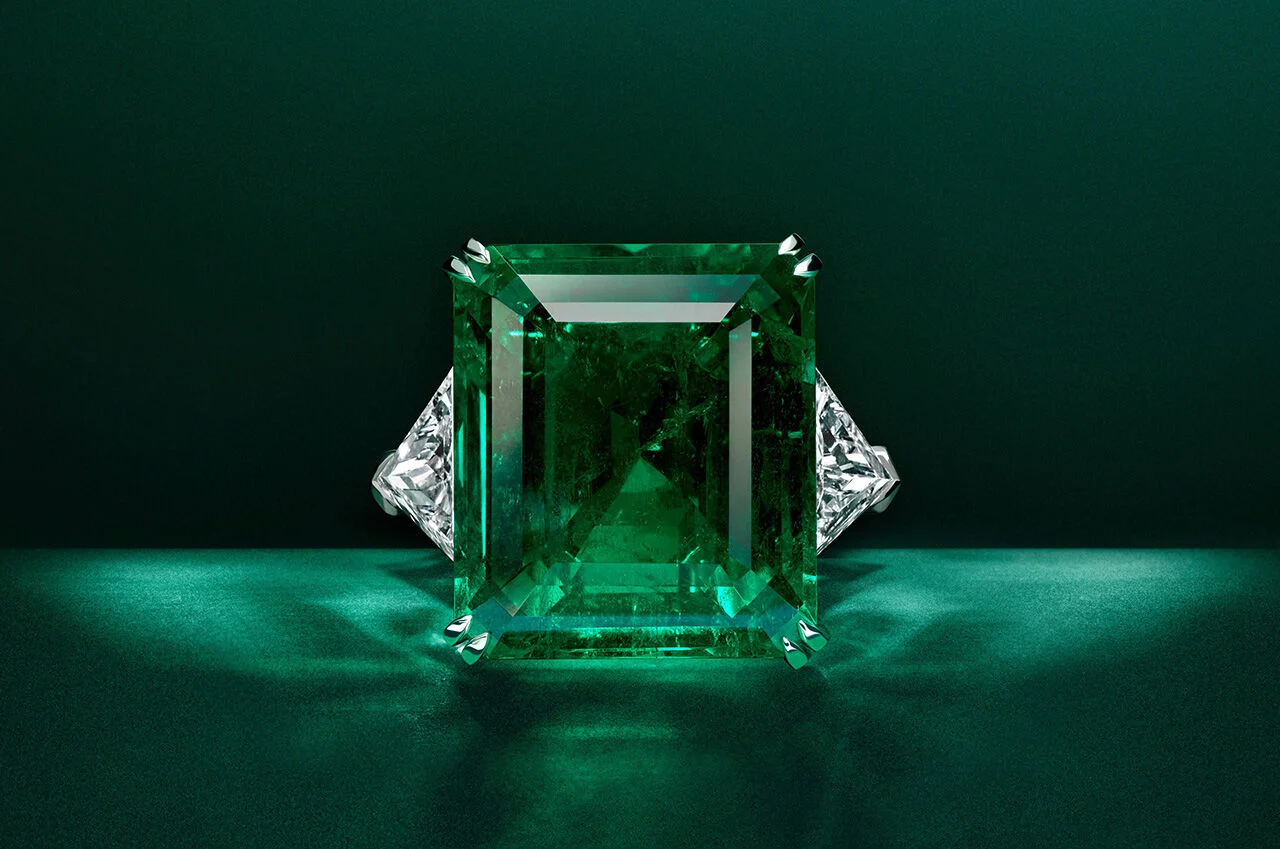
At the 2025 AGTA GemFair in Tucson, Arizona, none of the winning entries in the show's bridal design competition set a center diamond. The pieces that took top honors carried bicolor and hazy stones, phenomenal cuts, and in at least one case a stone with an inclusion left visible rather than hidden. The Gemological Institute of America, which tracks the fair each year, recorded custom cuts and one-of-a-kind stones as the dominant thread across the show, a sign that the center of gravity in fine jewelry design has shifted away from a single graded diamond and toward color with a visible personality.
The shift is not cosmetic. GIA's 2025 guide to engagement-ring alternatives now positions sapphire, ruby, spinel and aquamarine alongside diamond, framing each on the basis of individuality rather than substitution. That framing changes the sales conversation: a couple choosing an unheated teal sapphire over a round diamond is not settling, they are choosing. At Tucson, GIA graders noted unheated green, teal and steely blue sapphires as the strongest sellers, alongside a rise in bicolor and tricolor stones and cuts, heart, hexagon, marquise and shield, that would have read as niche five years ago.
Christie's June 2025 Magnificent Jewels sale in New York sold every lot on offer, with colored stones drawing the heaviest bidding. The Blue Belle, a 392.52 carat Ceylon sapphire, sold for 11.3 million dollars. Three weeks earlier, in Geneva, Christie's May sale brought in 723 million dollars, driven again by what the house described as strong demand for vibrant, rare precious stones. Neither result describes mass-market demand. What it describes is the top of the market pricing documentation and traceable origin as heavily as it prices carat weight, a habit now filtering down into how independent jewelers write their own product copy.
The supply side is less tidy. Gemfields' 2025 operational update put emerald auction revenue at 78.6 million dollars, roughly flat year over year, while ruby auction revenue fell to 49.9 million dollars from 117.2 million dollars the year before, a drop tied to production mix and auction timing rather than any cooling in buyer interest. India's Gem and Jewellery Export Promotion Council has flagged a related problem further upstream: its cutting centers depend heavily on imported rough, much of it from artisanal mining, and tightening export restrictions in producing countries are already limiting what reaches the trade. Add a gold price that the World Gold Council says has already cut into 2025 U.S. jewelry volume, and the incentive for independent houses points toward lighter settings built around one expressive stone rather than broad, gold-heavy pieces.
The word origin carries two meanings the trade has let blur together. A gemological origin opinion describes where a lab believes a stone formed. A provenance claim describes the documented chain of custody behind it, and the Responsible Jewellery Council's March 2025 guidance is direct that the first should never be sold as the second: origin opinions, it notes, remain matters of expert judgment even when backed by lab testing, and any geographic provenance claim needs a transparent system standing behind it, whether that is blockchain records, RFID tagging or the emerald paternity testing now emerging in laboratories. GIA has been building toward that standard from its own side, expanding country-of-origin reporting to opal, peridot and demantoid garnet starting in January 2026, three categories that previously had no verifiable origin service at all.
For a house without Christie's reach, the practical lesson is not to chase the same rare stones the auction houses are chasing. It is to apply the same discipline at a smaller scale: state plainly what is known and unknown about a stone's origin, use the Tucson lesson (that color and cut can carry a piece without a diamond center) to build repeat categories around birthstones and personal palettes, and treat every gold-heavy design as a cost customers are now weighing against a lighter, stone-forward alternative. The houses that treat disclosure as paperwork will keep losing ground in 2026 to the ones that treat it as the actual product.