Profile
David and Sybil Yurman: A Life in Art, Made Wearable
Hannah R. Harris / Nov 20, 2025

For Jesse Marlo Lazowski, jewelry is a meeting point between travel, memory, craftsmanship, and the symbols people carry through life.
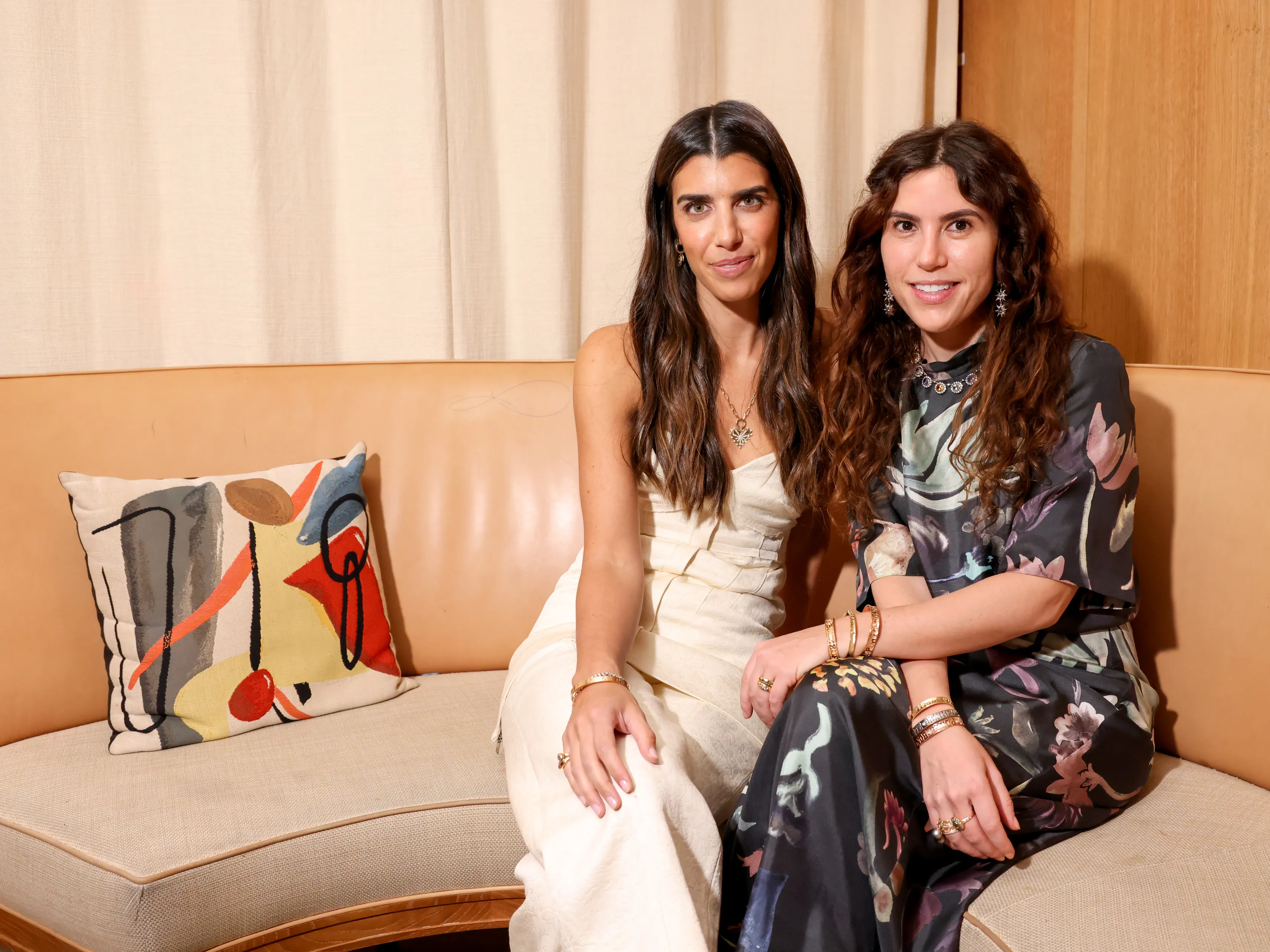
Jesse Marlo Lazowski learned jewelry history from a great aunt who dealt in antiques and launched her first line, Shopgirl, at thirteen. Years based in Paris and an early apprenticeship with artisan jewelers in Jaipur shaped the talisman-driven language she now makes in Manhattan as Marlo Laz.
You were introduced to jewelry at a very young age. What did those early experiences teach you about the medium?
My great aunt was an antique jewelry dealer, and she gave me an extraordinary education in jewelry history. I learned to recognize the language of different periods, from Victorian and Edwardian to Art Nouveau, Art Deco, and beyond. She would take me to auctions, show me old catalogs, and let me handle pieces with real histories behind them. My mother also taught me how to string beads at our kitchen counter. Those experiences made jewelry feel very accessible to me. It was not only something to admire. It was something to study, transform, wear, and live with.
You began designing your own jewelry as a teenager. What did that first experience of selling your work give you?
When I was thirteen, I made a small jewelry line called Shopgirl. A clothing boutique in my hometown gave me a case to display the pieces, and I had business cards made with an illustration of myself. It was a very simple beginning, but it allowed me to understand that an idea could move from my imagination into the world and find an audience. I also learned early that creativity and business are not separate activities. They can support one another. That first experience gave me the confidence to take my interest seriously, even though I had no idea then where it would lead.
How did your years in Paris and your travels shape the visual language of Marlo Laz?
Paris gave me a foundation in art history, communication, language, and culture, but it also gave me the freedom to travel extensively. I spent several years based there and visited more than forty countries. I was constantly absorbing architecture, textiles, antiques, color, lettering, and local forms of adornment. That material continues to surface in the work, although rarely as a literal translation. I am more interested in the feeling of a place and in the way different visual traditions can coexist. French remains important to the brand, while the designs also carry traces of North Africa, India, Mexico, the American West, and New York.
India was especially important in the early development of the brand. What happened there?
During my senior year in Paris, my mother and I traveled to Jaipur and met a group of artisan jewelers. I extended the trip and began designing and overseeing the production of my first collection there. It was an immersive education. I was learning about materials, construction, scale, and the realities of making a piece, all at once. After graduating, I returned to New York and decided that I wanted to build a fine jewelry company. I later studied at the Gemological Institute of America and spent time learning production from a second-generation manufacturer on 47th Street. Those practical experiences became just as important as my formal education.
Marlo Laz is closely associated with talismans and symbolic jewelry. Why do symbols matter to you?
Symbols can communicate across language and culture. A heart can suggest love, an eye can represent protection or guidance, and sun rays can evoke light. I have always been drawn to the idea that a small object can hold an expansive meaning. The Talisman Coin came from my habit of collecting coins from different countries and currencies. I wanted to create a design that brought together familiar symbols from different traditions, almost like a portable collection of good wishes. Jewelry can be beautiful, but it can also become a personal reminder of what someone values, hopes for, or wants to carry with them.
The Porte Bonheur designs express that idea particularly clearly. How did that collection begin?
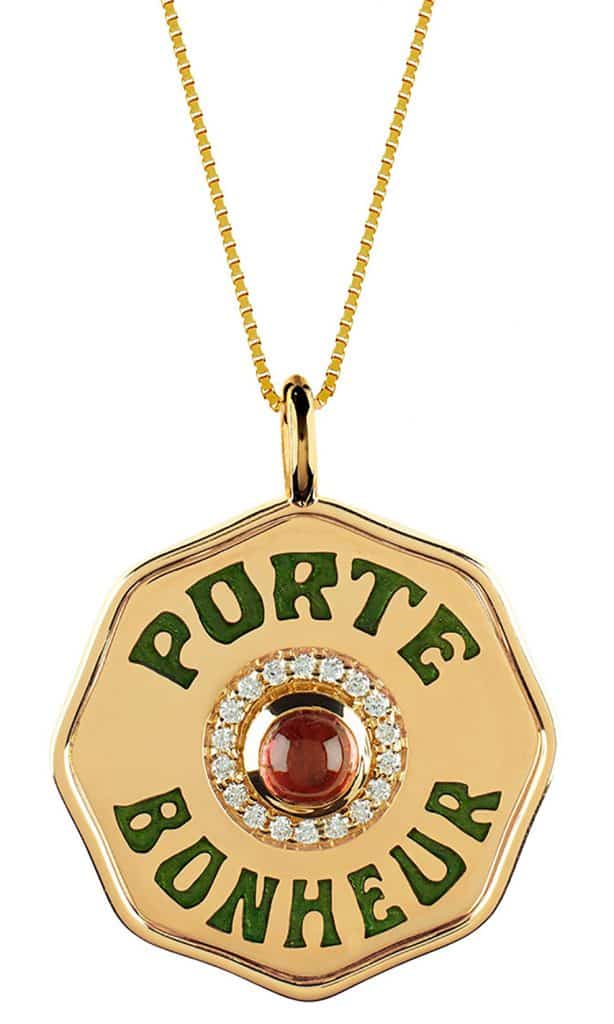
Porte Bonheur means "I bring good fortune" in French, and the phrase captures the spirit I wanted Marlo Laz to embody. I grew up with a strong awareness of gratitude, resilience, and the importance of finding light even in difficult circumstances. My grandparents and great aunt were Holocaust survivors, and their experiences shaped the values I carry into my work. I wanted the jewelry to offer a sense of optimism without losing depth. The Porte Bonheur pieces became a way to put that intention into a physical form. They are charms, but they are also messages of love, luck, protection, and encouragement.
Your jewelry often combines vivid gemstones, engraving, and unexpected references. How do you approach the design of a new piece or collection?
I usually begin with a feeling, an image, or a place that has stayed with me. Sometimes it is a landscape, sometimes an architectural detail, a vintage object, or a particular combination of colors. From there, I think about how to translate that impression into proportion, stone, metal, and symbolism. I am drawn to contrasts, such as an old-world reference with a more playful silhouette or a traditional motif rendered in an unexpected palette. The process is intuitive, but it also requires discipline. A design has to work technically, feel comfortable, and retain its meaning when it becomes something a person wears every day.

The Marlo Laz lettering has become an important part of the brand's identity. What were you trying to express through it?
I designed the Marlo Laz font when I launched the collection in 2014. I wanted it to feel distinctive but not overly polished or anonymous. Its references include La Belle Époque and Art Nouveau, as well as the energy and freedom associated with the 1960s and 1970s. The lettering gives the pieces a sense of personality and helps carry the emotional character of the brand. Words in French, initials, names, and small inscriptions become part of the design rather than simply information placed onto it. The font allows language to function as ornament, while still giving each piece a personal point of entry.
You have described the brand as global, but the work is made in Manhattan. How do those two aspects relate to one another?
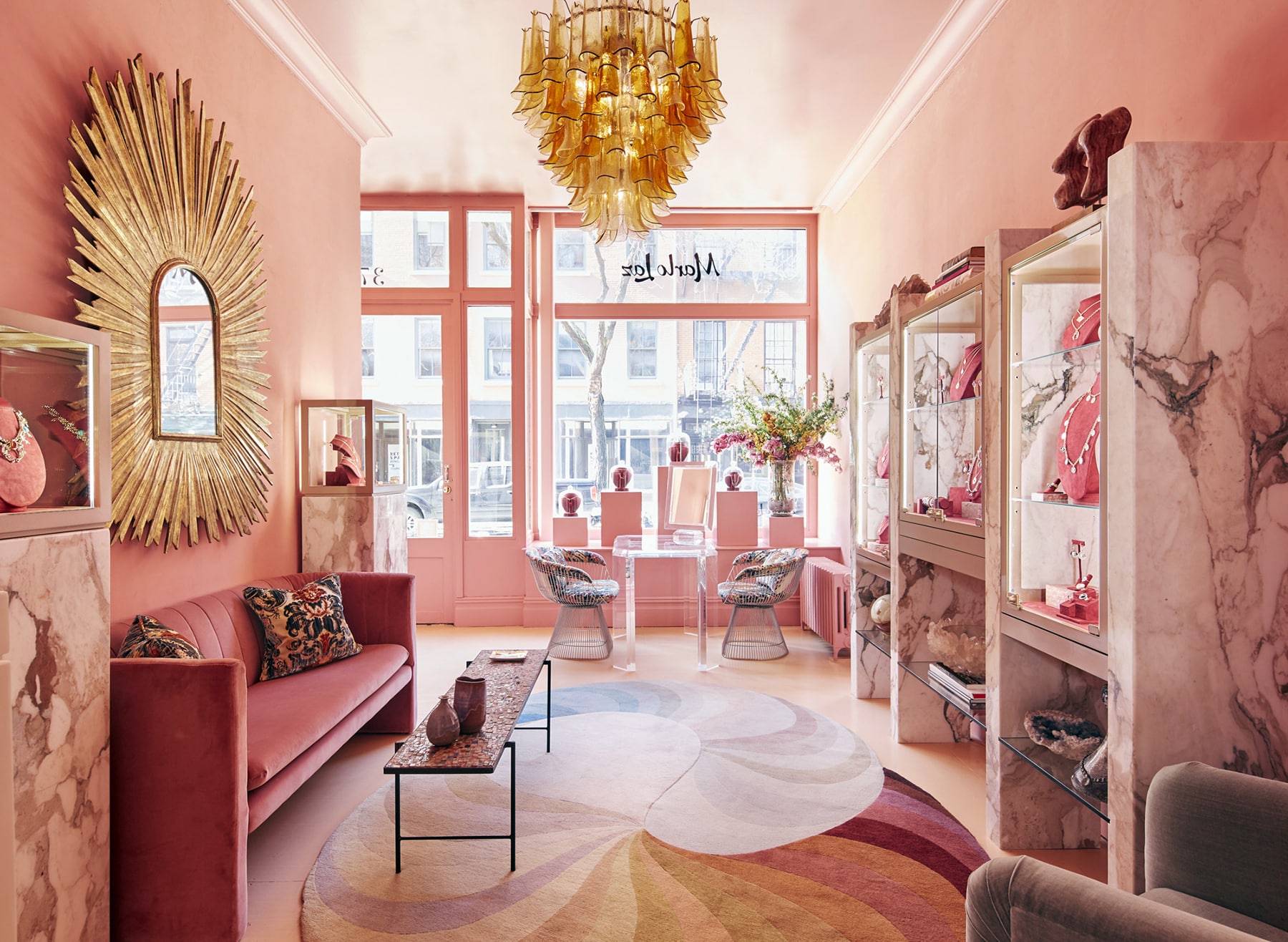
The world provides much of the inspiration, while Manhattan is where the work is brought into focus. I enjoy the tension between those things. The designs may begin with a memory of Morocco, a color combination from Mexico City, or an American landscape, but each piece is personally developed and made through relationships in New York. For bespoke work, I remain closely involved from the first sketch through production and quality control. That connection to the making process is essential to me. It keeps the work grounded and allows the final piece to retain both the global reference and the intimacy of something made for one person.
What do you hope someone feels when they choose and wear a Marlo Laz piece?
I hope the piece becomes meaningful in a way that is specific to the person wearing it. It might remind them of someone they love, a place they have visited, a quality they want to cultivate, or a moment they want to mark. I do not think jewelry has to be reserved for a formal occasion. The most powerful pieces can become part of daily life, almost like private companions. My aim is to create objects that bring pleasure and carry a sense of possibility. If a piece helps someone feel more connected to their own story or more open to the world around them, then it has done what I wanted it to do.