Profile
David and Sybil Yurman: A Life in Art, Made Wearable
Hannah R. Harris / Nov 20, 2025

Gold jewelry volumes fell by roughly a quarter in both countries in 2025, but India set a spending record while China sorted into a resilient top tier and a squeezed middle.
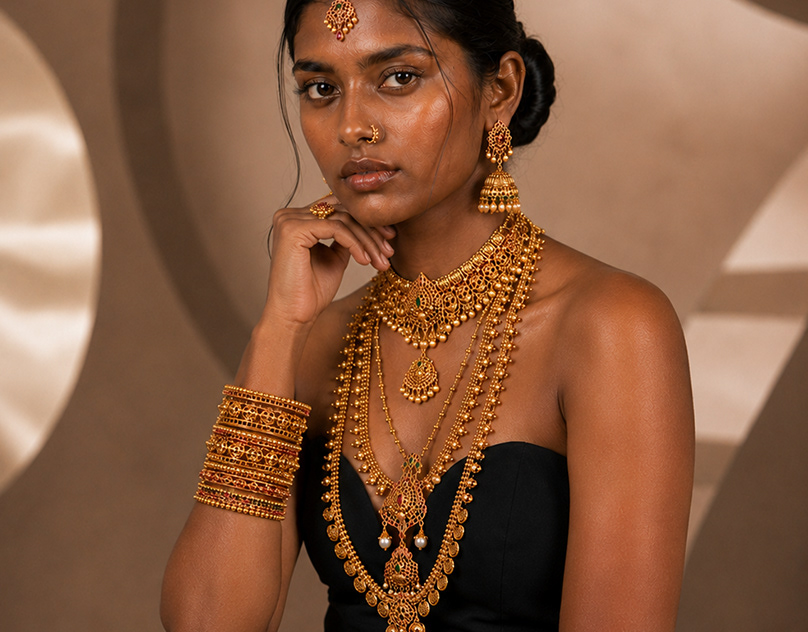
India's gold jewelry demand fell 24 percent in 2025, down to 430.5 tonnes. Spending on it still reached $49 billion, the highest figure on record for the country. China's tonnage moved almost the same distance in the same direction, down 25 percent to 360.1 tonnes, a level not seen in more than 15 years, while spending rose 8 percent to $39 billion, the second highest figure on record there too, according to World Gold Council data. Two markets, nearly identical volume declines, and by the time you look past the headline number, two entirely different stories.
The mechanism behind India's decline is a price problem, not a demand problem. The local gold price rose 74 percent over 2025, and households who set a rupee budget for a wedding or a festival responded by buying less metal rather than buying nothing. Retailers describe the adjustment in practical terms: lighter pieces, more stone work to hold visual size at a lower gram weight, wider use of 14 and 18 karat gold in cities where higher purity was once the default, and a trade-in market that lets a customer convert old gold into a new design without paying full price twice. The pattern carried into 2026. First quarter demand fell 19 percent year over year to 66.1 tonnes, while spending set a new quarterly record of $10 billion.
Organized retail is the clearest beneficiary of that adjustment. India's 2024 to 2025 union budget cut the basic customs duty on gold and silver to 6 percent, a step intended to pull supply out of informal channels and into registered stores. Titan, the country's largest listed jewelry retailer, grew its jewelry division 31 percent to 61,148 crore rupees in the fiscal year ending March 2026, a period in which the raw material it sells got substantially more expensive. A shopper stretching a fixed budget wants certainty on purity, a fair valuation on the gold they trade in, and a retailer who will still be there before the next wedding season. National chains have made those guarantees standard practice, and it is taking share from smaller, unorganized jewelers who cannot match them.
China's numbers look similar on paper and behave differently underneath. A new value-added tax treatment introduced in November 2025 added cost to jewelry purchases and pushed investment-minded buyers toward bars and coins instead, compounding a year already weighed down by soft consumer confidence and a late Lunar New Year. The pressure did not ease in 2026: first quarter demand fell 32 percent year over year to 85.2 tonnes, even as spending rose 16 percent to $13 billion. China's official retail sales category for gold, silver, and jewelry grew 12.8 percent in 2025, to 373.6 billion RMB, but that number is nominal revenue, inflated by the gold price itself, and it hides the volume decline sitting underneath it.
What is actually happening is a sorting into two tiers with a vanishing middle. At the accessible end, lightweight Hard Pure Gold pieces and old-for-new exchange programs are holding demand by keeping the visible gold content intact at a lower ticket. At the top, Richemont's jewelry houses were the group's most resilient category through a 23 percent sales decline across China, Hong Kong, and Macau in fiscal 2025, and they came back first: the quarter to June 2026 brought double digit combined growth across that region and a 24 percent constant currency rise at the jewelry maisons specifically. It is the middle, generic gold weight carrying no craft or story, that is losing its argument against a bar of bullion sitting next to it in the same display case.
I expect that gap to widen through the rest of 2026. India's organized retailers should keep converting the price shock into share gains heading into the autumn wedding season, and Titan's next set of results will be the number to watch for confirmation. In China, the test is whether the accessible lightweight segment and the luxury top can keep growing while the undifferentiated middle keeps shrinking around them. A brand entering either market this year needs a different playbook for each: India rewards trust built at scale, China rewards a proposition sharp enough to survive next to a gold bar.