Profile
Rachel Scott on Craft, Context, and the Expansive Language of Diotima
Hannah R. Harris / Aug 8, 2026

Why more brands are trading showrooms for one-on-one fitting sessions.
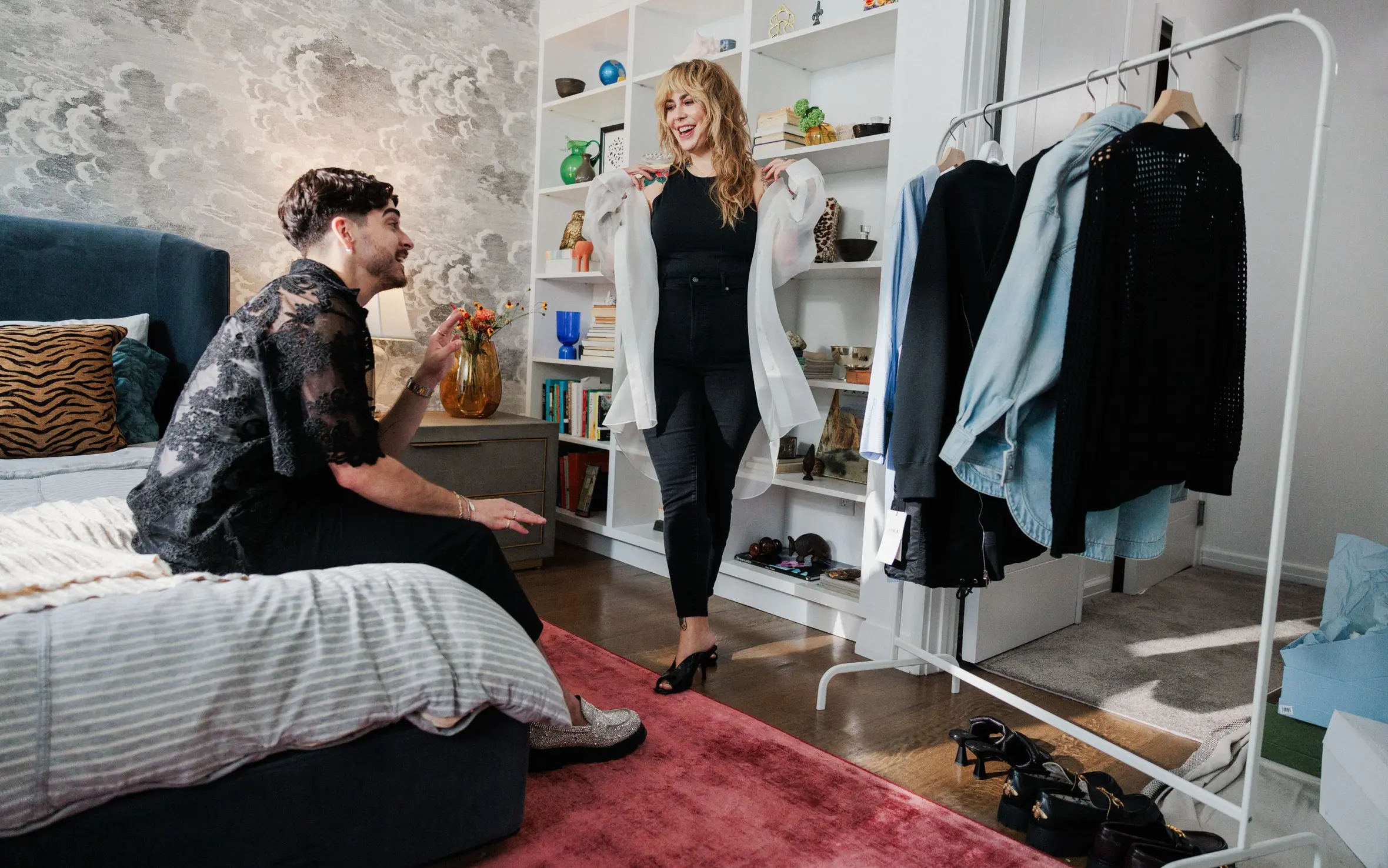
The appointment is becoming fashion’s most useful small room. Not the sprawling showroom with a full seasonal rail and a quiet afternoon to fill, but a compact studio with a calendar, a stylist, and a client who has already said what she came to solve.
The model sits between e-commerce and traditional retail. A customer discovers the label online, books a time, and arrives to a deliberately edited selection: a few silhouettes, the right sizes, perhaps a fabric book or a measuring tape. The sale may be ready-to-wear, made-to-order, or a commission that begins with a deposit. The common denominator is not exclusivity for its own sake. It is that the brand is turning a fitting into the primary commercial event.
McKinsey’s April 2026 research on the future of physical retail found that younger consumers show stronger preferences for curated environments, pop-ups, and showroom-style formats. The same research argues that physical retail remains important even as discovery and purchasing become more digital. That combination matters for independent fashion: a studio does not need to recreate the department store’s breadth if it can make the in-person moment more useful than a scroll.
The evidence is not an argument that shoppers have stopped wanting open stores. It points to a division of labor. Digital channels handle search, comparison, and pre-qualification; the appointment handles proportion, confidence, and the social reassurance of another person saying, in effect, try this one. McKinsey’s earlier apparel omnichannel research reached a similar conclusion: six in ten people used at least one digital channel in their apparel journey, while physical stores could differentiate through experience and personalization.
For a small label, that can mean fewer square feet devoted to passive browsing and more time devoted to high-intent visits. The operating logic is an inference, not a reported industry average: if a studio can reduce idle opening hours and hold less breadth on the rail, it may put more of its fixed cost behind appointments that have a defined purpose. That only works when the calendar fills and the service is good enough to earn a second visit.
The appointment model is especially natural for categories where the garment cannot be understood on a hanger. DEPLOY, a London label, asks clients to book a 60-minute made-to-measure appointment, choose from its ready-to-wear collection, and commission a version in a preferred fabric or colour. It charges a £90 booking fee and makes the made-to-measure order non-refundable. The fee is a small but clear signal that time and expertise are part of the offer.
At the other end of the spectrum, appointment studios can work as personal-shopping rooms rather than ateliers. ONE OF’s Manhattan appointments range from a one-hour showroom session for a made-to-order piece to a longer bespoke appointment, with a virtual option available as a first conversation. In both cases, the customer is not simply being given access to stock; she is being guided through a decision with consequences for fit, price, and delivery.
That changes what staff need to know. A conventional sales associate is trained to move a product. A studio stylist must read a wardrobe problem, build an edit, take or interpret measurements, explain alterations, and record the outcome. The useful technology is consequently less about spectacle than continuity. In Moncler’s 2024 annual report, the company describes its MonClient app as a centralized CRM calendar that lets advisors manage appointments, record client moments, check availability, make sales, enrich profiles, and handle after-sales requests. A small brand does not need Moncler’s scale to need the same memory.
The operational prize is a reusable client record. A measurement taken once can inform the next order. A note about sleeve length or preferred neckline can prevent a future return. A fitting that ends without a sale can still produce a better next appointment. This is where appointment retail can become more than a private version of a shop: it creates a feedback loop between styling, product development, and production.
The strongest examples are hybrid. In April 2026, TheIndustry.fashion reported that Susie Cave’s new label would open a by-appointment-only store in London, offering 25 silhouettes for weddings and funerals, custom-tailored and personalisable. The small assortment is the point: a client can compare meaningful variations without sorting through an undifferentiated season.
Other businesses use the appointment as one layer of a broader physical strategy. TheIndustry.fashion reported that LN-CC, whose original concept opened on an appointment-only basis, later reopened for walk-in visitors while retaining private appointments for a more personalized journey. That sequence is instructive. Appointment retail can create calm and control, but walk-in traffic still performs discovery, brand theatre, and the basic work of being findable.
The choice should therefore follow the job the space must do. A bridal or made-to-measure brand can make the calendar the front door because fit and ceremony are already part of the purchase. A directional ready-to-wear label may need a hybrid room where a customer can browse before booking a deeper session. A wholesale showroom still has a separate purpose: it lets buyers compare a range, place seasonal orders, and see the commercial architecture of a collection. A private client fitting cannot replace that function.
The temptation is to treat appointments as a luxury signal. That is the least interesting version of the idea. The serious test is whether the studio improves the quality of demand without making access needlessly narrow.
Brands should track booked-to-held appointments, conversion, average order value, deposits, alteration and return rates, repeat booking, referral, and the hours required per sale. They should also separate made-to-order deposits from recognized revenue and account for the labor of follow-up. A full calendar can conceal a weak business if every session is long, heavily discounted, or unable to turn into production.
Access is the other constraint. A deposit or consultation fee can protect scarce time, but it can also filter out precisely the customer a growing label needs to meet. Virtual consultations, periodic open studio days, traveling pop-ups, and a clear online size-and-fit education layer can widen the funnel without returning the brand to an always-open showroom.
My read is that appointment styling studios will grow because they answer a narrow 2026 problem: shoppers still want the confidence of a physical fitting, while smaller brands cannot afford to perform abundance all day. The winning studio will not pretend that every customer wants intimacy. It will use the appointment where human judgment adds value, keep discovery available elsewhere, and treat every fitting as data for the next garment.
The quiet rise is therefore not a retreat from retail. It is a re-pricing of the room. Less inventory on display, more expertise on call, and a business model that asks the customer to arrive with a question—and leaves the brand responsible for making the answer fit.
Sources: McKinsey on the future of physical retail, McKinsey on apparel omnichannel retail, DEPLOY made-to-measure appointments, ONE OF appointments, Moncler 2024 annual report, and TheIndustry.fashion on Susie Cave and LN-CC.