Profile
Gucci Westman on the Art of Making Beauty Feel Like Yourself
Kayla M. Walker / Aug 8, 2026

Historian Erin Griffey convenes Beauty Studies in the Premodern World, a monthly scholarly working group running September 2026 through May 2027, arguing that face paint and skin care were knowledge systems, not vanity, long before the modern beauty industry existed.
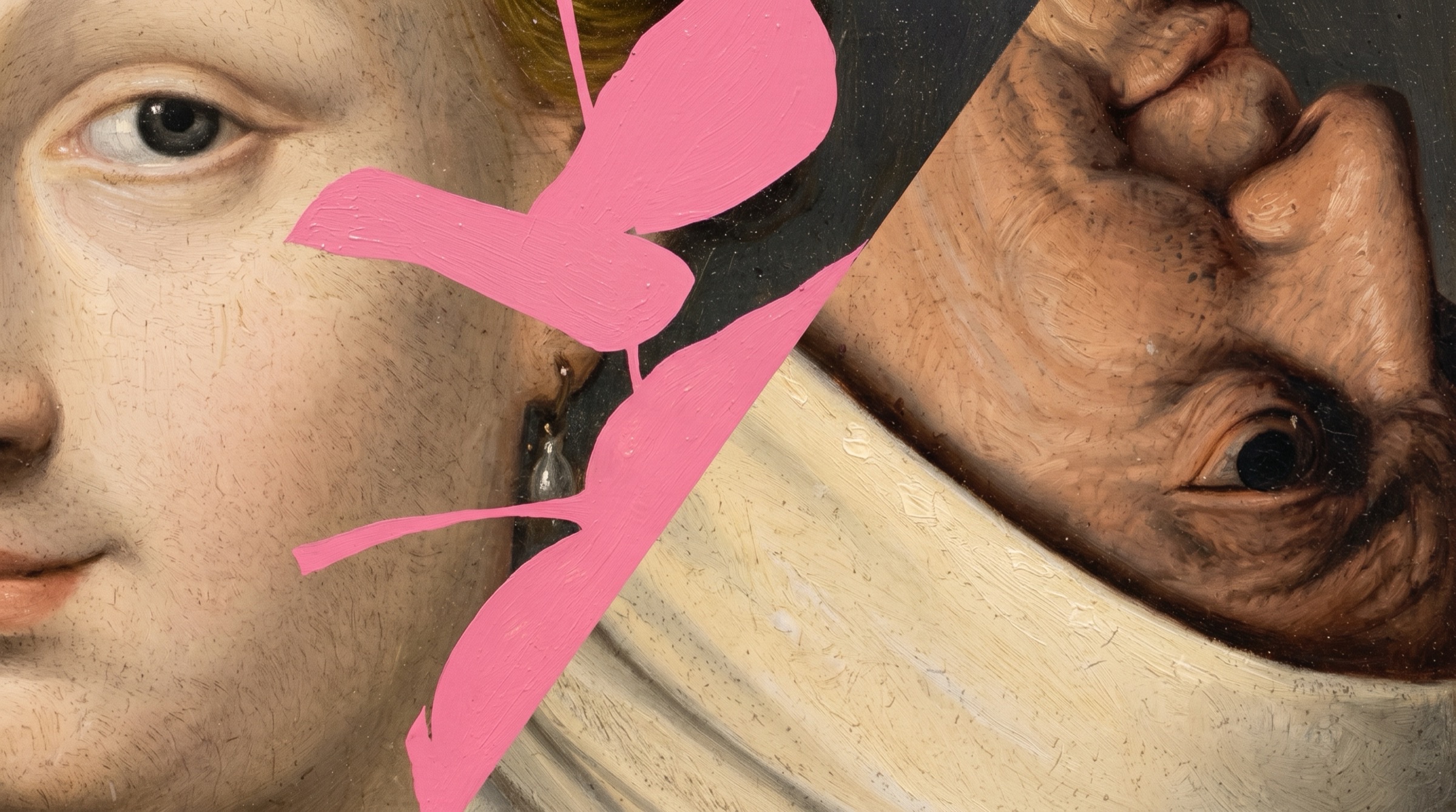
Nine sessions, ninety minutes each, the first Monday of the month from September 2026 through May 2027, conducted entirely online: that is the unglamorous shape of Beauty Studies in the Premodern World, a new scholarly working group convened under the Consortium for History of Science, Technology and Medicine. It is not an exhibition, and there is no object on a plinth. What it offers instead is an argument, stated plainly on the group's own page, that the cultural histories of beautification and bodily care in the premodern world deserve the same transdisciplinary scholarly attention as medicine, alchemy or religion, fields that have never had to justify their own seriousness the way cosmetics history routinely does.
The group is convened by three historians: Montserrat Cabré of the University of Cantabria in Spain, Romana Sammern of the University of Salzburg and Mozarteum University, and Erin Griffey of the University of Auckland, whose 2025 book Facing Decay: Beauty, Aging, and Cosmetics in Early Modern Europe, published by Pennsylvania State University Press, is the kind of scholarship the seminar series is built to generate more of. Griffey's research reconstructs how women in early modern Europe understood aging skin, cosmetic recipes and the tension between religious suspicion of face paint and a widely shared, practical belief that appearance signaled health, status and moral order.
The working group's founding language draws a direct line under its own stakes: "We reposition beauty not as a superficial concern but as an historically significant domain of knowledge making." That sentence is doing more argumentative work than it first appears to. Cosmetics history has long been treated, even within academic circles, as a minor tributary of fashion or social history, a footnote to the real business of medicine or economics. Griffey and her co-conveners are proposing instead that a sixteenth-century recipe for whitening a woman's complexion belongs in the same analytical category as a period's medical texts: both encode theories of the body, both circulated through networks of women who tested, adjusted and passed down formulas by hand, and both were taken seriously enough at the time to be regulated, moralized about and occasionally banned.
What makes this an unusual peg for a beauty desk is exactly what makes it worth flagging: none of the nine session topics have been announced beyond placeholder scheduling, so the working group is, at this stage, a structure and a premise rather than a set of findings. A skeptical reader could reasonably ask whether repositioning beauty as knowledge making is itself doing rhetorical work, borrowing the prestige of the word knowledge to dignify a subject that some scholars would argue is interesting precisely because it was frivolous, contested and socially fraught, not despite it. Griffey's own book does not shy from that friction: Facing Decay documents religious writers condemning cosmetics as vanity and deception in the same period that recipe books for exactly those cosmetics circulated widely among the same social class, evidence that the premodern world itself never fully settled whether painting a face was knowledge, sin, or both at once.
That unresolved tension is likely to be the working group's real subject, whatever the individual session titles turn out to be. A recipe for concealing smallpox scars or slowing the visible signs of age was never neutral information. It carried judgments about who was permitted to alter their appearance, for what reason, and at what moral cost, questions a modern beauty industry still has not fully answered either. Convening scholars monthly to take that seriously, rather than treating it as settled or beneath notice, is itself the argument.