Profile
Rachel Scott on Craft, Context, and the Expansive Language of Diotima
Hannah R. Harris / Aug 8, 2026

At Schiaparelli, Daniel Roseberry approaches couture as a space for instinct, craft, cultural exchange, and the freedom to make fashion that cannot be ignored.
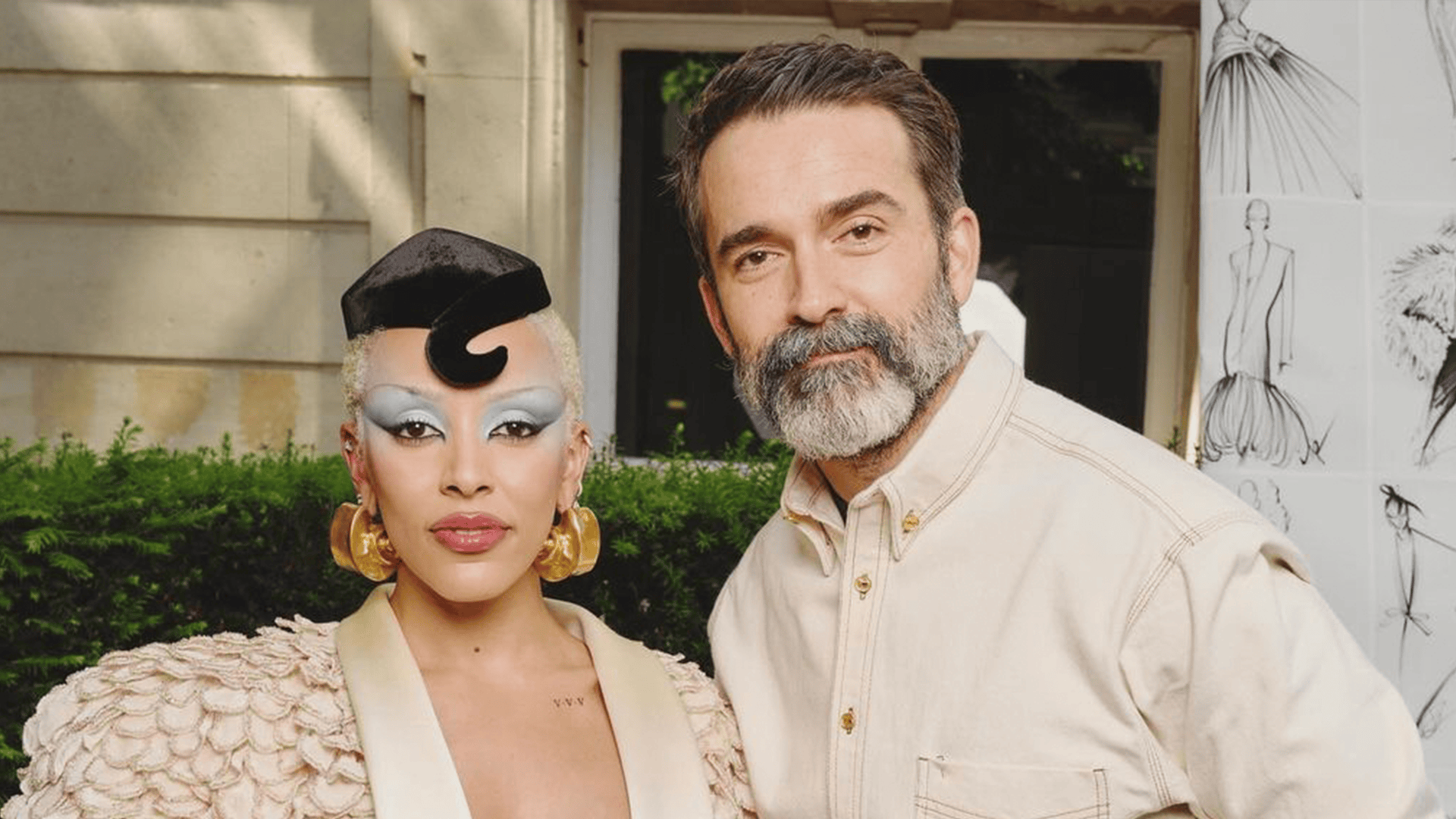
At Schiaparelli, Daniel Roseberry approaches couture as a space for instinct, craft, cultural exchange, and the freedom to make fashion that cannot be ignored.
You grew up in Plano, Texas, and now lead one of Paris’s historic couture houses. What did that distance give you?
It gave me an outsider’s perspective, and I think that has been important at Schiaparelli. I did not grow up inside the traditional European fashion system, so I came to it with a certain openness and perhaps fewer assumptions about what a couture house was supposed to be. My early references were broad. They included animation, music videos, cinema, art, and the spectacle of fashion itself. That sense of possibility has stayed with me. Paris is a place with an extraordinary history, but I have never wanted history to become a restriction. I am interested in what happens when a strong heritage is approached with curiosity rather than reverence alone.
What did you understand about Elsa Schiaparelli when you first arrived at the house?
I understood that Elsa was not simply a designer with a recognizable archive. She was someone who created a way of thinking. Her work came from an engagement with artists, writers, technology, popular culture, and the strange energy of her time. She understood that fashion could be provocative, humorous, intellectual, and emotionally direct at once. That is more useful to me than reproducing a particular shoe, dress, or motif. When I arrived, I felt a responsibility to preserve her bravery rather than imitate her vocabulary. The challenge was to ask what that spirit could mean now, through my own experience and the capabilities of the ateliers.
Schiaparelli is closely associated with Surrealism. How do you keep that connection alive without turning it into a costume?
For me, Surrealism is less a visual style than a permission structure. It allows the unconscious, the unexpected, and the irrational to enter the work. It encourages a certain creative innocence, where an idea does not have to justify itself immediately through practicality. At the same time, the house cannot depend on eccentricity alone. The craft has to be exact, and the silhouette has to carry the idea. I am interested in the tension between something disciplined and something that feels almost impossible. A sculpted form, an exaggerated anatomical detail, or an unfamiliar proportion can be powerful when it is resolved with precision.
Your couture often makes the body look altered or transformed. What draws you to that language?
The body is the starting point of fashion, but it does not have to remain literal. Couture gives us the opportunity to question what the body can become through clothing. A shoulder can become architectural, a gesture can be extended, or a familiar part of the anatomy can be displaced into something symbolic. I am not interested in decoration for its own sake. The transformation should create a feeling. It might suggest strength, vulnerability, desire, danger, humour, or a kind of myth. The most successful pieces are those where the construction is visible, but the emotional response comes first.
How do the Schiaparelli ateliers shape your ideas?
The ateliers are active participants in the design process. An idea may begin as a drawing, but it changes when it encounters fabric, the body, and the hands of the people making it. Sometimes the limits of a material lead to a more interesting solution. Sometimes a technical problem reveals the real character of a piece. Couture is built through a conversation between imagination and knowledge. The artisans bring an understanding that cannot be reduced to a reference or a sketch. My role is to establish the emotional and visual direction, then work closely with the teams until the garment has both the force of the original idea and the integrity of its execution.
You have described ready to wear as a more intimate part of the house. What does intimacy mean in that context?
Couture can operate at the level of fantasy and spectacle, while ready to wear has to enter someone’s life. That does not mean it should become anonymous or ordinary. At Schiaparelli, the ready to wear collection is intentionally focused. It gives us a way to explore the house’s attitude through pieces that can be worn more frequently and styled in different ways. The work still depends on strong tailoring, distinctive details, and the tension between restraint and extravagance. I want the wardrobe to feel precise and recognizably Schiaparelli, but also useful to the person wearing it. The intimacy comes from that relationship between a garment and its everyday life.
How do you think about the relationship between fashion and art?
I do not see fashion and art as interchangeable, and I do not think a garment becomes art simply because it is difficult to make. Fashion has its own responsibilities. It touches the body, moves through the world, and is shaped by the person who wears it. What interests me is the exchange between the disciplines. Elsa understood that exchange very well. She worked with artists because their perspectives could disrupt the usual logic of clothing. I approach collaborations and references in a similar way. Art can open a door, but the final object still has to function as fashion, with its own rhythm, construction, and emotional immediacy.
Schiaparelli has become known for highly visible moments on the red carpet. What can those moments do for a house?
A public appearance can reveal the power of a garment in a very immediate way. It places the work in a cultural conversation, sometimes before people know anything about the collection or the atelier behind it. That visibility can be meaningful, but it is not the whole purpose of the house. The garment still needs an idea, a point of view, and a relationship to the larger body of work. I am interested in pieces that have an instant presence but reward a closer look. The image may travel quickly, while the craft and the thought behind it take longer to understand. Both forms of attention matter.
You have spoken about resisting the pressure of constant digital visibility. How does that affect your approach to presenting couture?
The speed of digital culture can make every image feel temporary. Couture asks for a different kind of attention. It is made slowly, and much of its value is found in details that do not always register immediately on a screen. I want a Schiaparelli presentation to create a real encounter with the clothes, the space, and the people making them. That does not mean rejecting the digital world. It means being conscious of what cannot be replaced by it. A show can be a complete experience, with its own atmosphere and duration. The work should offer more than a quick visual reaction.
What does it mean to move Schiaparelli forward?
It means allowing the house to remain alive. A heritage brand can become fixed if it treats its history as a finished answer. Schiaparelli’s history is valuable because it was open to experiment, collaboration, and change. Moving forward means keeping that attitude while responding to the present. It means respecting the ateliers, developing a clear vocabulary, and allowing each collection to ask a new question. I do not want the house to be remembered only through its past images. I want it to continue producing work that feels necessary to the moment, with enough conviction to stay in the mind after the spectacle has passed.