Profile
Rachel Scott on Craft, Context, and the Expansive Language of Diotima
Hannah R. Harris / Aug 8, 2026

For Conner Ives, fashion is a way to turn personal memory, discarded materials, and cultural references into clothes with emotional and social weight.
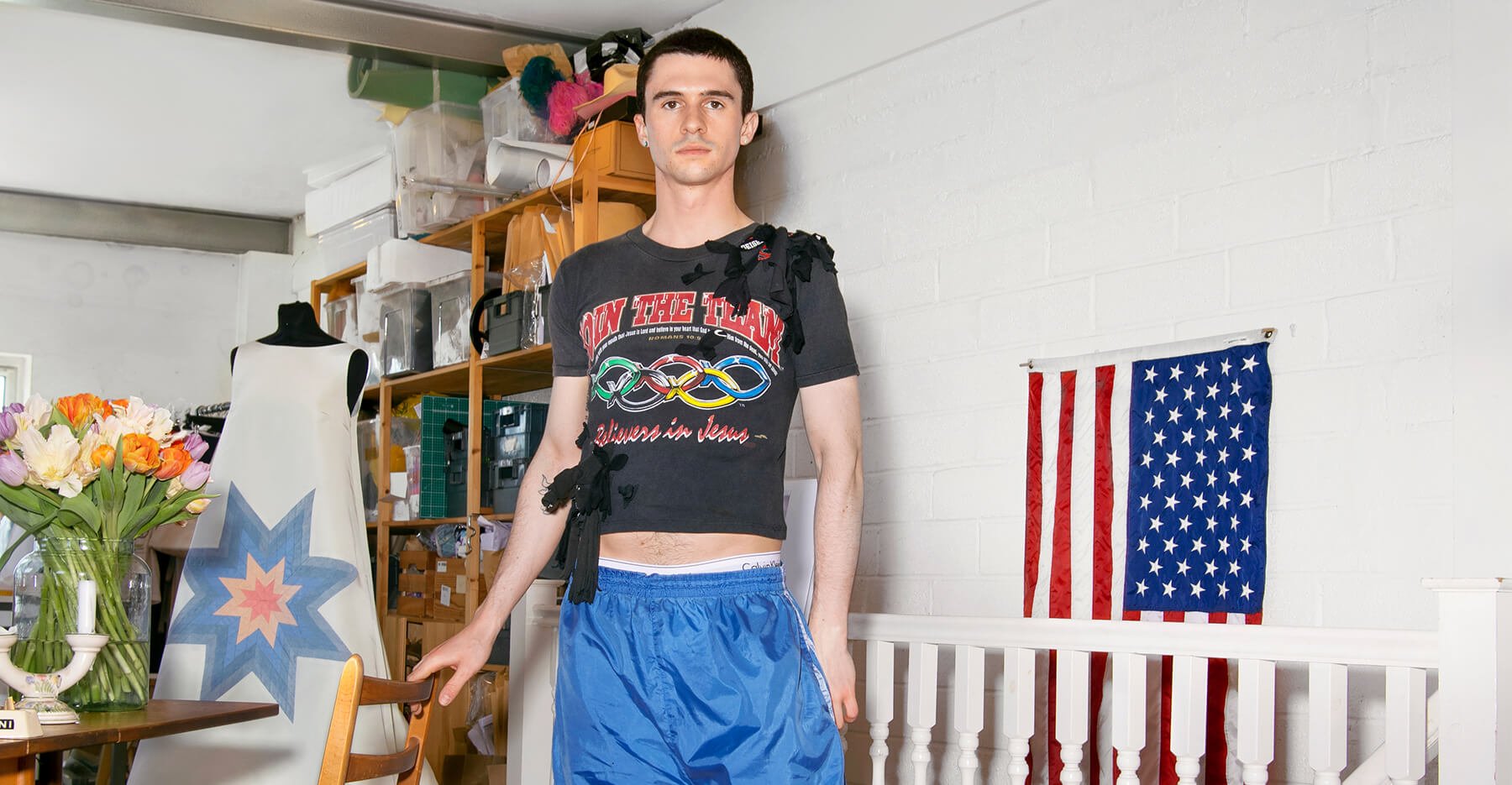
For Conner Ives, fashion is a way to turn personal memory, discarded materials, and cultural references into clothes with emotional and social weight.
You grew up in Bedford, New York, and later moved to London to study at Central Saint Martins. How have those two places shaped your work?
America and London are both deeply present in the way I think about clothes. Bedford gave me a very specific relationship to American culture, particularly through the girls and women I grew up around. Their clothes, attitudes, and sense of occasion became an important visual language for me. Moving to London in 2014 gave me distance from that world, which made it easier to examine it. At Central Saint Martins, I was able to develop the technical and conceptual tools to turn those memories into garments. The work often comes from looking at America from the outside while still feeling completely connected to it.
Your work is often described through the idea of Americana. What does that idea mean to you now?
Americana is not a fixed image for me. It is a collection of symbols, memories, contradictions, and shared references. There is an effortlessness in the way American identity is presented, but underneath that are many different stories and experiences. I am interested in expanding what Americana can represent rather than treating it as a finished visual code. That can mean looking at school uniforms, sportswear, evening clothes, popular music, or the women who shaped my understanding of style. The references are recognisable, but I want them to remain open enough for people to bring their own associations to them.
The women and girls you grew up with have been central to the brand’s identity. Why has that perspective remained so important?
They were my earliest references for how clothing could communicate personality. I watched the women around me dress for ordinary situations and important ones, and I noticed how much meaning could be carried through a silhouette, a colour, or the way something was worn. My early collections were a kind of portrait of that environment and the people in it. I am not trying to recreate those individuals literally. I am interested in the emotional charge of those memories, and in the confidence, humour, vulnerability, and contradictions that clothing can hold. The work is a way of acknowledging the influence they had on me.
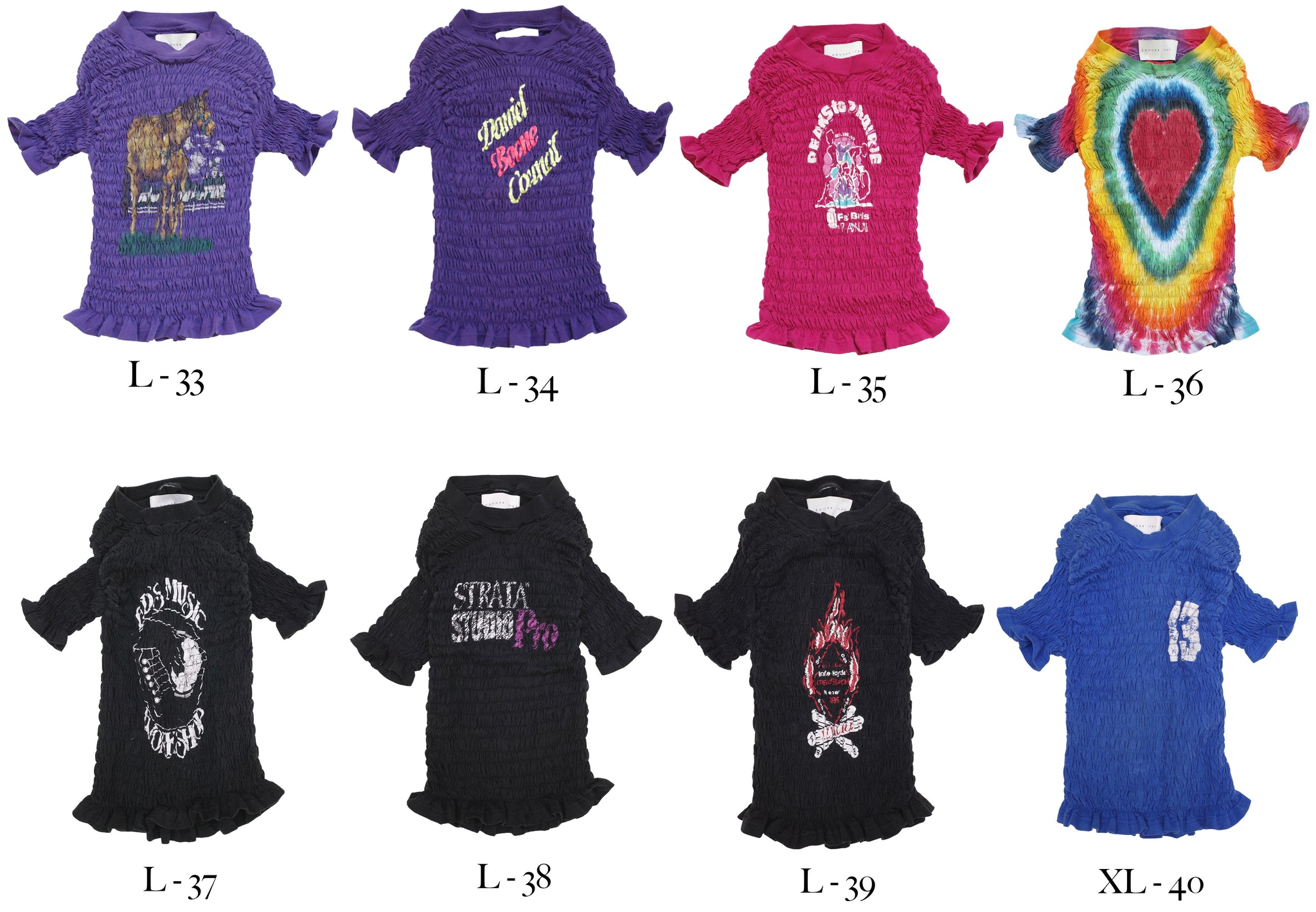
You began reworking garments while you were still a student. What did that process teach you about design?
Working with existing garments forces you to pay attention. You cannot approach the material as if it has no history or limitations. The proportions, damage, seams, colours, and previous uses all become part of the design problem. That process encouraged me to be more inventive and more respectful of what was already there. It also helped me understand that desirability does not have to come from newness. A garment can become more compelling when its past remains visible, or when several histories are brought together. Reworking taught me to let the material participate in the design rather than imposing an idea on it from the beginning.
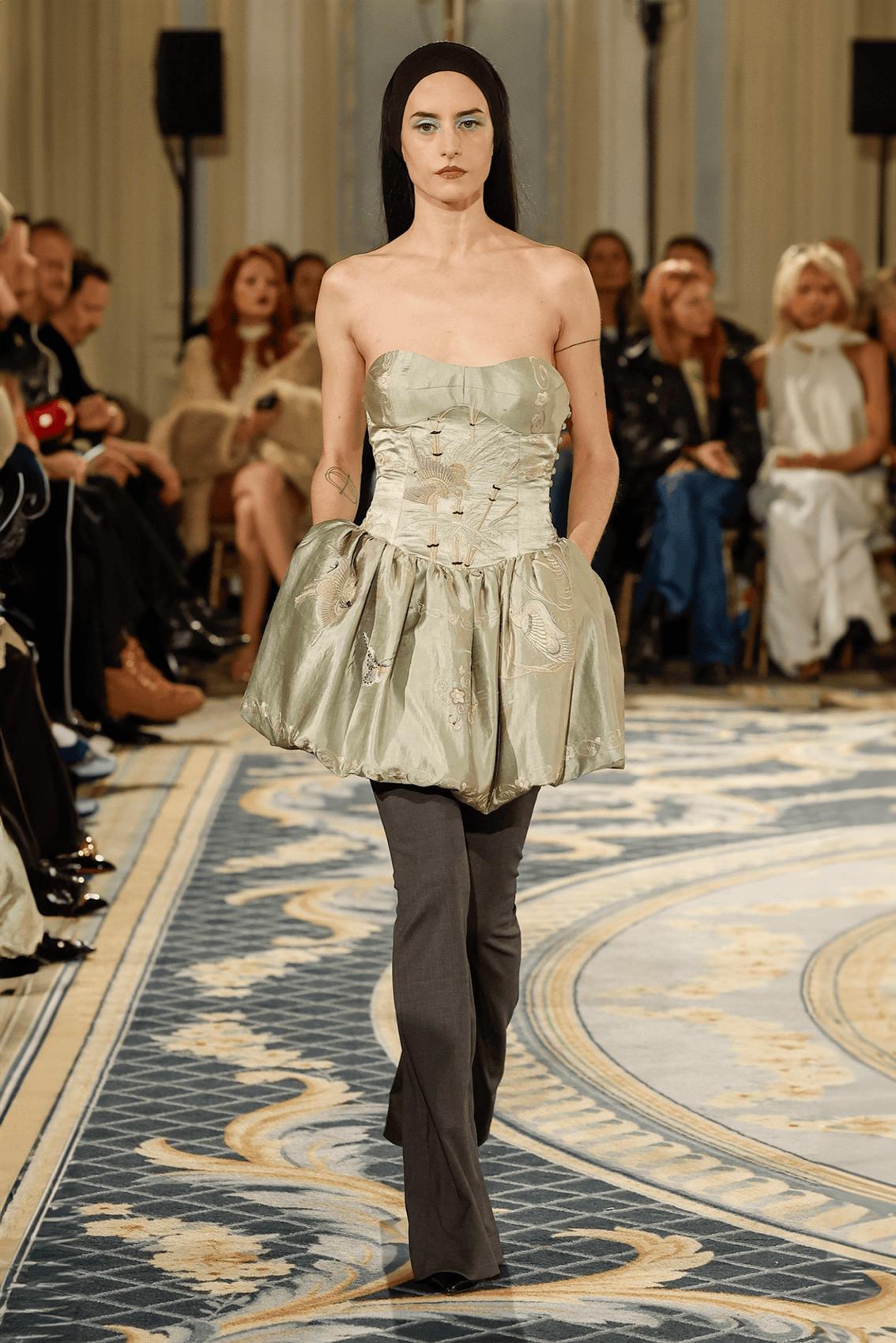
Most of your pieces are made from deadstock or vintage garments. How do you make responsibility feel like a creative principle rather than a limitation?
Responsibility has to be built into the way the clothes are conceived, not added afterwards as a statement. Working with deadstock and vintage material gives the design process a different starting point. I am responding to what exists, which can lead somewhere less predictable than working from a blank piece of fabric. At the same time, the finished garment still has to be desirable. I have always wanted to challenge the idea that responsible clothing should look worthy in a narrow or obvious way. Craft, care, and reuse can support clothes that feel exciting, glamorous, and emotionally powerful.
How do you think about the relationship between sustainability and the desire to make fashion that feels joyful and dramatic?
I do not think those things have to be separated. Fashion has an important role as an escape, and people should be allowed to want beauty, pleasure, and spectacle. The question is how that desire is produced and what happens to the materials involved. Humour and theatricality can also help open up a conversation about responsibility. If a garment is playful, it can make people curious before asking them to think more deeply about how it was made. I am interested in that balance. The clothes can be entertaining and visually immediate while still carrying a more considered approach to production.
Your collections often draw on pop culture, music, and recognisable social codes. How do those references enter the studio?
They usually arrive through a mixture of memory and observation. I might begin with a particular image, performer, garment, or type of woman, and then the reference expands as the collection develops. Pop culture is useful because it already has an emotional relationship with people. A song or image can take you immediately to a particular time in your life. I am interested in that speed of recognition, but I also want to disrupt it. The references are not there simply to reproduce a look. They help establish a world, and then the clothes can make that world stranger, more personal, or more complicated.
Your work has moved between clothing, footwear, casting, performance, and collaborations. How do you define the role of a fashion designer?
I see fashion design as a broad practice. Clothing is the centre, but the surrounding elements affect how that clothing is understood. Casting, music, styling, imagery, and setting can all change the emotional meaning of a collection. That does not mean every decision needs to be separated into its own category. They can work together as part of one larger idea. I have always been drawn to designers who build a complete world around their clothes, and I think that ambition is especially important for an independent label. The work is not only about producing garments. It is about creating a point of view people can enter.
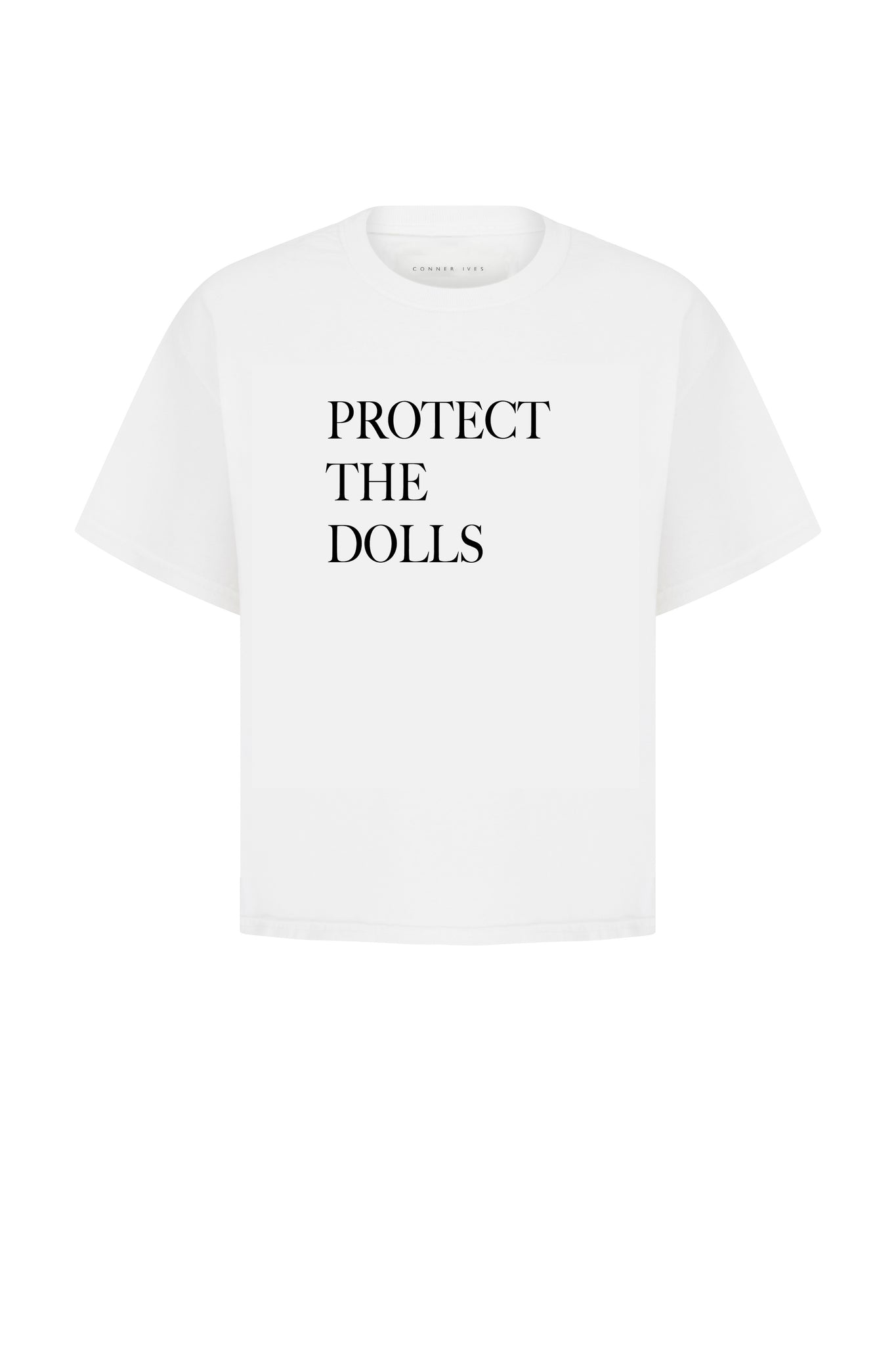
The Protect the Dolls T-shirt brought a clear political message into your work. What did you want the garment to communicate?
I wanted the message to be direct, visible, and useful. The phrase has a history within Ballroom culture and carries a sense of solidarity with transgender women. Putting it on a simple white T-shirt allowed the statement to travel easily and become part of everyday life. It was important that the garment support Trans Lifeline through its sales, because the message needed to be connected to practical support. Fashion can communicate an idea, but it can also create attention and resources around that idea. The response showed how a straightforward piece of clothing can become a way for people to publicly express care and solidarity.
What do you hope people feel when they wear Conner Ives?
I hope they feel recognised and energised. The clothes are designed to have a strong identity, but they should not dictate a single way of being worn or understood. I want people to bring their own memories, references, and sense of humour to them. Clothing becomes meaningful through use, and I am interested in the human charge that accumulates when a garment is worn repeatedly and made part of someone’s life. The work can be colourful, glamorous, or theatrical, but it should still feel personal. Ultimately, the clothes are for the person wearing them, and their interpretation is part of the design.