Profile
Gucci Westman on the Art of Making Beauty Feel Like Yourself
Kayla M. Walker / Aug 8, 2026

At the Museum at FIT, curator Colleen Hill's Doll Dressing argues that hair, makeup and dress have been quoting fashion dolls, not just childhood, since at least the twentieth century. On view September 16, 2026, through January 3, 2027.
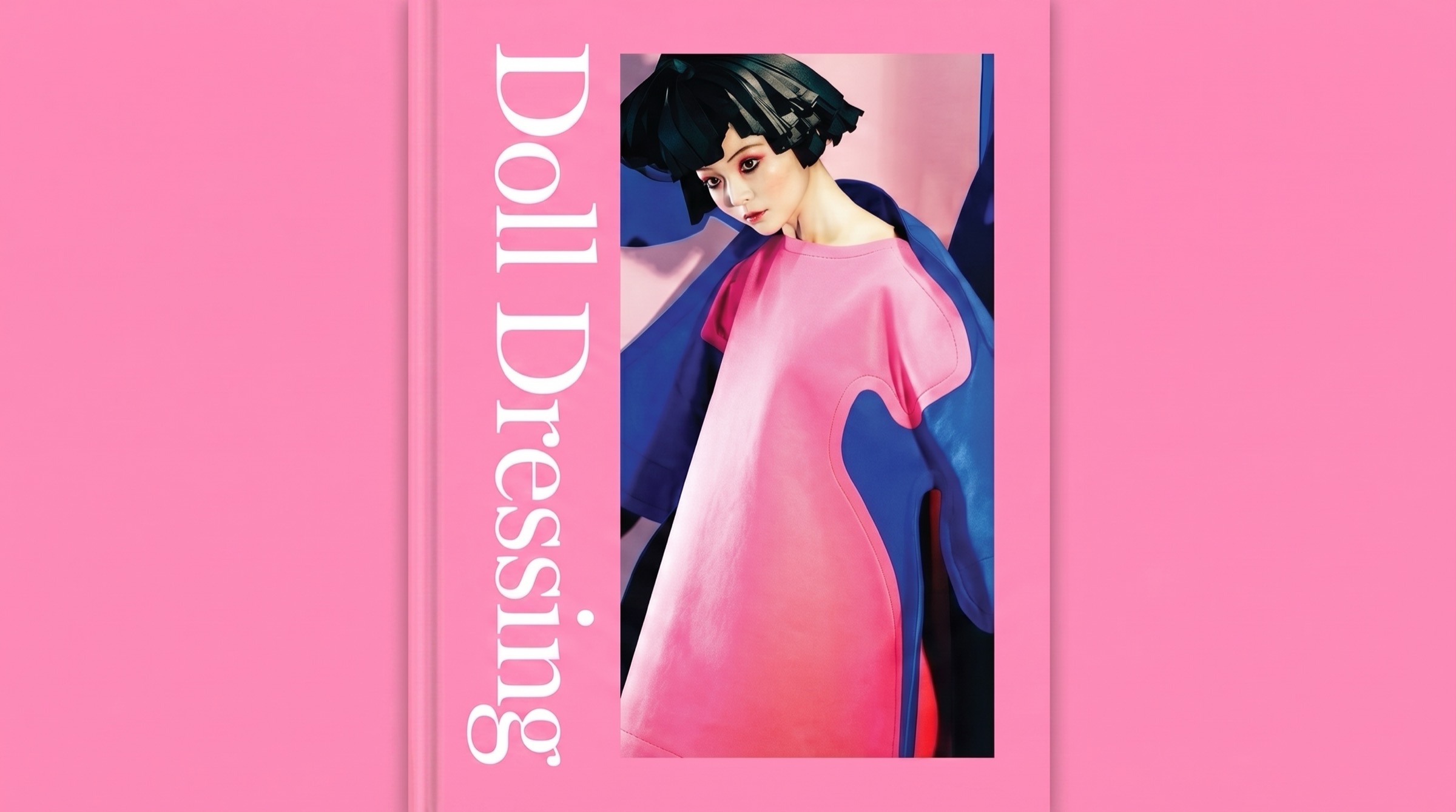
More than 170 objects fill the Special Exhibitions Gallery at the Museum at FIT this fall, and not one of them is a doll a child actually played with. They are garments, accessories, videos and artworks by designers from Balenciaga to Comme des Garçons to Moschino, chosen by curator Colleen Hill to make a specific and slightly uncomfortable claim: that fashion dolls have functioned less as toys imitating adult dress than as originators of it, prototypes that grown women's clothes, hair and makeup have been citing back for a century. Doll Dressing runs at the Museum at FIT in New York from September 16, 2026, through January 3, 2027.
Hill, senior curator of costume at FIT, gives the idea a name in the exhibition's own language: doll dressing, a phrase she defines as encompassing clothing, accessories, hair, makeup and even gestures that draw inspiration from dolls. That last word, gestures, is doing real work. The show is not only about silhouette. A section titled All Dolled Up moves through archetypes that recur across a century of fashion imagery, the flapper, the Lolita, each one built as much from a hairstyle and a painted mouth as from a hemline, and each one framed in the wall text as a mode of styling that designers and stylists have used deliberately, sometimes to signal empowerment and self-definition rather than infantilization.
It is a useful correction for a beat that tends to talk about hair and makeup as texture, as mood, as whatever a stylist reaches for backstage. A doll's face is a fixed, repeatable design object: molded features, a painted brow, a wig set in a particular curl. When a stylist replicates that on a living model, glassy lids, a rosebud mouth, hair set in stiff waves, they are not evoking childhood in the vague sense. They are quoting a specific manufactured face, one with its own design history and its own market logic, built to be sold and re-dressed season after season the way a ready-to-wear collection is.
The roster of designers assembled to prove the point is deliberately wide: Maison Martin Margiela and Marc Jacobs alongside Patrick Kelly, Loewe and Louis Vuitton alongside Anna Sui and Off-White, plus newer names like Emily Adams Bode Aujla and Lirika Matoshi. Read across those houses, the doll reference stops looking like a niche fetish object for a handful of provocateurs and starts looking like a recurring, almost load-bearing device in how fashion pictures femininity, artifice and control.
The claim a viewer could reasonably push back on is the direction of influence itself. It is easy to accept that fashion dolls reflect the era's beauty ideals, since manufacturers style them to look like whatever a given decade already prized. It is a stronger and more debatable claim that the traffic runs the other way too, that a stylist backstage at a runway show, glossing a lip to a hard shine or setting a wig into an unnaturally uniform curl, is reaching for the doll's face specifically rather than some looser idea of glamour or artifice. Hill's exhibition does not pretend the influence is one-directional; it asks the viewer to hold both readings at once, doll as mirror and doll as source, and to notice how often fashion has found that ambiguity useful rather than embarrassing.
What the show ultimately withholds is comfort. It does not resolve whether treating a woman's hair and face as an interchangeable, re-dressable surface is a critique of that idea or a continuation of it. Held up next to a century of designers who kept returning to the same device, styled brow after set curl after glossed mouth, the ambiguity starts to look less like an oversight and more like the actual subject.