Profile
Gucci Westman on the Art of Making Beauty Feel Like Yourself
Kayla M. Walker / Aug 8, 2026

At Jones Road Beauty, Bobbi Brown continues to build on a career defined by natural-looking makeup, practical formulas, and the belief that beauty should meet people where they are.

You have already built one influential beauty company. What made you want to begin again with Jones Road Beauty?
Jones Road grew out of a question I kept returning to: why was it so difficult to find makeup that was both clean and high-performing? I wanted products that felt good on the skin, looked natural, and did not require a great deal of time or technical ability. The idea was to create a collection of smart, flexible formulas that could work for many different people and many different lives. Starting again was exciting, but it was also a little frightening. I wondered whether people would compare the two brands or question whether I could do it again. In the end, I made the products I believed in.

What did you want Jones Road to offer that you felt was missing from the market?
I was looking for makeup that could be used intuitively. Something you could apply with your fingers, build up or sheer out, and adapt to the way you wanted to look that day. I wanted the products to be useful to someone who has been doing makeup for years, but also to someone who does not feel especially skilled at it. The collection needed to be simple without being basic, and versatile without becoming confusing. I often think of it as a makeup kit with the usefulness of a Swiss Army knife. Each product should have a purpose, but it should also give people room to make it their own.
Natural-looking makeup has been central to your work for decades. How has that idea changed?
The principle has stayed quite consistent. I have always been interested in enhancing someone’s features rather than covering them or changing their structure. When I was working as a makeup artist, I was drawn to skin that still looked like skin and faces that still looked like faces. The tools and formulas have evolved, and people now have access to far more information and inspiration, but the desire to feel like yourself has not gone away. At Jones Road, natural does not mean that makeup has to be invisible. It means the result should feel believable, comfortable, and connected to the person wearing it.
Jones Road is designed for a wide range of ages, skin types, and skin tones. How do you think about inclusivity when developing products?
It starts with paying attention to real people rather than designing for an abstract ideal. Skin does not behave the same way at every age, and people do not all want the same level of coverage or finish. A product has to be flexible enough to work with those differences. I also think inclusivity involves making products understandable. If someone needs a complicated set of instructions before they can use something, that creates a barrier. We try to make formulas that allow people to choose how much they want, where they want it, and how polished or minimal they want the final look to be.
What does clean beauty mean to you in practical terms?
For me, it means being deliberate about the ingredients we use and holding the formulas to a clear standard. When I began working on Jones Road, I gave our chemists a list based on the Credo beauty guidelines. I did not know at first whether we could meet those requirements while still creating products that performed well and looked natural. That became part of the work. Clean beauty should not require a compromise in performance. People deserve formulas that are thoughtfully made, effective, and pleasant to use. It is also important to keep paying attention to regulations and to the standards in the markets where the products are sold.
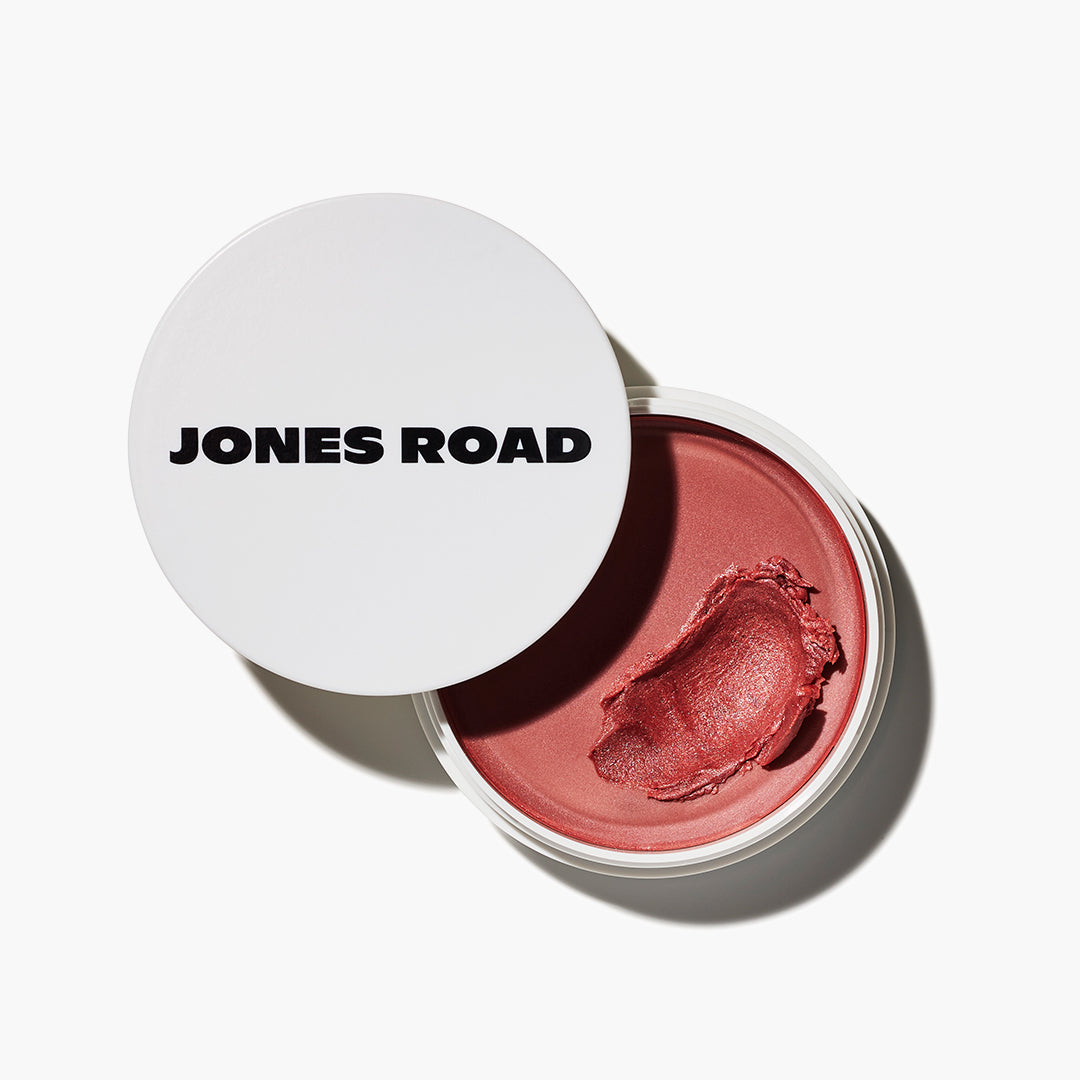
Miracle Balm has become one of the best-known Jones Road products, but it was not originally planned in its final form. What did that experience teach you?
Miracle Balm came from a formulation that was different from what I had initially requested. My first reaction was that it was not right. Then I tried it on my own face, and I understood that it had a quality I had not anticipated. It gave the skin a fresh, dimensional look and could be used in more than one way. That experience reminded me to stay curious during development. Not every unexpected result is a mistake. Sometimes you need to test a product in context, on the face, and see what it actually does before making a decision. Product development requires a clear point of view, but it also requires openness.
You have spoken about being less interested in makeup that changes the shape of the face. What do you want makeup to do instead?
I want makeup to bring life to the face. Blush, in particular, can make someone look more awake and more like themselves. I am less interested in telling people that they need to redraw their features or follow one prescribed technique. Makeup should give you options, not impose a correction. Some people want a very minimal look, while others enjoy something more visible. Both are valid. The important thing is that the person wearing the makeup remains present. I think the best result is often the one that makes you feel more comfortable in your own face, rather than making you feel that you have become someone else.
Jones Road began as a direct-to-consumer brand and later moved into physical retail. What has each environment made possible?
Direct-to-consumer gave us a direct relationship with the people using the products. We could listen to questions, see what people were curious about, and understand how the formulas were fitting into their routines. It also allowed us to introduce the brand with a focused collection rather than trying to build a large assortment immediately. Physical stores create a different kind of connection. People can sit down, try products, ask questions, and experience the textures in person. Beauty is very sensory, so that matters. The two channels support each other. One gives us immediacy and reach, and the other gives people time and space to explore.

What has changed about your role as the founder of a smaller, independent brand?
There is a different energy in working with a small team. I am still deeply involved in the products and the creative direction, but I also have to trust the people around me to do what they do best. The work is collaborative, and decisions can move quickly. I enjoy bringing together what I know from my years in beauty with the knowledge and perspective of the team. Being independent also gives the brand a clear sense of responsibility. We have to stay close to the products, the customer, and the reason the company exists. That focus helps us decide what belongs in the collection and what does not.
What do you hope people take away from the Jones Road approach to beauty?
I hope people feel encouraged rather than judged. Makeup should be a useful part of getting ready, not another source of pressure. You should be able to wear a little or a lot, change your mind, and use a product in the way that makes sense for you. I also want people to understand that there is no age at which beauty becomes less relevant. The needs may change, but the pleasure of caring for yourself and expressing yourself remains. Jones Road is built around that freedom. It is about helping people look and feel more like themselves, with products that support their choices instead of defining them.