Profile
Gucci Westman on the Art of Making Beauty Feel Like Yourself
Kayla M. Walker / Aug 8, 2026

Skin-cycling converted established dermatology principles into a simple consumer schedule, but its strongest effect has been behavioral rather than clinical.
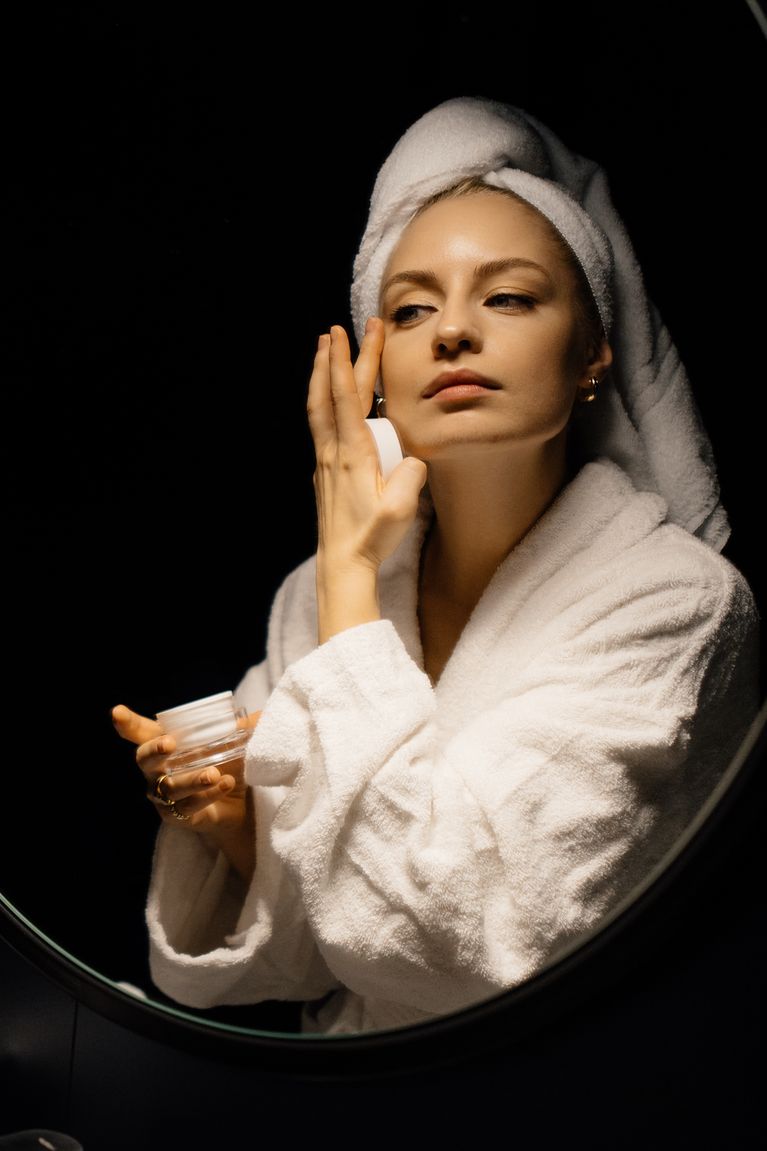
Skin-cycling became a durable beauty term by giving familiar ingredients a memorable sequence. The commonly circulated four-night plan uses an exfoliant on the first night, a retinoid on the second, and recovery-focused products on the third and fourth nights. The schedule was easy to demonstrate, easy to repeat, and easy to translate into product bundles.
The evidence is more limited than the visibility of the term. There is no established clinical literature validating the branded four-night sequence as a superior regimen for the general population. Popular Science reported in its review of the trend that no research had directly studied skin-cycling as a named method. That gap matters because evidence for individual ingredients cannot automatically validate the order, frequency, or combination prescribed by a social routine.
The useful question is therefore what changed in practice. Skin-cycling made consumers more conscious of irritation, ingredient overlap, and the need to introduce actives gradually. It also gave brands a framework for selling recovery products alongside treatment products. Its contribution is best understood as a behavior and merchandising system built on older dermatological advice.
Retinoids are among the better-supported topical ingredients in the conversation. A randomized, double-blind, vehicle-controlled study published in JAMA Dermatology evaluated 0.4 percent retinol in older adults over 24 weeks and found a significant improvement in fine wrinkling compared with vehicle. The study was small, used a specific formulation, and does not establish that every over-the-counter retinol product will produce the same result.
The American Academy of Dermatology advises that retinoids can improve uneven tone, pigmentation, and texture, while also warning that irritation is common. Its guidance recommends starting slowly, using moisturizer when appropriate, and protecting the skin from the sun. It also notes that people with redness, inflammation, or certain skin conditions may need professional advice before using a retinoid. These instructions support flexible dosing rather than a universal calendar.
A prospective 28-day study indexed in PubMed in 2025 examined retinol tolerance in 18 Chinese women. The researchers observed changes during an adverse-reaction phase and later tolerance establishment, including markers associated with barrier restoration. The study is mechanistic and small. It does not test skin-cycling, but it supports a practical conclusion: tolerance develops over time for some users, and irritation should be managed rather than treated as proof of efficacy.
Retinoid performance therefore depends on concentration, formulation, application frequency, baseline skin condition, and adherence. A lower-frequency schedule can help a new user remain consistent. A person who already tolerates a retinoid may have no reason to follow a fixed two-nights-on, two-nights-off pattern.
Exfoliation removes or loosens accumulated surface cells through chemical or mechanical means. Alpha hydroxy acids, beta hydroxy acids, and other keratolytics can be useful for selected concerns, but irritation risk increases with strength, frequency, and combination with other active products.
The American Academy of Dermatology’s current guidance on home exfoliation tells consumers to account for products already in use, including retinoids and benzoyl peroxide. It warns that exfoliating alongside sensitizing products can worsen dryness and irritation. The academy advises choosing a method suited to skin type, applying moisturizer afterward, and reducing frequency when the skin becomes red or irritated. It also flags increased pigmentation risk from aggressive exfoliation for some people with darker skin tones.
That advice explains why the recovery nights resonated. They operationalize a basic principle: active products can be useful, but a damaged barrier can reduce tolerability and adherence. Moisturizers, gentle cleansers, ceramides, humectants, and occlusive ingredients can help support comfort. The term barrier repair is often used loosely in marketing, however. A moisturizer can reduce water loss and improve feel without repairing every underlying cause of irritation.
Skin-cycling also simplified the category map. Brands can sell an exfoliating treatment, a retinoid, and a recovery moisturizer as a coordinated set. Retailers can organize products by night or function. Creators can demonstrate a sequence rather than review isolated formulas. That merchandising logic is stronger than the clinical claim.
The lasting change is that consumers now expect brands to explain how products fit together. Ingredient literacy has moved from a label-reading exercise to a scheduling problem. Consumers ask whether acids can be used with retinoids, how often an exfoliant belongs in a routine, and what to apply when irritation appears.
This creates an opportunity for clearer product education. Brands can specify intended frequency, warn against overlapping actives, disclose concentration where appropriate, and distinguish cosmetic support from medical treatment. They can also avoid presenting one routine as suitable for every skin type.
The trend has limits. Social platforms reward a clean sequence, while real skin responds unevenly. Acne, eczema, rosacea, pigmentation, pregnancy, medication use, and prior irritation can change the risk calculation. A fixed routine may delay appropriate care or encourage consumers to treat symptoms with more products.
Two years on, skin-cycling remains commercially useful because it converts complexity into a repeatable story. The evidence supports gradual introduction, careful exfoliation, moisturization, and sun protection. It does not support a universal four-night rule. The category that learned the lesson is skincare itself: the next advantage will belong to brands that explain timing as carefully as ingredients.