Profile
Gucci Westman on the Art of Making Beauty Feel Like Yourself
Kayla M. Walker / Aug 8, 2026

Retinoids have a long clinical record, but age alone does not determine who should use them, how often, or which form is appropriate.
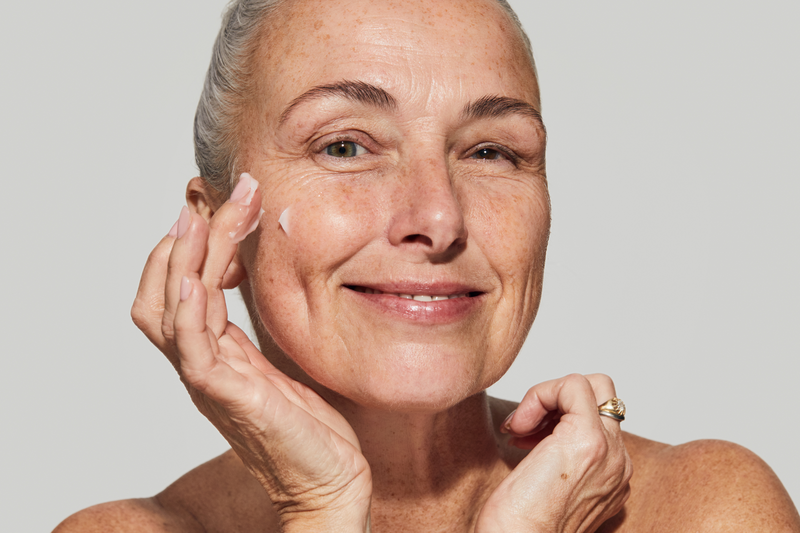
Retinol is often sold as an age marker. The message begins with prevention in the twenties, moves to correction in the thirties, and ends with repair in later life. Dermatology does not divide the face so neatly. Retinoids are a family of vitamin A-based ingredients with different strengths, legal status, and clinical uses. The right conversation starts with the skin concern, the formulation, tolerance, other treatments, and life stage. Birth year is only one part of it.
The American Academy of Dermatology says the first topical retinoid, tretinoin, was approved by the U.S. Food and Drug Administration for acne in 1971. Today, adapalene is available without a prescription in the United States, while tretinoin, tazarotene, and trifarotene are prescription topical treatments for acne. Retinol is a cosmetic form used in over-the-counter products for uneven tone, pigmentation, texture, and the appearance of fine lines. Those names are not interchangeable, and a product's marketing language should not blur them.
For teenagers and people in their twenties, the strongest reason to discuss a retinoid is often acne rather than wrinkle prevention. The AAD's updated acne guideline recommends topical retinoids among the therapies dermatologists may use. Its consumer guidance explains that they clear pores, treat blackheads, whiteheads, and some pimples, and can help lighten dark spots left after acne. That is a treatment rationale. It does not mean every young person needs a retinol serum.
For adults with recurring acne, the same logic can apply, although hormonal patterns, scarring, inflammation, and other medicines can change the treatment plan. The AAD advises people with moderate or severe acne scarring, acne linked to menstrual periods, or acne accompanied by increased hair growth to see a board-certified dermatologist before trying a retinoid. A retail shelf cannot distinguish those cases.
For people in their thirties and forties, retinoids may be considered for acne, uneven pigmentation, or photoaging. The evidence is stronger for prescription tretinoin than for the broad category called retinol. A 2025 systematic review and meta-analysis indexed by PubMed identified eight randomized trials involving 1,361 patients and found that topical tretinoin improved fine and coarse wrinkles caused by photodamage compared with vehicle treatment. The review included participants from age 29 to 76 and follow-up periods from 16 weeks to two years. That range supports use across adult life, but it does not create a starting age or a universal dose.
Later life can bring both a reason to consider a retinoid and a reason to proceed more carefully. Dryness, sensitivity, thinner-feeling skin, medications, and a history of procedures may change what is tolerable. The AAD notes that people with darker skin should be especially alert to irritation because inflammation can trigger post-inflammatory hyperpigmentation. That warning is a reminder that the visible result of overuse can be more pigment, not less.
Beauty companies have recognized that retinoid demand is not a single anti-aging lane. Shiseido's 2025 annual report describes its ELIXIR Retinol Power Wrinkle Smoothing Cream, launched in September 2025, as a product that exceeded sales expectations in Japan's wrinkle-care category. The report attributes the product's positioning to pure retinol stabilization technology and the brand's collagen research. It is a company claim about commercial performance, not independent evidence of clinical superiority, but it shows how brands are converting one ingredient into a portfolio story about efficacy, technology, and age.
Ulta Beauty's 2026 Form 10-K reported skincare at 23 percent of net sales in fiscal 2025, up from 20 percent in fiscal 2023. The filing does not isolate retinol. It does show why retailers have room to merchandise the ingredient by need: acne maintenance, uneven tone, fine lines, and texture can bring different consumers into the same category without pretending that one formula suits all of them.
Dermatologists generally frame tolerance as a process. The AAD advises that a clinician may reduce irritation by using a smaller amount, applying the product less often, or putting moisturizer on first, with changes made with professional guidance. Sun protection remains part of the basic conversation. A retinoid does not replace sunscreen, and a consumer should follow the product label and the directions of the clinician who prescribed it.
Pregnancy is the clearest boundary. The AAD advises avoiding prescription retinoids and over-the-counter retinol during pregnancy. The American College of Obstetricians and Gynecologists says topical retinoids are generally recommended to be avoided during pregnancy and advises reading labels and discussing acne treatment with a dermatologist and an ob-gyn. Anyone who is pregnant, trying to become pregnant, or breastfeeding should ask their healthcare professionals how to handle a current product rather than relying on a social routine.
The same caution applies to prescription isotretinoin, which is an oral medicine for severe acne and is not the same as a cosmetic retinol cream. People with persistent redness, significant dryness, eczema, rosacea, severe acne, scarring, or an uncertain diagnosis should seek medical advice. This article is a consumer-market analysis, not personalized medical guidance.
The category's next phase will be less about a stronger percentage on a front label and more about proof, delivery systems, and instructions that respect real skin. A formula that a customer can tolerate long enough to use consistently has a better commercial and clinical story than a powerful product that sits unopened after a week of peeling. Retinoids can belong at many stages of adult life. They do not belong on autopilot.