Profile
Gucci Westman on the Art of Making Beauty Feel Like Yourself
Kayla M. Walker / Aug 8, 2026

The formulation choices that turn a serum from a promising first purchase into a product people use, finish, and buy again.
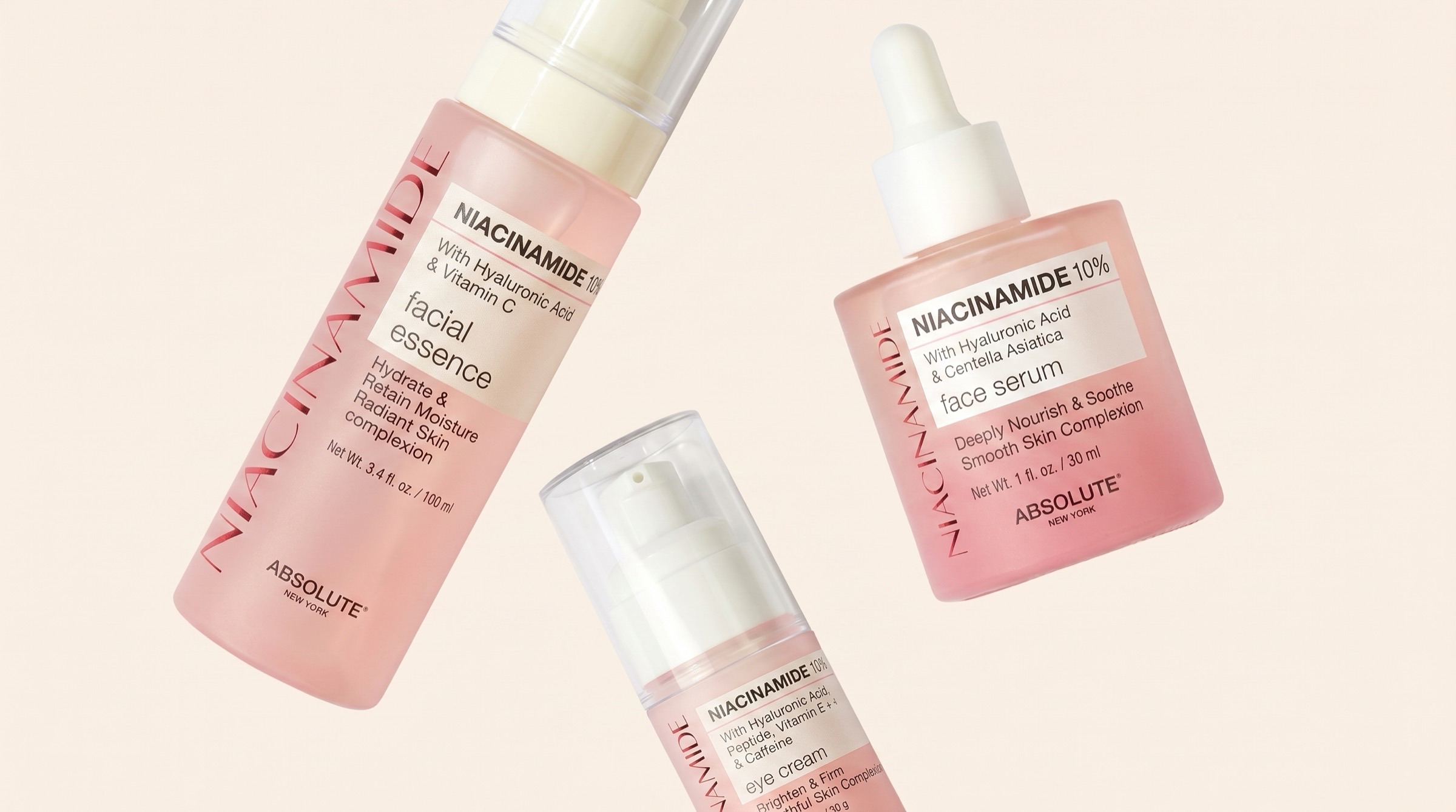
A serum's reorder rate sounds like a clean measure of devotion. In practice, it is usually a private commercial metric, shaped by the way a brand defines a customer, a time window, and a second purchase. There is no standardized public dataset that reports product-level serum reorder rates across brands. A company may count a second order within 60 days, a replenishment within a year, or any later purchase from the same account. Those figures are not interchangeable.
The strongest public evidence is therefore indirect. Researchers studying skincare repurchase have looked at attitude, perceived quality, retailer credibility, trust, and the customer's belief that a product is effective and suitable. One 2024 cross-sectional study of 531 skincare consumers in Can Tho, Vietnam found that attitude, retailer credibility, and confidence in product signals were associated with repurchase intention, though the study measured stated intention rather than a verified reorder record. The result is useful as a proxy, with an important limitation: it tells us what consumers say supports a repeat decision, not what every customer actually buys after finishing a bottle. The study is available in full through the National Library of Medicine.
A serum earns that second purchase when several small promises survive contact with daily life. The formula must feel good enough to apply consistently. The active must remain sufficiently stable through its use period. The package must dispense the product cleanly and protect it from avoidable degradation. The result must be visible enough, or the experience dependable enough, to justify staying with the same bottle when another launch is always nearby.
The word serum describes a product category more than a single technology. A serum may be a low-viscosity aqueous gel, an oil-in-water emulsion, a water-in-silicone system, or a more complex structure designed to suspend, protect, and release particular ingredients. The active receives the attention on the label, but the vehicle determines how the product spreads, sits, dries down, and interacts with the skin.
A water-based serum often relies on humectants such as glycerin, propylene glycol, panthenol, sodium PCA, or hyaluronic acid to attract and hold water in the outer layers of the skin. That can create an immediate feeling of suppleness and reduce the tightness associated with dehydration. Humectants alone do not tell the whole hydration story. Occlusives reduce water loss by forming a surface film, while emollients soften the spaces between dry, uneven corneocytes. Reviews of moisturizer science consistently describe these three functions as complementary, with combinations often producing a more useful and comfortable result than a single class of ingredient. A review of topical vehicles and cosmetic moisturizers explains the roles of humectants, emollients, occlusives, and thickeners.
For a serum, balance is the technical challenge. Too much water-binding material without enough film-forming support can leave a tacky surface or a transient effect. Too much oil or silicone can compromise the light texture that makes a serum appealing beneath sunscreen or makeup. A gel network can improve skin retention and dosing, but an incompatible polymer system may pill as layers are added. A well-designed formula makes its benefits legible through use: a measured slip, a controlled dry-down, and a surface that accepts the next product without rolling into flakes.
In one first-party formulation document, BASF describes a creamy serum built around an oil-in-water emulsifier that supports lamellar structures, alongside a thickener chosen to control viscosity and prolong moisturization. The example is a reminder that texture is not decoration applied after the chemistry. The emulsion architecture, rheology, and sensory profile are developed together. BASF's formulation material describes the relationship between lamellar structure, viscosity, and moisturization.
The clinically supported point is that topical vehicles influence delivery, tolerability, and satisfaction. The editorial inference is that a comfortable vehicle increases the chance of regular use, which gives any compatible active more opportunity to perform its intended cosmetic or therapeutic role. A review of topical treatment design reaches a similar conclusion in dermatology: poor tolerability from the active, vehicle, or delivery system can reduce adherence, while simpler and better-tolerated vehicles can improve satisfaction and continued use. That review discusses vehicle design, tolerability, and adherence in topical acne and rosacea treatments.
A reorder depends on more than whether an ingredient is present at the moment of filling. The active has to remain in a useful chemical state through manufacturing, transport, storage, and repeated opening. This is where formulation development becomes less visible and more consequential.
Topical vitamin C offers a clear example. L-ascorbic acid is biologically active but hydrophilic, charged, and vulnerable to oxidation. A peer-reviewed review reports that a pH below 3.5 can improve the molecule's stability and penetration by increasing the proportion in its uncharged form. The same review notes that concentrations above 20 percent have not shown additional biological significance in the cited literature and may increase irritation. These details do not establish that every low-pH vitamin C serum will work for every person. They show why concentration, pH, solvent system, antioxidant support, and package must be evaluated as one design problem. The review of topical vitamin C covers formulation stability, pH, penetration, concentration, and irritation.
Derivative selection creates a different set of tradeoffs. Some vitamin C derivatives are more stable at a near-neutral pH, which may make them easier to formulate into a comfortable daily product. Their conversion, penetration, and clinical evidence are not identical to those of L-ascorbic acid. A serum that avoids dramatic short-term sensation may still be the more durable choice if it supports consistent use and maintains its intended appearance and odor over time.
Delivery systems can also reduce the burden placed on a single free active. Encapsulation, liposomes, nanoemulsions, and solid lipid particles may be used to protect an ingredient, alter its release, or improve its distribution across the skin surface. Their value is formulation-specific. "Encapsulated" is not a universal guarantee of efficacy, and a delivery claim should be supported by data on the finished product rather than by the technology's name alone.
The testing behind that decision is rarely published in full. Cosmetic manufacturers may conduct accelerated stability studies, compatibility checks, preservative efficacy testing, and packaging evaluations, but the data generally remain proprietary. FDA guidance explains that cosmetics can degrade through emulsion separation, oxidation, temperature changes, moisture, and microbial growth. It also makes clear that manufacturers are responsible for product safety and that the agency does not require cosmetic companies to share their shelf-life testing and tracking information. FDA's guidance on cosmetic shelf life explains the main degradation pathways and the limits of public disclosure.
A dropper can communicate precision, but every opening admits air and gives the user another chance to touch the neck of the bottle. An airless pump can reduce direct contact and control the dose, but it may be less suitable for a formula whose viscosity changes during storage or whose suspended particles require a particular dispensing path. A light-resistant bottle can help protect a photosensitive active, but color alone does not prove performance.
FDA's cosmetic good manufacturing practice checklist specifically connects preservation with packaging. It notes that a product dispensed by pump, flip cap, or single-use container may require a less vigorous preservative system than a wide-mouth jar, because the package changes the likely route of contamination. The same guidance points to testing of raw materials, finished products, microbial contamination, and preservation against reasonably foreseeable consumer use. FDA's GMP checklist outlines packaging, microbiological controls, retained samples, and preservative testing.
That matters to repeat purchase because a serum is not consumed in one sitting. It spends weeks or months in a bathroom, exposed to heat, humidity, light, and the user's hands. A successful package preserves the product's sensory identity from first pump to last. The color does not shift dramatically. The scent does not turn sour. The emulsion does not separate. The pump does not begin delivering air and foam instead of a consistent dose.
Use behavior completes the system. A serum that needs four drops may finish sooner than expected. One that spreads with two pumps and layers under moisturizer may become a dependable morning step. Directions that are clear about frequency, order, and storage reduce friction without promising a medical result. Packaging that shows how much remains can also make replenishment feel predictable rather than urgent.
The public record cannot prove that any one formula has a cult reorder rate. It can show why certain products are more likely to earn one. A coherent vehicle, a stable active, a compatible package, and tolerability that survives repeated use create the conditions for trust. Reorder is the commercial expression of that trust, but the real work happens earlier, in decisions most customers never see.