Profile
Gucci Westman on the Art of Making Beauty Feel Like Yourself
Kayla M. Walker / Aug 8, 2026

Routine compression is turning skincare from a long sequence of steps into a test of formulation, evidence, and whether each product earns its place.
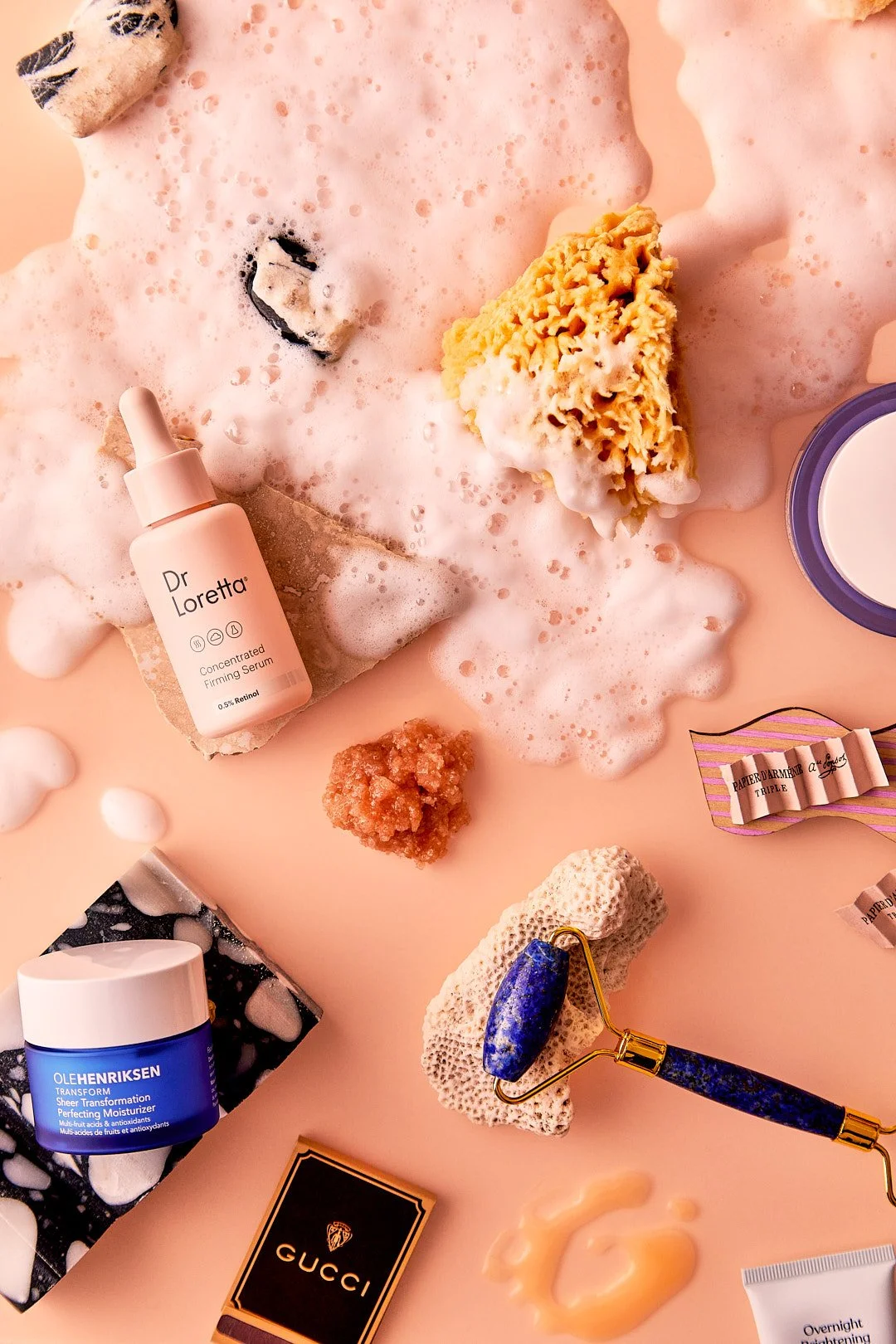
Skincare minimalism is often presented as a smaller shelf. The more consequential change is a higher threshold for entry. A cleanser, moisturizer, sunscreen, or treatment now has to explain its job, tolerate regular use, and work alongside the products a customer has decided to keep. Less is not automatically cheaper. It is a demand for better decisions.
The shift comes after a period of routine expansion. BCG's 2026 survey of approximately 5,000 US adults describes an increasingly advanced beauty routine, with consumers combining products, procedures, and performance claims. The same report identifies a smaller group of highly engaged consumers who spend across a broad beauty ecosystem. The opportunity for minimalism is therefore not the disappearance of the enthusiast. It is the enthusiast becoming more selective about duplication.
The basic compressed routine is familiar: cleanse when needed, moisturize, protect from ultraviolet exposure, and add a targeted treatment when the skin can tolerate it. The commercial challenge is making those steps useful without turning every bottle into a vague all-in-one promise. A moisturizer can support hydration and reduce water loss. A sunscreen can provide protection and, depending on its formula, a cosmetic finish. A treatment can address a particular concern. The jobs can overlap, but they are not interchangeable.
The American Academy of Dermatology's survey of more than 1,000 US adults found that 73 percent use products or procedures to prevent premature aging, while only 56 percent use sunscreen regularly. The academy's advice is practical: broad-spectrum sunscreen with SPF 30 or higher belongs at the end of a morning routine, after moisturizer. That gap between buying intentions and consistent use is where routine compression becomes valuable. A shorter routine is easier to repeat, but only if the essential step remains visible.
The science also argues against treating every extra step as progress. A randomized controlled study indexed by PubMed compared four commonly used moisturizers with no moisturizer on the opposite forearm in people with atopic dermatitis. The study is not a license to treat a cosmetic as a medicine, and it does not prove that one moisturizer suits every skin type. It does show why barrier language has commercial force: a product's texture, lipid system, and repeated use can matter more than the number of active ingredients on the front of the pack.
Multifunctional products appeal to a consumer who has begun to audit the routine. A tinted moisturizer can combine hydration, complexion adjustment, and some level of cosmetic coverage. A serum moisturizer can carry a focused active in a base designed for daily application. A cleansing balm can remove makeup while reducing the need for a separate first cleanse. The strongest examples are not trying to replace every category. They remove a redundant handoff.
Circana describes the rise of hybrid skincare-makeup products as a category shift and also points to science-backed claims, including retinol serums and niacinamide creams, as drivers of skincare demand. The wording matters. Hybrid does not mean that a product can make any claim it likes. In the United States, the Food and Drug Administration says a product marketed to affect the structure or function of the body may be regulated as a drug, even when it looks like a cosmetic.
For brands, multifunctionality should be expressed through a defined use case. The customer should know which step the product replaces, how often to use it, and what it cannot replace. That is a more credible proposition than attaching a long list of benefits to a single jar. It also makes the price legible. A 50 dollar product is not good value because it has many ingredients. It is good value when the customer uses it consistently and does not need three adjacent purchases to make it work.
Retail beauty was built to reward addition. Every new serum creates a launch moment, a merchandising story, and a reason to revisit a shelf. High-SKU regimens also allow a brand to meet narrow needs: redness, dryness, texture, pigmentation, oil control, and sensitivity can each become a product lane. That specialization is useful when it reflects real differences in skin and harmful when it turns ordinary maintenance into an endless troubleshooting exercise.
The tension is visible in the same BCG research. Its highly engaged consumers combine more solutions and spend more across the beauty ecosystem. Minimalism will not replace that customer. It will change the logic of the basket. A shopper may still buy a treatment, a mask, and a device, but expect the daily core to remain compact. Brands that rely on a ten-step sequence for growth may find that the customer trims the routine while keeping the one or two products that have proved their value.
The next phase will reward brands that publish clear routines without pretending every customer needs the same one. Show the minimum viable sequence, then explain where a treatment belongs and when it should be left out. Offer sizes that let a customer finish a product before committing to a large one. Build refills and replenishment around actual use rather than a launch calendar. The fewer-product promise only works when the product has enough integrity to carry the routine.