Profile
Gucci Westman on the Art of Making Beauty Feel Like Yourself
Kayla M. Walker / Aug 8, 2026

Skin cycling turned a viral four-night routine into a correction for over-layering, changing how shoppers, editors, and beauty brands organize active skincare.
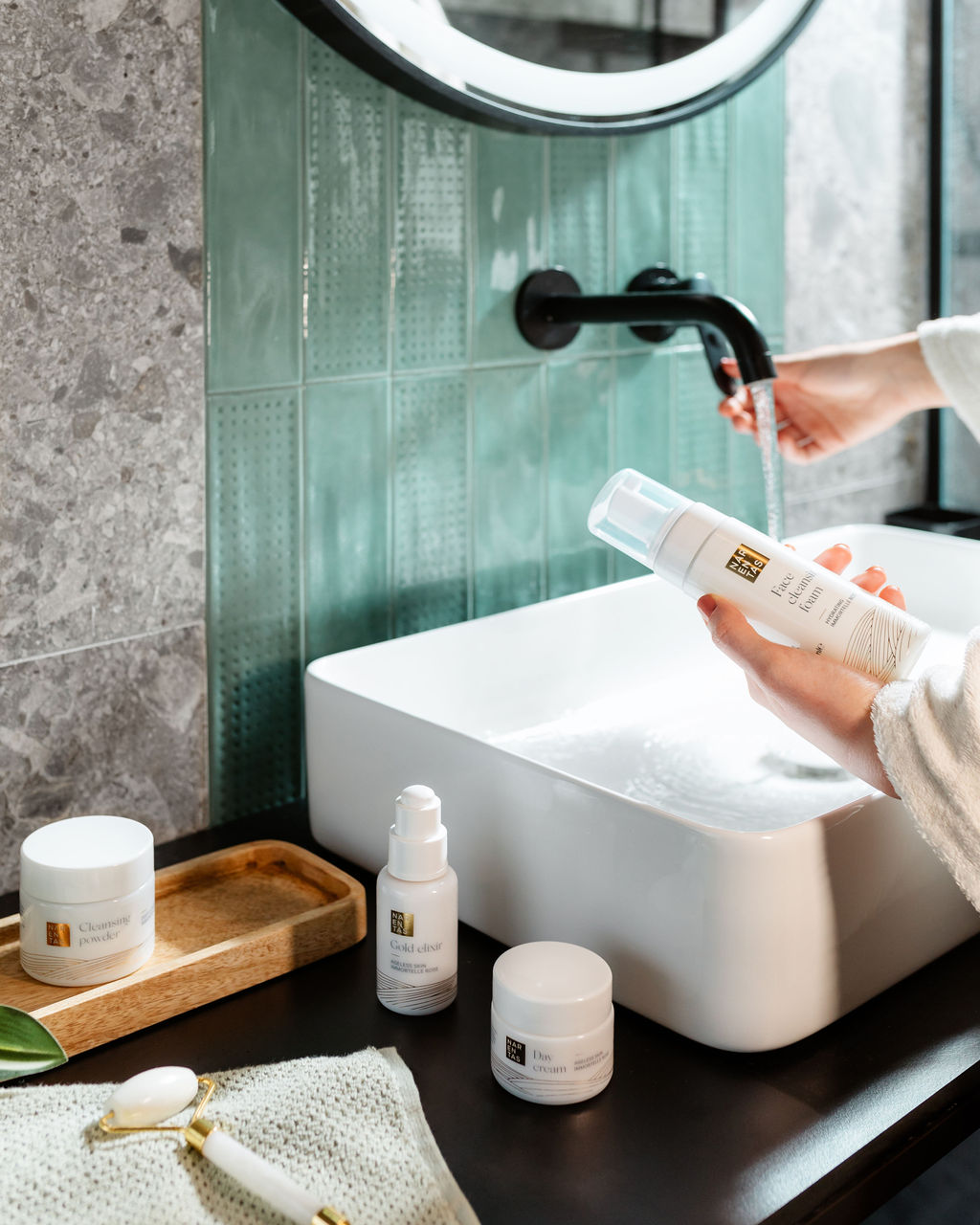
Skin cycling began as a name for restraint. The routine, associated with dermatologist Dr. Whitney Bowe, placed an exfoliation night, a retinoid night, and two recovery nights into a repeating four-night pattern. Its appeal was practical. Instead of asking consumers to understand every interaction between acids, retinoids, vitamin C, and barrier creams, it gave the cabinet a calendar.
That simplicity mattered because the modern skincare customer had been trained to layer. A cleanser was followed by a toner, an essence, several serums, an active treatment, an eye product, and a moisturizer, with the implied promise that each additional step moved the face closer to a result. Skin cycling did not reject active ingredients. It changed the behavior around them. The product became less important than the interval between products.
Dr. Bowe's own brand says the program has generated 3.5 billion TikTok views. That is a platform metric, not proof of product use or clinical benefit, but it explains the routine's unusual editorial afterlife. The phrase is short, searchable, and easy to demonstrate in a four-panel video. It also carries a professional credential without requiring a consumer to read a formulation brief.
The routine spread because it answered a lived problem. Shoppers were not necessarily buying fewer products. They were struggling to use the products they already owned without redness, stinging, dryness, or flaking. A four-night sequence offered permission to stop treating every evening as a treatment night. The recovery nights were the behavior change. They made the routine easier to remember, easier to explain, and easier to continue.
The underlying concern is not a social invention. A 2024 review indexed by PubMed examined strategies for reducing irritation from topical retinoids and identified barrier improvement and hydration as part of the formulation problem. The American Academy of Dermatology also tells consumers that retinoids can irritate skin and that a dermatologist may reduce irritation by changing the amount or frequency and adding moisturizer. Skin cycling packages that caution into a retail-friendly habit, but it should not be mistaken for a universal medical protocol.
The consumer shift is from accumulation to sequencing. A shopper who once asked which serum to add can now ask when an exfoliant belongs in the week. That moves authority away from the shelf and toward routine architecture. It also changes how editors write. The useful article is no longer a parade of new launches. It is an explanation of what can be combined, what should be separated, and when a routine should pause.
Retailers have a commercial reason to support this slower language. Skin cycling does not eliminate the active category. It creates jobs for more parts of it. An exfoliant, a retinoid, a moisturizer, a cleanser, and sunscreen can be merchandised as a system, while recovery creates a reason to buy barrier-support products that might otherwise appear secondary.
Ulta Beauty reported skincare at 23 percent of net sales in fiscal 2025, up from 20 percent in fiscal 2023, in its 2026 Form 10-K. The filing does not isolate skin cycling, and it would be misleading to claim that it does. It does show that skincare has taken a larger place in the retailer's sales mix, giving retailers an incentive to clarify how customers move through a regimen rather than simply adding more choice.
The same logic is visible at the supplier level. L'Oréal's 2025 annual report said its Dermatological Beauty division grew 5.5 percent like-for-like to 7.2 billion euros. The division describes a portfolio spanning La Roche-Posay, CeraVe, Vichy, and SkinCeuticals, brands that can occupy different points in a skin-health routine. Its report also says the division reached more than 320,000 healthcare professionals in 2025. That is a distribution of trust as much as a distribution of product. In a crowded skincare aisle, a recovery message gives a brand a way to sell efficacy without presenting every formula as a daily demand.
This is why the trend is more useful as a category strategy than as a fixed regimen. Brands can formulate around compatibility, explain the order of use, and offer smaller discovery formats that reduce the cost of trial. Retailers can build navigation around goals and tolerance instead of ingredient volume. Editors can make the correction legible without turning ordinary irritation into a diagnosis.
The format is memorable, but skin is not a content calendar. A person with eczema, rosacea, significant inflammation, a compromised barrier, or a prescription treatment may need a plan that bears little resemblance to the classic sequence. Even within Dr. Bowe's framework, the brand describes a customizable routine with additional recovery nights for sensitive skin. That qualification is more important than the four-day graphic.
There is also a retail risk. Once recovery becomes a named step, it can produce another wave of products marketed as essential: barrier serums, microbiome creams, sleeping masks, and multiple forms of soothing concentrate. The correction can become another layer. The discipline is to make recovery a use decision, not an excuse to replace an entire cabinet.
The more durable lesson is behavioral. Consumers are learning that strength is not the same as frequency and that a visible sensation is not evidence of performance. A routine that keeps a customer using one active consistently may be commercially healthier than a shelf full of products used twice and abandoned. Skin cycling began as a social shorthand. Its editorial value now lies in making skincare slower, more interpretable, and easier to sustain.