Profile
David and Sybil Yurman: A Life in Art, Made Wearable
Hannah R. Harris / Nov 20, 2025

The Ethiopian painter moves between Addis Ababa and German Expressionism, Huguette Caland gets her American survey, furniture turns surreal and more openings.
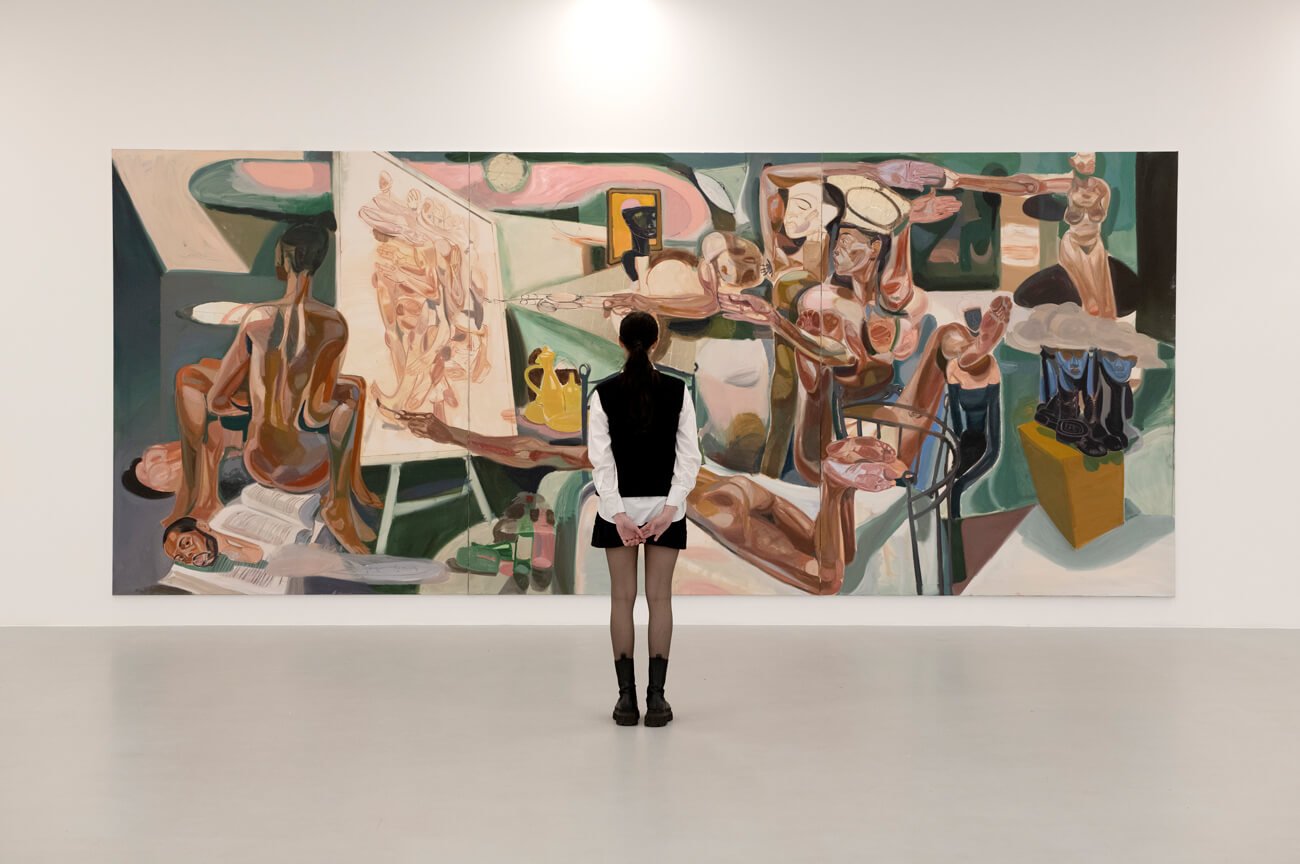
Tesfaye Urgessa's figures carry the influence of two places at once. Ethiopian iconography meets the physical urgency of German neo-Expressionism, a language he developed while studying and working in Germany. After returning to Addis Ababa, the painter turned more directly toward migration, displacement, race and identity. A London survey coincides with his commission for Ethiopia's first national pavilion at the 60th Venice Biennale, placing the private tension of his crowded canvases beside a very public milestone.
Huguette Caland approached life and the body with the same generous appetite. Her best-known Body Parts works reduce flesh to folds, curves and delicate lines, finding humor where other artists might have chosen embarrassment. The Lebanese painter exhibited internationally and eventually settled in Los Angeles, yet remained strangely underrecognized in the United States. The Institute of Contemporary Art, Miami presents the first American museum survey devoted to her work, concentrating on the years in which her visual language became unmistakably her own.
Rogan Gregory makes the sort of furniture that suggests Salvador Dalí has taken over the floor plan. Coffee tables spread like puddles, lamps appear to drip and mirrors acquire fur. The Los Angeles artist works in wood, bronze and textiles, using soft, anamorphic forms to test how strange a functional object can become before it stops being useful. For this exhibition, the pieces furnish an imagined bedroom and living room rather than standing politely on individual plinths.
Francis Picabia is usually introduced as a Dadaist, which is accurate but hardly sufficient. He also moved through Impressionism, Cubism, poetry and several styles that refused a lasting label. To mark its tenth anniversary, David Lewis Gallery places five works by Picabia alongside 24 contemporary artists who have inherited something of that restlessness. The show is less about identifying one influence than celebrating an artist who made changing his mind look productive.
In West Africa during the 1950s, a studio portrait was both an occasion and a collaboration. Oumar Ly, Seydou Keïta, Sanlé Sory and Malick Sidibé photographed clients in their best clothes, against painted scenery and beside radios, flowers, scooters and other carefully chosen props. Bell-bottomed teenagers and solemn families used the studio to decide how they wished to enter public memory. The photographs preserve daily life in the years after independence while showing why the portraitist became one of the community's most trusted witnesses.