Profile
David and Sybil Yurman: A Life in Art, Made Wearable
Hannah R. Harris / Nov 20, 2025

For Completedworks, jewellery, ceramics and glassware become vehicles for exploring form, feeling and the cultural meaning of the objects we choose to live with.
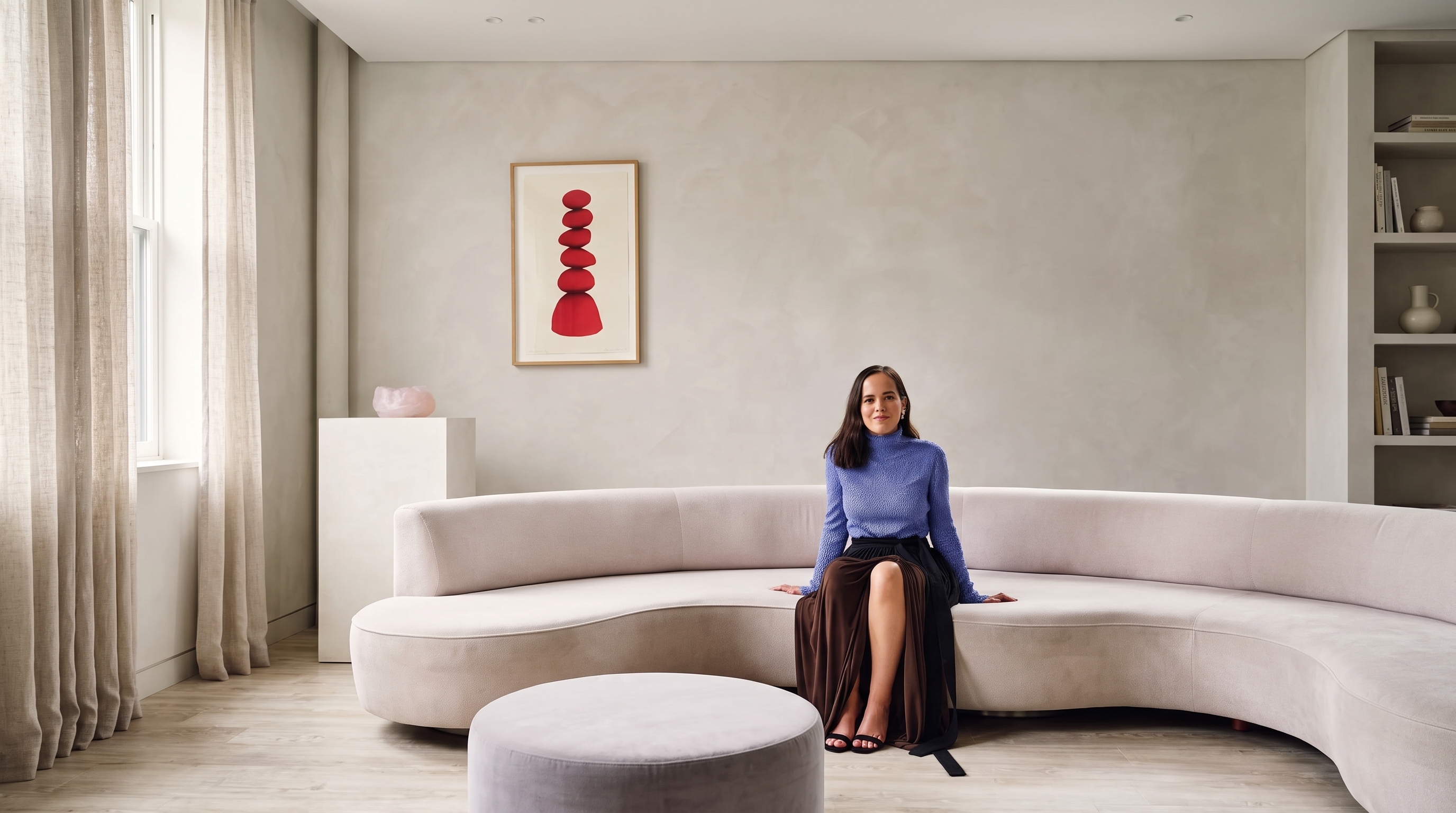
Anna Jewsbury founded Completedworks in 2013 after studying mathematics and philosophy rather than jewellery. Raised in Yorkshire and shaped early on by the sculpture of Barbara Hepworth, she has since expanded the brand from jewellery into ceramics, glassware and furniture.
Completedworks was founded in 2013. What did you want the brand to make possible?
I wanted to create something new: a visual language with a sense of beauty, but also with room for questions and social commentary. Jewellery felt like a particularly powerful medium because it is both intimate and communicative. You do not need to wear jewellery, so choosing to wear a piece can say something about your taste, your interests or the way you want to present yourself. It also has an inherent longevity because of the materials involved. From the beginning, I was interested in making objects that could sit between art, design and adornment, while still having a genuine relationship with the body.
Your background is in mathematics and philosophy rather than jewellery. How does that education continue to influence your work?
I see mathematics and philosophy as disciplines that combine precision with creativity. Both are concerned with finding different ways to understand the world, and that way of thinking has stayed with me. I tend to approach design through questions. I might begin with an idea, an image or a tension, then bring together different references and materials to see what kind of object emerges. My training also made me comfortable with reduction and clarity. There is a pleasure in taking something back to its essential form, then introducing a detail or an unexpected shift that changes how it is read.

Completedworks often begins with the overlooked details of daily life. What draws you to those moments?
Everyday life contains an enormous amount of visual information, but we often move through it without really looking. The way a cloth falls, the movement of something soft, or the trace left by an ordinary object can become unexpectedly beautiful when it is taken out of context. I am interested in that shift in attention. A familiar form can be transformed through scale, material or placement, and suddenly it asks to be considered differently. The starting point might be completely ordinary, but the finished piece should offer something more elusive. It should reward a longer look and allow the wearer or viewer to bring their own associations to it.
Nature and the Yorkshire landscape are recurring points of reference for you. How do they enter the design process?
I grew up in Yorkshire, and I have come to appreciate the landscape more deeply with time. Walking in the hills gives me a sense of calm, but it also reminds me that nature is never fixed. The landscape is constantly changing depending on the light, the weather and the way you move through it. That fluidity has a strong relationship to the way I think about form. I am drawn to shapes that appear to be in motion, or that seem to have been softened, folded or altered by natural forces. Nature is not usually a literal reference in the work. It is more an influence on the rhythm and behaviour of the forms.
Sculpture is another important influence. What does jewellery offer that sculpture cannot?
I grew up around the work of Barbara Hepworth, whose sculptures were present in the grounds of my school. That experience made me aware of how powerful a form can be without needing to explain itself. Jewellery has obvious connections to sculpture, but its smaller scale creates a different kind of intimacy. A piece is held close to the body and becomes part of someone's daily life. Each wearer forms a relationship with it, and that relationship can change over time. I like the fact that jewellery can be seen as an object in its own right, but also carries personal meaning through the person who chooses to wear it.
Your pieces can feel both classic and unconventional. How do you balance those two qualities?
I am interested in beginning with something recognisable, then making a small adjustment that changes its character. A piece might refer to a familiar object, a traditional motif or a classic form, but the proportion, texture or construction can make it feel unfamiliar. That tension helps the work remain accessible without becoming predictable. I am not interested in creating objects that are difficult simply for the sake of being difficult. The design should have a point of entry, but it should also contain something that keeps revealing itself. For me, the aim is to make pieces that feel enduring while still carrying a slightly subversive element.
How important is comfort when you are designing something for the body?
Comfort is essential. Jewellery can be beautiful as an object, but it also needs to feel natural when it is worn. The relationship with the body is part of the design, not something considered afterwards. I think about weight, balance, movement and how a piece sits in relation to the wearer. Those practical questions can also create new possibilities. A form may need to be adjusted for comfort, and that adjustment can lead to a more interesting silhouette. The best pieces have a sense of ease, even when they appear sculptural or elaborate. They should become part of someone's movement rather than interrupt it.
Sustainability is part of Completedworks' material approach. How do you think about responsibility in a category built around newness?
Jewellery is not a necessity, so it is important to consider why a piece should exist at all. We try to make objects that have a reason for being made and that can remain relevant beyond a particular moment. Our work prioritises recycled, upcycled and renewable materials wherever possible, and we are continually considering how those choices can be integrated into the design process. Longevity matters to us in both material and visual terms. A piece should not depend entirely on a trend. It should have enough character, quality and meaning to stay with someone as their life changes.
Completedworks now extends beyond jewellery into ceramics, glassware and furniture. What connects these different forms?
The connection is our interest in the beauty and complexity of the everyday. Jewellery, ceramics, glassware and furniture all have a relationship to use, but they can also carry an emotional or cultural charge. We are interested in what happens when an ordinary function meets an unexpected form. The same design language can move between scales and contexts, although each material brings its own constraints. Working with a chair or a vessel is very different from working with an earring, but the questions remain related: how does an object occupy space, how does it invite interaction, and how can it make daily life feel a little more considered?

You have used live performance and narrative as part of Completedworks' presentations. Why is that important to the brand?
A presentation can do more than show an object. It can establish a world around the work and communicate a point of view. Live performance is especially powerful because it introduces time, atmosphere and human presence. People do not encounter the pieces in isolation. They experience them as part of a larger setting, which can change the way they understand the collection. There is also something valuable in doing what is not expected of a jewellery brand. We want the work to feel open to different forms of expression, whether that is through an object, a performance, a space or the way people wear the pieces themselves.