Profile
David and Sybil Yurman: A Life in Art, Made Wearable
Hannah R. Harris / Nov 20, 2025

The Italian fashion photographer looks back on New York freedom, Los Angeles culture shock and the handmade process behind his personal portrait of America.
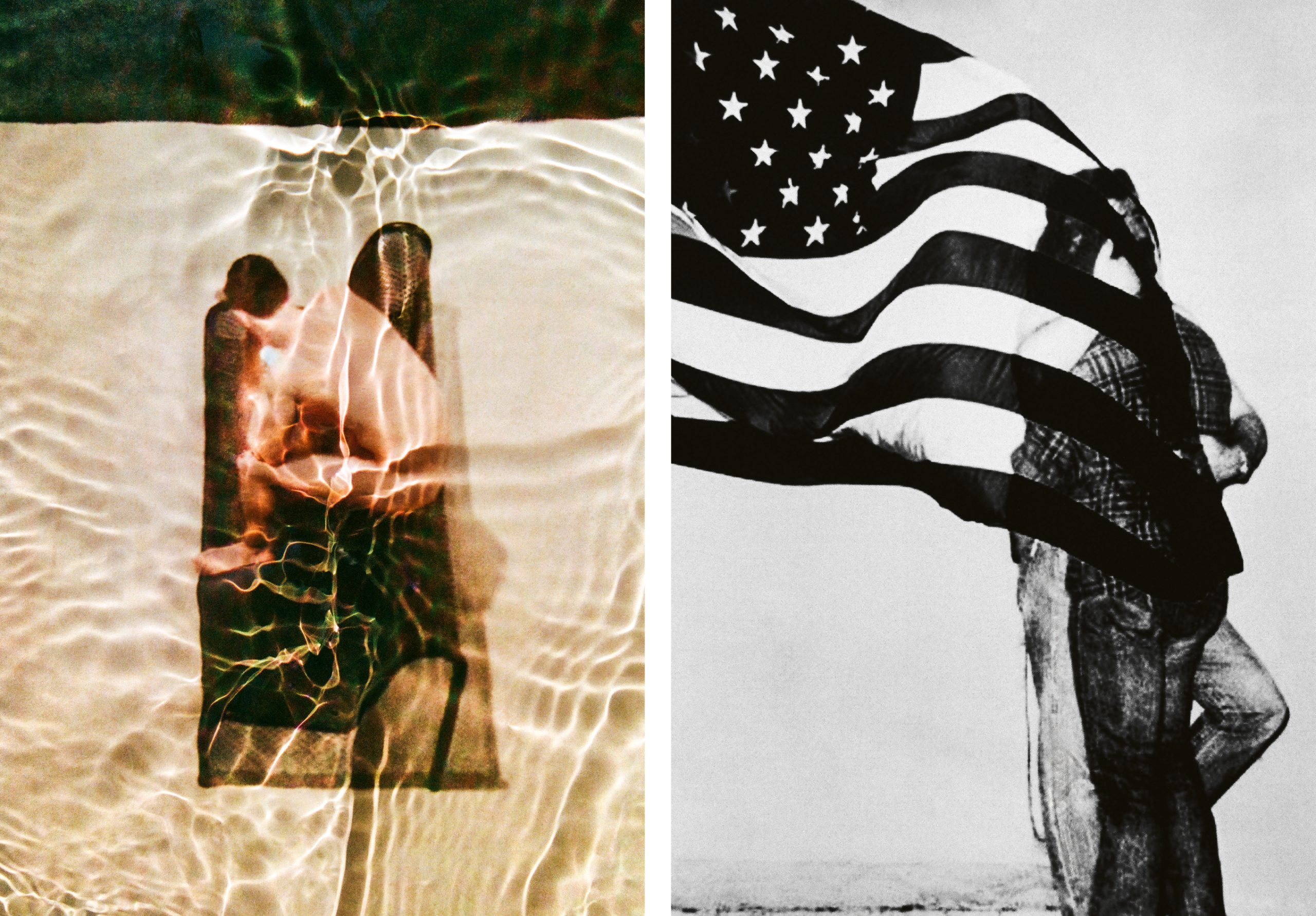
Alessio Boni spent more than a decade photographing fashion for magazines and houses including Vogue Italia, Interview, Miu Miu and Gucci. The work took the boy from Supino, a small town southeast of Rome, into the professional world he had imagined as a teenager. It also left him wanting to touch a photograph again.
Now based between Paris and New York, Boni makes fine-art images through a deliberately physical process. Pictures are printed on office paper, submerged in water, altered with pigment or ink and photographed again on film. His series The Idea of the Past Is Immutable uses that unstable surface to look at America, the place that gave him a career, a second home and the freedom to say who he was.
Mr. Boni, how long have you worked professionally as a photographer?
I began taking pictures when I was about 15 and have worked professionally for 14 years. Fine art is the new part. I have only been pursuing it for roughly two and a half years.
What made you step away from fashion and portraiture?
I had left New York after 17 years and moved to Paris because I wanted a significant change. Once I arrived, I realized the work itself also needed to change. Professional photography had become one day on set followed by weeks at a computer. I missed using my hands, so I began experimenting with water, paper, ink and paint. The computer still appears in the process, but it no longer controls the entire experience.
Do you remember your first camera?
Photography was everywhere in my family. My father loved cameras, one uncle had a darkroom and enlarger, and another uncle was equally enthusiastic. My father lent me a camera for a school trip when I was 12 or 13. I became serious later, after moving to Rome. A friend and I were invited to model at a photography school, but the set interested me far more than being in front of the lens. I wanted to be one of the people making the pictures.
How did that interest become a career?
At 19, I began assisting a photographer while taking restaurant, production and film-extra work. The camera kept helping me find the next job. By 23, I understood that Rome was not where I could build the career I wanted, so I decided to move to the United States.
Los Angeles was your first stop. What did it look like to an Italian newcomer?
I arrived in 2006 and felt completely disoriented. I was used to walking through a city, sitting in a piazza and buying groceries nearby. In Los Angeles, even a basic errand seemed to require a car. At the same time, everything I had seen in films was suddenly in front of me. The desert, Las Vegas, palms and freeways were extraordinarily photographic. The landscape changed the kind of pictures I wanted to make.
When did New York enter the story?
I went there after Los Angeles and began assisting fashion photographers. Fashion had never been the original plan. I simply needed to keep taking pictures, and that work became the route available to me.
Your personal photographs became a way of speaking about sexuality. Was that deliberate?
The male body and homoeroticism were present early in my personal work. Photographing men and experiences from my own life made my sexuality visible before I was always comfortable stating it directly. In that sense, the pictures became part of coming out. New York gave me the freedom and safety to make them. Over time, the symbolism became less literal. A burning car, a palm tree or an athlete can carry the same charge for me as a body.
How do you construct the new images?
I begin with many kinds of material: photographs from my archive, phone pictures, public-domain images and frames taken from screens. I may combine or adjust them digitally, then print them on inexpensive office paper. The paper goes into a tray of water. I add pigment or ink, sometimes to the water and sometimes directly to the sheet, and photograph the whole arrangement in sunlight with a film camera. The final object is an analog photograph.
Why return to film for the final stage?
Film has been one of the foundations of my career. I still shoot digital when it suits the work, but this series needed the physical feeling and grain of film. It makes the last image feel connected to the reason I began taking photographs.
Has the fine-art work changed your commercial photography?
It gave my creativity a necessary shock. I had reached a point of exhaustion, and this process activated parts of my thinking that had gone quiet. The benefit to the fashion work is indirect but real. My mind feels healthier and more alert.
The series contains liberation and pleasure, but also fear. Is it a love letter to America?
Yes. It began as a tribute to New York and to the freedom I found there. I thought about the city's place in art, the gay-rights movement and the broader history of expression. As the American election unfolded, the work became more complicated. My second home had given me so much, but the political direction made me fear for the freedoms that shaped my life.
Do you remember the moment New York first felt safe?
I came out of the subway on my first day and noticed the diversity, the clothes, and the way people allowed one another to move through the city without interference. Everyone appeared able to coexist while minding their own business. I understood immediately that I might be able to live there and begin saying who I really was.