Profile
David and Sybil Yurman: A Life in Art, Made Wearable
Hannah R. Harris / Nov 20, 2025

From Colorado gem collecting to a Laguna Beach atelier and a place in the Smithsonian's permanent collection, Adam Neeley has built a practice where nature, metallurgy, and imagination meet.
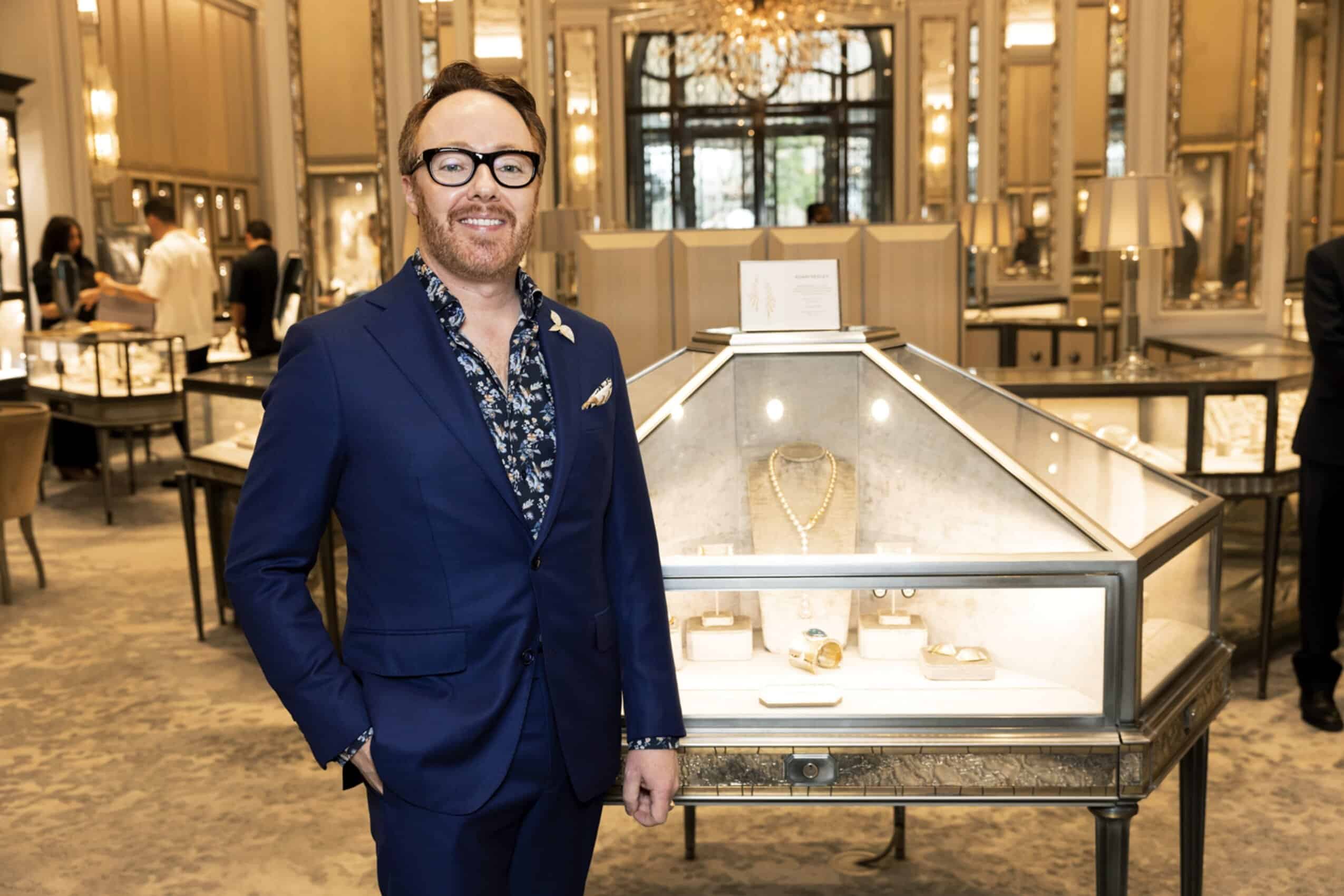
Adam Neeley opened his Laguna Beach atelier in 2006, at the age of 23, after training as a Graduate Gemologist and apprenticing under master goldsmith Gio Carbone in Florence. His practice traces back to childhood gem collecting in the Rocky Mountains of Colorado with his father, and it has since grown to include a retrospective at the Laguna Art Museum and a piece in the Smithsonian's permanent collection.
You began with gems before you began with jewelry. What did collecting stones teach you about the work?
I grew up in the Rocky Mountains of Colorado, collecting gems with my father, who was passionate about rocks and minerals. As a teenager, I became fascinated by the process of cutting and polishing stones, but also by the experience of encountering something that had been hidden in the earth. There was a sense of discovery in holding a crystal that no one had seen before. That feeling stayed with me. It shaped the way I think about jewelry today. A stone is never simply a material to place in a setting. It has a history, a character, and a visual language that can guide the entire piece.
How did that early interest develop into a professional practice?
I began making jewelry while I was still young and started exhibiting at art shows in places including Aspen and Beverly Hills. That early experience allowed me to understand how people responded to the work, but it also made clear that I needed to deepen my technical education. I earned my Graduate Gemologist diploma from the Gemological Institute of America and then studied in Florence at Le Arti Orafe, where I apprenticed under master goldsmith Gio Carbone. Florence gave me a strong foundation in traditional goldsmithing and introduced me to approaches that continue to influence my work. In 2006, at the age of 23, I opened my atelier in Laguna Beach.
What made Laguna Beach the right place for the brand?
Laguna Beach has always felt connected to the kind of work I wanted to make. It has a strong relationship with art, nature, and independent creative practices, and those qualities are important to me. When my father and I first came to California, we had planned to travel farther along the coast, but Laguna made an immediate impression. I opened the atelier there with a small selection of pieces, and the response was encouraging from the beginning. The location has allowed the studio and the gallery to grow in a way that remains personal. Clients can encounter the work in a setting that reflects its connection to the landscape and to the process of making.

Your jewelry often feels organic without becoming literal. How do you translate nature into form?
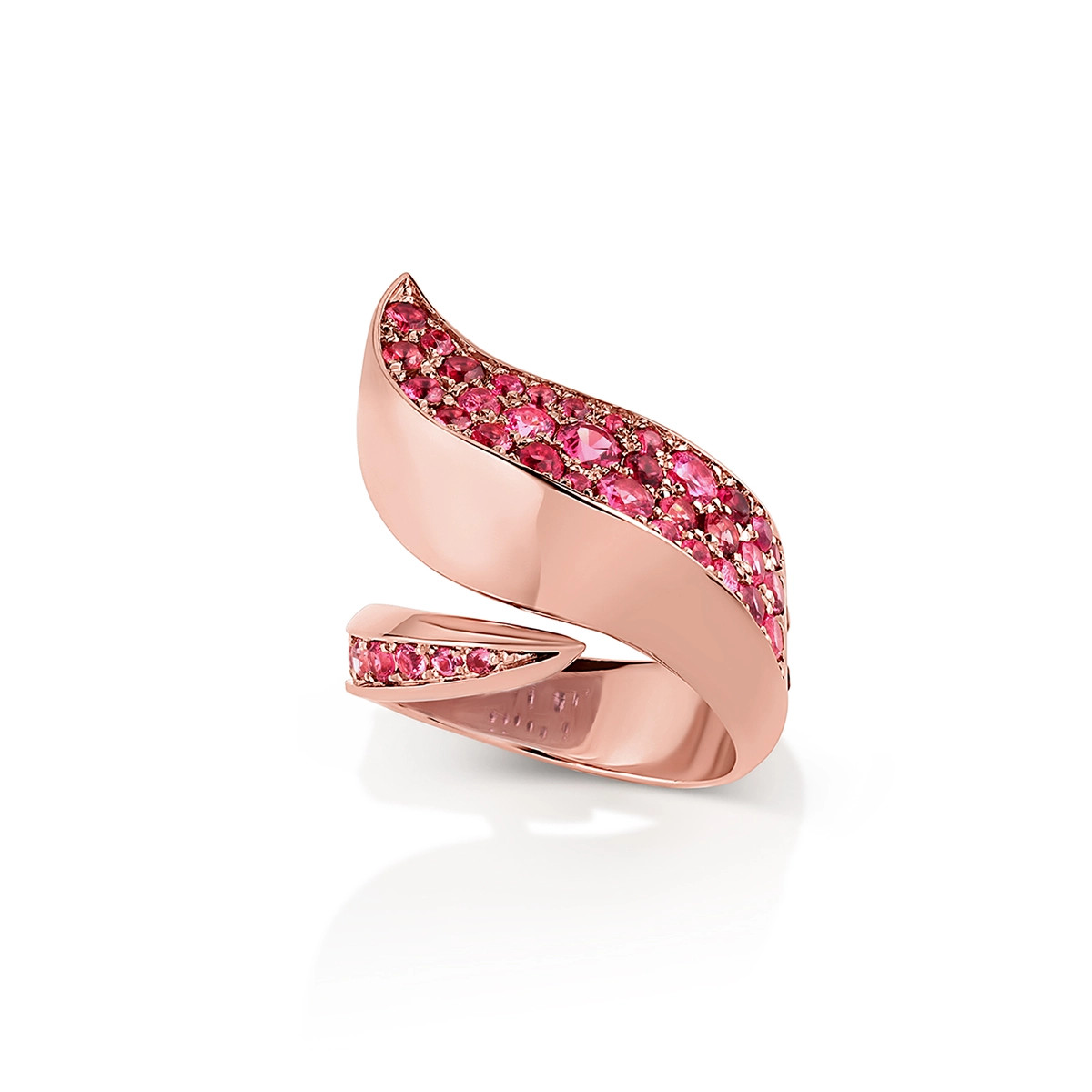
I am interested in the qualities of nature rather than in simply reproducing its recognizable shapes. I might respond to the movement of a wave, the structure of a flower, the way light changes across a landscape, or the feeling created by a particular color. Those observations are then distilled into abstract forms. Dreams are also an important part of the process. I have often woken with a design already present in my mind, with its proportions, materials, and overall structure unusually clear. The challenge is to take that initial image and resolve it through drawing, modeling, stone selection, and fabrication so that it becomes something wearable and enduring.
You describe yourself as an alchemist. What does that mean within your practice?
For me, alchemy is about transformation through experimentation. Jewelry brings together artistic intention, scientific knowledge, and physical labor. I work with metals at a very fundamental level, testing how their composition affects color, hardness, movement, and the way they interact with gemstones. I am drawn to the point where a technical decision also becomes an aesthetic one. A new alloy is not useful simply because it is unusual. It has to contribute to the design and help express the idea behind the piece. That combination of research and intuition is central to how I work.

SpectraGold has become one of your signature materials. Why was developing a gradient gold so important?
I wanted to create a transition in gold that behaved almost like a change in light, moving gradually from rich yellow gold toward white gold. SpectraGold emerged through many experiments with alloy composition, color, hardness, and workability. The result is not a surface treatment. The color exists within the metal, which means the material itself becomes part of the design. Each section must be hand fused and forged, and the process requires a significant amount of time and control. I think of the gold as another part of the palette, alongside the gemstones. It can echo a sunset, a horizon, or the gradual shift between two natural colors.
Your work combines old world craft with techniques such as laser construction. How do you decide when innovation belongs in a piece?
Innovation has to serve the design. I am not interested in using a technique simply to demonstrate that it is possible. The starting point is always the form, the stone, or the story I want the piece to communicate. Sometimes traditional forging and hand fabrication are the right answers. In other cases, laser construction or another contemporary process allows me to create a line, suspension, or connection that could not be achieved in the same way by conventional methods. The important thing is that the technology should disappear into the finished object. What remains visible should be the balance, movement, color, and character of the jewelry.
How do gemstones influence the direction of a design?
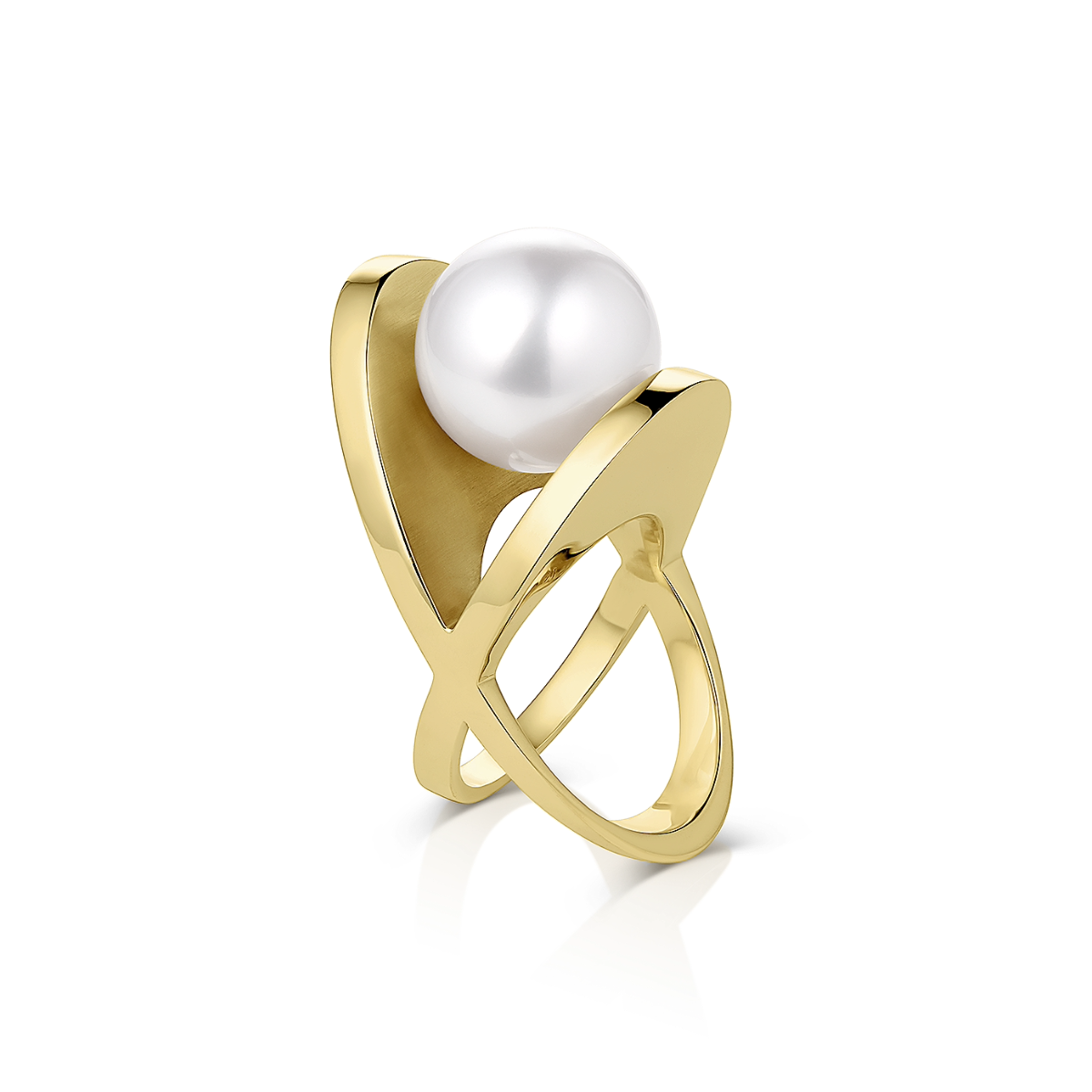
A remarkable gemstone can determine the entire rhythm of a piece. I pay attention to its color, internal structure, proportions, and the way it responds to light. Some stones ask to be presented with restraint, while others suggest a more complex architectural setting. I also enjoy creating moments of discovery, where an unexpected detail is revealed only when the piece is worn or examined closely. The stone may be the first thing the eye notices, but it should not be the only thing the viewer experiences. Metal, negative space, movement, and hidden elements all contribute to the narrative.
The Laguna Art Museum's retrospective presented your jewelry as art. What did that context make visible about your work?
The exhibition gave me the opportunity to look at the practice as a whole, from my early years of collecting and cutting stones through the development of my work as a goldsmith, designer, and metallurgist. Showing more than 100 pieces together revealed themes that are difficult to see when the work is encountered one object at a time. It also created space to consider the difference between jewelry made for mass consumption and jewelry conceived as individual sculpture. The pieces are designed to be worn, but they also have physical, kinetic, and performative qualities. The exhibition helped make that relationship more apparent.
What kind of relationship do you hope people build with an Adam Neeley piece?
I hope the relationship continues to unfold over time. Jewelry is intimate because it lives on the body, moves with the wearer, and becomes connected to personal experiences. I want each piece to offer an immediate visual impression, but also to reward closer attention. There might be an unusual transition in the metal, an unexpected perspective, or a detail that only becomes visible through movement. My clients tend to see jewelry as a form of self-expression and as part of their relationship with art. The most meaningful outcome is when a piece feels personal to its wearer while still retaining its own sense of mystery.