Profile
David and Sybil Yurman: A Life in Art, Made Wearable
Hannah R. Harris / Nov 20, 2025

An informal survey of the jewelry our own staff reaches for daily.
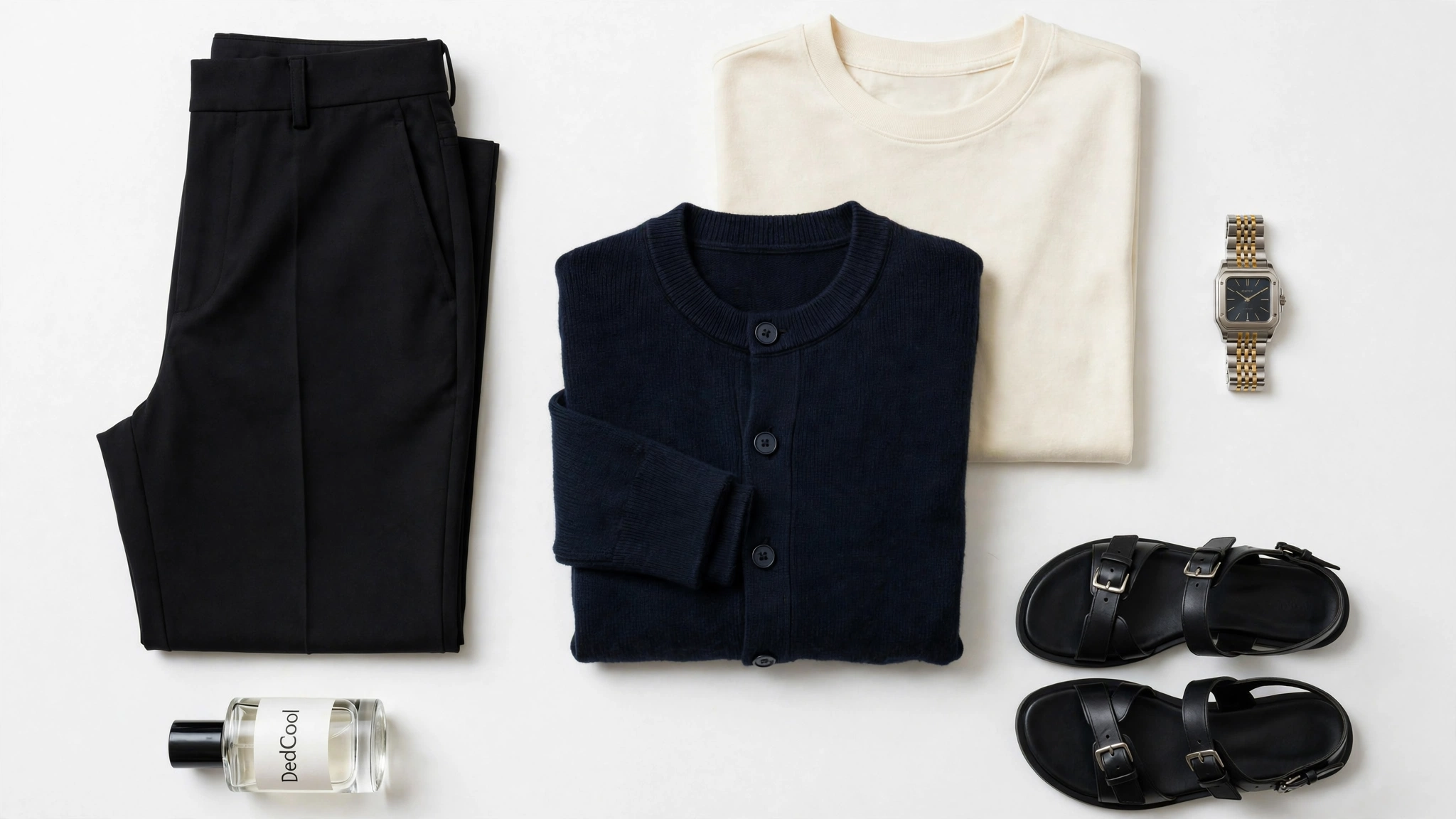
The jewelry on an editorial desk is more revealing than the jewelry in an editorial still. It arrives with coffee, disappears into a coat pocket, gets removed before a meeting, and turns up again the next morning. It is scratched, resized, repaired, forgotten in a drawer, and promoted back into rotation. An informal internal wardrobe audit found less interest in a perfect stack than in a dependable cast of characters.
This is not a market survey or a collection of invented staff testimonies. It is a field note from our wardrobes: a collective look at pieces that survive actual schedules. The common thread was not a metal, price point, or styling rule. It was usefulness. The jewelry stayed in rotation because it was comfortable, adaptable, emotionally legible, and easy to put on.
Chains did the most work. A fine chain could sit under a shirt collar, over a knit, or beside a second necklace without requiring a new outfit around it. A heavier link could make a plain T-shirt feel deliberate and give a jacket a little more weight at the neckline. The important distinction was not whether the chain was delicate or substantial. It was whether its scale made sense across more than one setting.
Length mattered as much as proportion. A chain at the collarbone can become an easy base layer; one that lands lower can work over a high neckline but catch on a lanyard or bag strap. The pieces with the broadest lives were the ones no longer treated as occasion accessories: familiar enough to leave on, considered enough to change a look.
Chains also made mixing metals feel less like a styling project. A warm pendant against a cooler chain, or a silver link beside a gold watch, created a bridge between pieces acquired at different times. The effect was not a carefully matched set. It was continuity built from use.
Signets appeared less often than chains but carried more symbolic weight. Their appeal was tactile: a smooth face, a substantial edge, a shape that becomes familiar through the hand. Some were marked with initials or inherited associations; others were simply chosen because the form felt right. The point was not to broadcast a private code. It was to wear a small object with a sense of permanence.
Hoops were the practical champions of the audit. Their range ran from small sleepers that could stay in for long stretches to larger shapes that changed the mood of a simple outfit. What made them repeatable was their independence. They did not need a matching necklace, a special neckline, or a particular hair arrangement to make sense. They framed the face, survived a busy day, and could be scaled up or down according to energy rather than occasion.
Signets and hoops illustrated the difference between newness and relevance. A piece can be familiar and still feel personal. The test is not whether anyone else owns the category, but whether this version has become part of how its wearer recognizes herself in the mirror.
The old instruction to choose one metal has lost its force in lived wardrobes, partly because most people do not acquire jewelry in one sitting. A silver hoop may predate a gold signet; a steel watch may sit beside both. Daily wear is an accumulation of relationships, not a showroom display.
Mixing worked best when there was a point of contact: a two-tone detail, a shared finish, a repeated shape, or simply enough repetition for the combination to look intentional. It did not require every piece to harmonize. In fact, a little friction made the collection feel more like a wardrobe and less like a set.
The practical advantage is freedom. A wearer can choose the ring that fits the day rather than excluding it because the earrings are a different color. Over time, the eye learns the household of pieces. A watch, like a chain, earns its place when it solves a small daily problem without creating another one.
The audit also found the unglamorous hinge of repeat wear: maintenance. Clasps loosen. Hoops lose their backs. Chains kink. Plating changes. Watch straps crack. A beloved piece can disappear from the rotation not because it has been replaced, but because one small failure makes it inconvenient to trust.
Repair is therefore not an afterthought to ownership. It is part of the cost and the pleasure. A repaired chain returns with a new chapter; a resized ring becomes wearable again after a change in routine or body. Even a visible mark can show that the piece has been allowed to live.
This does not mean every repair is sensible. The right question is what the piece contributes: comfort, memory, utility, or a combination of the three. The answer may justify a careful fix, a redesign, or a decision to retire it. What mattered in the internal audit was that wearers knew which pieces were worth the trouble.
Comfort was the most decisive filter and the least glamorous one. Earrings that pinch, rings that catch, necklaces that twist, and bracelets that interfere with a keyboard do not become daily jewelry through force of will. The pieces that stayed on were light enough, secure enough, and quiet enough to accompany the day. Comfort was not the opposite of style. It was the condition that allowed style to repeat.
Sentiment operated differently. It could make an imperfect piece indispensable: a chain from a particular year, a signet connected to family, or a watch that had traveled through several versions of a career. Sentimental value is not a substitute for wearability, but it often changes the threshold for repair and patience. It gives an object a reason to remain in the wardrobe while its role evolves.
Cost per wear offered the clearest way to connect feeling with economics. A piece worn three times a week can make more sense over time than a dramatic purchase reserved for one event, even when the initial prices are very different. That is not an argument for buying only basics. It is an argument for asking what kind of life an object can enter. The answer should include the number of outfits, seasons, repairs, and ordinary days it can plausibly share.
By the end, the lesson was not that everyone needs a chain, a signet, hoops, or a watch. It was that jewelry earns its place by becoming dependable without becoming invisible. The repeat pieces carried small contrasts: a hard edge against a soft sleeve, warm beside cool metal, a polished surface marked by use, a sentimental object paired with something new.
That is why an internal wardrobe audit is more useful than a list of current favorites. It records behavior. It asks what survives the commute, the long meeting, the rushed morning, the repair queue, and the outfit that was not planned. The answer is a quieter kind of luxury: fewer pieces, worn more honestly, with enough flexibility to keep meeting the person who owns them.